
Wind-Driven Rain vs Wind Damage
Wind-driven rain and wind damage are treated differently by many insurance policies. Learn how storm water enters buildings, how adjusters evaluate claims, and why coastal property owners should understand this distinction.
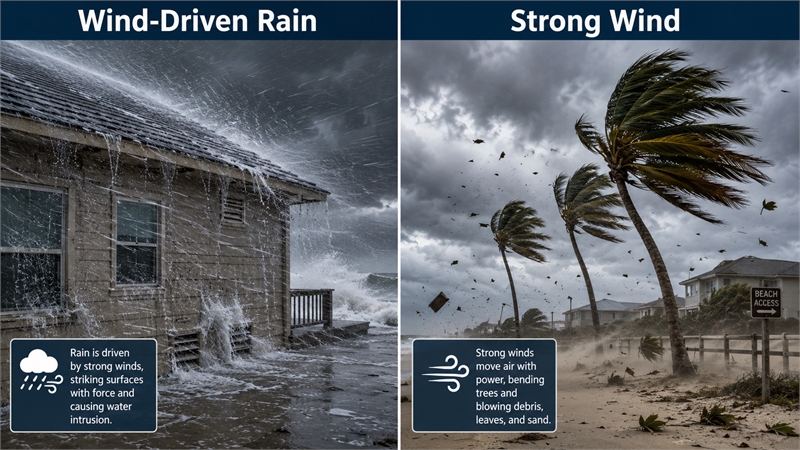
Why Insurance Policies Treat Storm Water Damage Differently
When Storm Damage Isn’t Always Treated the Same
After a coastal storm passes, many property owners assume that any rain damage caused during the storm will automatically be covered by their insurance policy. In reality, insurance coverage often depends on a critical detail that many homeowners and condominium associations do not realize until after damage occurs.
Insurance policies frequently distinguish between wind damage and wind-driven rain damage. While both may occur during the same storm, the way water enters the building can determine whether the damage is covered under a windstorm policy or falls into a separate category.
For property owners in coastal regions like eastern North Carolina, understanding this distinction can make a significant difference when filing a claim after a hurricane, tropical storm, or severe coastal storm.
This guide explains how insurance policies evaluate storm water damage, why wind-driven rain can create confusion in insurance claims, and how coastal property owners can better understand their coverage before the next storm arrives.
Understanding Wind Damage in Insurance Policies
Wind damage refers to physical damage to a building caused directly by wind during a storm. In most property insurance policies, wind damage is considered a covered peril, especially for buildings located in hurricane-prone regions.
Wind damage usually involves a storm physically altering or damaging part of the building structure. Examples of wind damage include:
• shingles blown off a roof
• roof panels lifted during a hurricane
• a tree branch breaking a window
• siding torn away from a building
• wind forcing open exterior doors
• debris breaking exterior glass
When wind physically damages part of the building, it may create what insurance policies often describe as a storm-created opening.
Once that opening exists, rain entering the building through that opening is typically treated as part of the windstorm damage.
For example:
A hurricane blows shingles off a roof. Rain then enters the attic through the exposed area and damages drywall and insulation. Because wind created the opening in the roof, the resulting water damage is usually covered under windstorm insurance.
This concept is central to how many insurance claims are evaluated after storms.
What Is Wind-Driven Rain?
Wind-driven rain occurs when strong winds force rain horizontally against a building, pushing water through small openings in the building envelope.
Instead of falling straight downward, rain is driven sideways or even upward by wind pressure.
Under these conditions, rain can enter through areas such as:
• roof flashing joints
• window frames and seals
• attic ventilation openings
• siding seams
• exterior wall penetrations
• door seals
• small gaps around utilities
Unlike wind damage, wind-driven rain does not necessarily require the structure to be physically damaged first.
The building envelope may appear intact, but wind pressure can still force water through small vulnerabilities.
In coastal storms where strong winds persist for hours, this type of rain intrusion can occur even in well-constructed buildings.
Why Insurance Policies Treat These Two Situations Differently
Many property insurance policies include language stating that rain damage is covered only when wind first creates an opening in the structure.
If rain enters through an opening created by wind damage, the resulting interior damage is usually covered.
However, if rain enters the building without wind first damaging the structure, the claim may fall into a different coverage category.
This is where wind-driven rain becomes important.
Some policies include specific exclusions for rain entering through existing vulnerabilities, while others may offer endorsements or specialized coverage addressing wind-driven rain exposure.
Because of these policy differences, determining how water entered the building often becomes one of the most important parts of a storm damage investigation.
Quick Comparison: Wind Damage vs Wind-Driven Rain
Feature Wind Damage Wind-Driven Rain
Structural damage occurs first Yes No
Storm creates an opening Yes No
Rain enters building Through storm opening Through existing vulnerabilities
Typical insurance treatment Usually covered Depends on policy wording
Common examples Roof shingles blown off Rain entering through flashing
While both events may occur during the same storm, insurance policies often treat them differently based on the sequence of events leading to water intrusion.
Why Coastal Buildings Experience Wind-Driven Rain More Frequently
Properties located near the ocean experience weather conditions that differ significantly from inland areas.
Coastal storms often produce:
• sustained high winds
• long periods of heavy rainfall
• strong wind gusts
• rotating rain bands during hurricanes
These conditions can push rain against buildings for extended periods.
Unlike typical inland storms that may pass quickly, coastal storms can expose buildings to hours of horizontal rain pressure.
This type of exposure increases the likelihood that rain may enter through small vulnerabilities in the building envelope.
Even minor issues such as deteriorated sealant around windows or aging roof flashing can allow water to enter when exposed to wind-driven rain.
Because of this, coastal buildings often face higher risks of water intrusion during storms even when the structure appears intact after the storm passes.
How Insurance Adjusters Determine the Cause of Storm Damage
When water damage occurs during a storm, insurance companies often investigate how the water entered the building.
Adjusters and inspectors may evaluate several factors, including:
• roof condition after the storm
• missing shingles or structural damage
• broken windows or doors
• damage caused by debris
• flashing or seal failures
• evidence of long-term deterioration
The goal of the investigation is often to determine whether wind created a structural opening that allowed rain to enter.
If wind damage created the opening, the claim may fall under windstorm coverage.
If rain entered through existing vulnerabilities without structural wind damage, the claim may be evaluated differently depending on the policy language.
In some cases, insurance companies may also involve engineers or forensic building inspectors to determine the cause of water intrusion.
Why Water Can Travel Far From the Original Leak
One of the most confusing aspects of storm water intrusion is that the location where water appears inside the building is not always the location where it entered.
Water can travel through:
• insulation layers
• framing cavities
• ceiling spaces
• attic areas
For example, water entering near the ridge of a roof may travel along roof decking before appearing as a ceiling stain several feet away.
In multi-story condominium buildings, water may even travel between floors before becoming visible.
This can make identifying the exact source of a leak extremely challenging after a storm.
Why Condominium Buildings Face Unique Water Intrusion Risks
Large condominium buildings often contain complex building envelopes.
These structures may include:
• extensive roof surfaces
• hundreds of window openings
• ventilation systems
• exterior mechanical penetrations
During storms, rain entering through roof seams or flashing can travel through structural cavities before appearing inside a unit.
This means a single intrusion point in the roof can sometimes affect multiple units within the building.
Determining responsibility for repairs can also involve multiple insurance policies, including:
• the condominium association’s master policy
• the individual unit owner’s HO-6 policy
Because of these overlapping policies, storm damage claims in condominium buildings can sometimes become complicated.
Why Some Insurance Policies Offer Wind-Driven Rain Coverage
Because coastal properties face unique exposure to wind-driven rain, some insurance policies include endorsements that address this risk.
These endorsements may be available in certain commercial property policies or specialty insurance markets.
In some cases, coastal condominium associations or commercial property owners obtain coverage through surplus lines insurers when standard market carriers restrict certain types of coverage.
Surplus lines insurers often specialize in higher-risk properties, including:
• coastal commercial buildings
• large condominium associations
• high-value coastal real estate
These insurers may provide customized policy structures or endorsements addressing risks that standard insurers decline to cover.
However, these policies may also involve higher premiums, higher deductibles, or coverage limitations.
Why Storm Damage Coverage Often Causes Confusion
Much of the confusion surrounding storm damage insurance arises from the difference between coverage not being offered by a particular insurer and coverage not existing in the insurance marketplace at all.
A specific insurance company may choose not to offer certain endorsements based on underwriting guidelines or risk tolerance.
However, that does not necessarily mean the coverage is unavailable through other segments of the insurance market.
Insurance brokers who specialize in coastal or commercial properties often explore additional coverage options through specialty or surplus lines insurers.
Understanding how these different insurance markets operate can help property owners make more informed decisions about protecting their property from storm risks.
Frequently Asked Questions About Wind-Driven Rain Insurance
Is wind-driven rain the same as a roof leak?
Not necessarily.
A roof leak may occur due to long-term deterioration, construction defects, or aging materials.
Wind-driven rain refers specifically to rain being forced into the building by strong wind pressure during a storm.
The two situations can sometimes appear similar but may have different causes.
Does homeowners insurance cover wind-driven rain?
Coverage depends on the policy language.
Many homeowners insurance policies cover rain damage when wind first damages the structure and creates an opening for water to enter. If rain enters without structural wind damage, coverage may depend on policy exclusions or endorsements.
Can wind-driven rain cause serious interior damage?
Yes.
Even small amounts of water entering through flashing, vents, or window seals can cause damage to drywall, insulation, flooring, and electrical systems.
If moisture remains trapped inside walls or ceilings, mold growth can begin within 24 to 48 hours.
Why do coastal storms create more wind-driven rain?
Coastal storms often produce strong winds combined with heavy rainfall over extended periods.
These conditions push rain horizontally against buildings for hours, increasing the chance that water may enter through small openings in the building envelope.
Can wind-driven rain affect buildings that appear undamaged?
Yes.
In many cases the exterior of the building may appear intact even though water entered through small vulnerabilities.
Because of this, wind-driven rain damage may sometimes be discovered only after interior staining or moisture becomes visible.
Understanding Storm Insurance Helps Property Owners Prepare
Storms are an unavoidable part of living in coastal regions. Hurricanes, tropical storms, and strong coastal weather systems can expose buildings to extreme wind and rain.
Understanding how insurance policies treat different types of storm damage can help property owners better prepare for these events.
Wind damage and wind-driven rain may occur during the same storm, but the way water enters a building can influence how insurance coverage is applied.
By reviewing insurance policies carefully, discussing coverage options with insurance professionals, and maintaining the building envelope through regular inspections, property owners can better protect their property from the unique risks associated with coastal storms.
This article is part of our larger wind-driven rain insurance feature guide for coastal property owners: Understanding Wind-Driven Rain Insurance: Why It Matters for Coastal Property Owners
Keep reading