HOA, Condo, and Insurance Considerations for Topsail Island Home Buyers
Buying on Topsail Island? This guide explains HOA rules, condo insurance, private carriers, and the NCJUA wind pool so buyers understand coverage options, costs, and risks before closing.
Buying property on Topsail Island often means buying into more than just a home. Many properties—especially condominiums and townhome communities—are governed by homeowners’ associations, layered with insurance requirements that are very different from inland purchases. Buyers who understand these factors early tend to avoid surprises later, particularly when financing, insuring, or planning future use of the property.
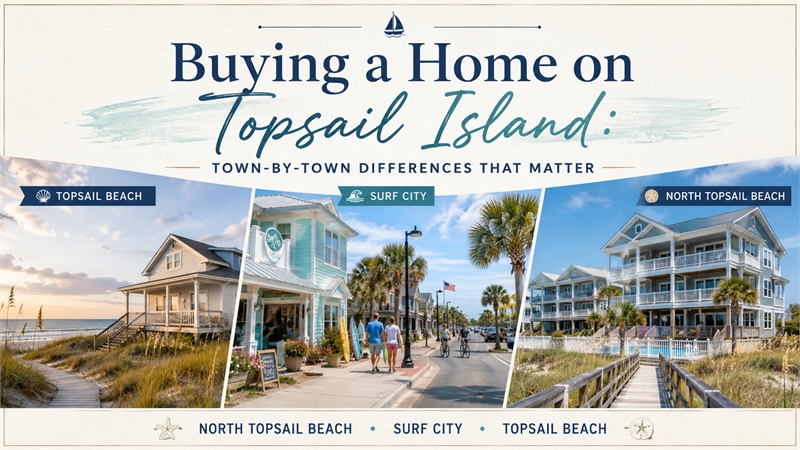
Because Topsail Island includes three municipalities—Surf City, North Topsail Beach, and Topsail Beach—HOA structures and insurance exposure can vary widely from one property to the next, even within the same town.
What Buyers Should Expect From HOAs on Topsail Island
Homeowners’ associations are common on Topsail Island, particularly for condominiums and planned communities. An HOA typically governs shared elements such as roofs, exterior walls, common walkways, parking areas, and amenities. Buyers should understand that HOA rules are not standardized across the island.
Some associations are highly structured, with professional management, detailed reserve studies, and regular maintenance schedules. Others may be smaller, owner-managed associations with fewer financial safeguards. These differences can affect monthly dues, special assessment risk, and long-term property condition.
Before purchasing, buyers should review governing documents carefully, including declarations, bylaws, budgets, reserve balances, and meeting minutes. These materials often reveal how an association handles maintenance, repairs, insurance claims, and unexpected expenses.
Condo Purchases: Shared Ownership Comes With Shared Risk
Condominium ownership on Topsail Island is popular due to oceanfront access and lower purchase price points compared to single-family homes. However, condos also introduce shared financial and insurance responsibilities that buyers must evaluate closely.
In many condo communities, the association insures the exterior structure, roof, and common elements, while individual owners insure the interior of their unit. This split coverage can affect deductibles, claims handling, and lender requirements. Buyers should confirm what the master insurance policy covers and what remains the owner’s responsibility.
Lenders may also impose stricter requirements on condo purchases, including minimum reserve funding levels, owner-occupancy ratios, and limits on deferred maintenance. These factors can affect financing approval even when a buyer is otherwise well qualified.
Insurance on Topsail Island: Not All Policies Are the Same
Insurance is one of the most significant ownership considerations for coastal property. Policies may include a combination of homeowners’ insurance, wind and hail coverage, and flood insurance, depending on location, elevation, and construction type.
Insurance costs are influenced by factors such as proximity to the ocean, flood zone designation, base flood elevation, building materials, roof type, and the age of the structure. Condominium buyers must also account for the association’s master policy and how deductibles are allocated among owners.
Buyers should obtain insurance quotes early in the process rather than waiting until after contract acceptance. This allows time to identify coverage gaps, affordability concerns, or lender-required adjustments before closing.
How HOA Decisions Affect Insurance and Long-Term Costs
HOA management decisions can directly impact insurance premiums and insurability. Deferred maintenance, underfunded reserves, or unresolved repair issues may increase premiums or reduce available coverage options. In some cases, insurers may impose higher deductibles or exclusions based on building condition or claim history.
Buyers reviewing HOA records should look for patterns related to maintenance delays, recurring claims, or unresolved structural issues. These details may not be immediately visible in listing descriptions but can have long-term financial consequences.
Town Location Matters More Than Many Buyers Expect
While HOA governance is property-specific, town jurisdiction also plays a role. Zoning, building codes, and enforcement practices differ between Surf City, North Topsail Beach, and Topsail Beach. These differences can influence renovation approvals, repair timelines, and rebuilding requirements after storm events.
Buyers should avoid assuming that HOA rules alone govern a property. Municipal regulations and permitting requirements may apply in addition to association rules, creating overlapping layers of compliance.
Private Insurance Carriers vs. the North Carolina Joint Underwriting Association (NCJUA)
Buyers purchasing property on Topsail Island often encounter two broad insurance paths: coverage through a private insurance carrier or placement through the North Carolina Joint Underwriting Association, commonly referred to as the NCJUA or the North Carolina Wind Pool. Understanding the distinction between these options is important, particularly for coastal properties with higher wind and storm exposure.
Private insurance carriers may offer homeowners’ policies that include wind coverage, flood exclusions, and varying deductible structures. Availability through private carriers depends on several property-specific factors, including construction type, roof age, elevation, distance from the ocean, prior claim history, and overall risk profile. When private coverage is available, terms, premiums, and deductibles can vary widely between insurers.
The NCJUA exists to provide wind and hail coverage when private insurers decline to offer it due to elevated risk. Properties insured through the NCJUA typically require separate policies for non-wind hazards, such as fire or liability, and often require a separate flood insurance policy as well. Buyers should understand that placement with the NCJUA is not optional when private wind coverage is unavailable, and it can affect overall insurance cost and policy structure.
Insurance eligibility can change over time. A property that qualifies for private wind coverage at purchase may later be placed with the NCJUA due to changes in underwriting standards, claim history, or property condition. Conversely, some properties initially insured through the NCJUA may later qualify for private coverage after improvements, mitigation measures, or changes in market conditions.
Because insurance requirements can directly affect financing, closing timelines, and long-term ownership costs, buyers should obtain insurance quotes early in the purchase process and confirm whether coverage is being offered by a private carrier or through the NCJUA. Understanding this distinction helps buyers evaluate affordability, deductible exposure, and future insurability without assumptions.
Frequently Asked Questions About HOA, Condo, and Insurance Issues on Topsail Island
Do all condos on Topsail Island have HOAs?
Yes. Condominium ownership on Topsail Island includes membership in a homeowners’ association responsible for common elements and governance. Rules, dues, and management quality vary by community.
What should buyers review in HOA documents before making an offer?
Buyers should review the declaration, bylaws, current budget, reserve balances, recent meeting minutes, and any history of special assessments. These documents help reveal financial stability and maintenance practices.
Is insurance included in HOA dues?
HOA dues often include the cost of the association’s master insurance policy, but this policy typically does not cover the interior of individual units. Buyers usually need a separate policy for interior coverage and personal property.
Why do insurance costs vary so much between similar properties?
Insurance pricing is affected by flood zone designation, elevation, construction type, roof condition, claim history, and proximity to the ocean. Two similar-looking properties can have very different insurance profiles.
Can HOA issues affect my ability to get a mortgage?
Yes. Lenders may deny financing if an HOA has inadequate reserves, excessive deferred maintenance, or a high percentage of investor-owned units. These factors are evaluated during the loan approval process.
Does town location affect insurance requirements?
Town boundaries alone do not set insurance pricing, but zoning, development patterns, and enforcement standards can influence rebuilding requirements and risk exposure, which insurers consider.
Who pays the deductible if there is a major insurance claim?
Deductible responsibility varies by HOA and by policy language. Some associations assess deductibles across all owners, while others allocate costs based on affected units. Buyers should confirm this in writing.
For more information check out The Complete Buyer’s Guide to Topsail Island Real Estate, a broader resource designed to help buyers understand the local market, property options, and ownership considerations.
Keep reading