Insurance Considerations for Buyers on Topsail Island
A buyer-focused guide to insurance considerations on Topsail Island, explaining FEMA flood zones, wind and hail coverage, and how total insurance costs affect affordability.
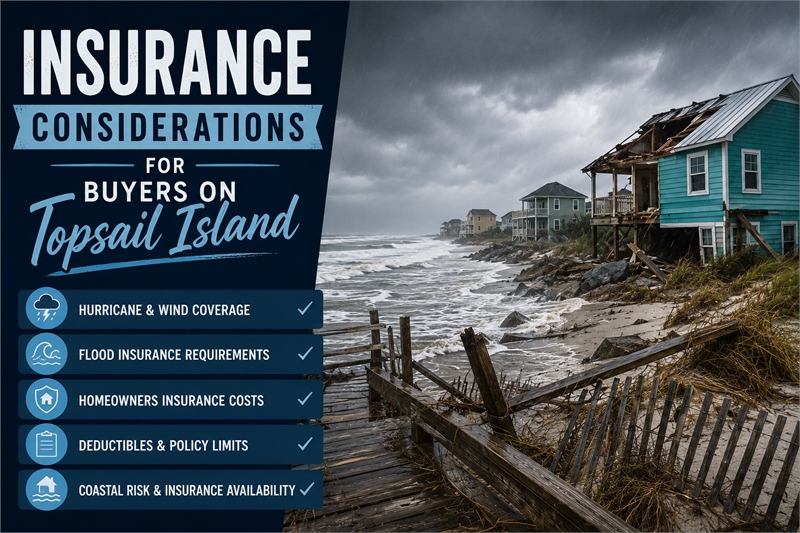
Flood Zones, Wind Coverage, and Total Cost Awareness
Purchasing property on Topsail Island involves insurance considerations that differ from inland real estate. Because the island is a coastal barrier island, buyers must account for flood exposure, wind and hail risk, and how multiple insurance policies interact. Understanding these factors early is essential when evaluating overall affordability and long-term ownership costs.
Insurance requirements do not apply uniformly across the island. Instead, they vary based on location, elevation, property type, and lender guidelines.
Flood Zones and FEMA Designations
Flood insurance requirements on Topsail Island are primarily driven by FEMA flood zone classifications. These designations indicate relative flood risk and determine whether flood insurance is mandatory for properties with a mortgage.
VE Zones
VE zones represent coastal high-hazard areas subject to wave action during storm events. Properties in VE zones are typically located closest to the ocean.
Common characteristics include:
- Mandatory flood insurance for mortgaged properties
- Higher flood insurance premiums
- Additional building standards related to elevation and construction
VE zones are most often associated with oceanfront and near-ocean properties.
AE Zones
AE zones indicate areas with a one-percent annual chance of flooding but without the same level of wave action found in VE zones.
For properties in AE zones:
- Flood insurance is typically required by lenders
- Premiums are often lower than VE zones but still significant
- Elevation certificates may be used to help determine rates
Many soundside and interior neighborhoods on Topsail Island fall within AE zones.
X Zones
X zones are considered lower-risk flood areas. Flood insurance is not typically required by lenders for properties in X zones, though it may still be recommended.
Important considerations:
- Flood insurance is optional but often encouraged
- Premiums are generally lower
- Flood events can still occur despite lower-risk designation
Some interior areas and higher-elevation properties on the island may be classified as X zones.
Wind and Hail Coverage
In addition to flood insurance, coastal properties on Topsail Island generally require separate wind and hail coverage.
Standard homeowners insurance policies often exclude or limit wind-related damage in coastal areas. As a result, buyers may need:
- A standalone wind and hail policy
- A wind endorsement through a specialized insurer
- Coverage coordinated with homeowners insurance
Wind and hail coverage is particularly important for:
- Oceanfront homes
- Properties exposed to open water
- Homes with older roofs or exterior materials
Premiums and deductibles for wind coverage can vary widely depending on property characteristics and insurer requirements.
Coordinating Multiple Insurance Policies
Coastal homeowners on Topsail Island often carry multiple insurance policies, which may include:
- Homeowners insurance
- Flood insurance
- Wind and hail insurance
- HOA master policies (for condominiums)
Understanding how these policies work together is essential. Buyers should review:
- Coverage limits and exclusions
- Deductible structures
- Responsibility split between individual owners and HOAs
For condominium properties, HOA master insurance policies may cover portions of the building structure, while unit owners remain responsible for interior coverage and personal property.
Insurance and Financing Requirements
Insurance requirements are closely tied to mortgage approval.
Lenders typically require:
- Proof of flood insurance when applicable
- Wind and hazard coverage that meets loan standards
- Active policies prior to closing
Insurance costs are factored into monthly housing expenses and can influence loan qualification. Buyers should obtain insurance estimates early in the purchase process to avoid affordability surprises.
Evaluating Total Insurance Costs
One of the most important considerations for buyers is understanding total insurance cost, not just individual premiums.
Total insurance expense depends on:
- Flood zone designation
- Distance from the ocean or sound
- Property elevation and construction type
- Roof age and materials
- HOA coverage structure
These costs can materially affect long-term ownership affordability and should be evaluated alongside taxes, HOA dues, and maintenance expenses.
Planning Ahead as a Buyer
Because insurance requirements vary by property, buyers are encouraged to:
- Confirm flood zone classification early
- Request insurance quotes during the due diligence period
- Review HOA insurance documents for condominiums
- Discuss coverage requirements with lenders and insurers
Early planning reduces transaction delays and supports informed decision-making.
Frequently Asked Questions (FAQ)
Is flood insurance required for all properties on Topsail Island?
No. Flood insurance requirements depend on FEMA flood zone designation and lender guidelines. Properties in VE and AE zones typically require coverage.
What is the difference between VE and AE zones?
VE zones are coastal high-hazard areas with wave action, while AE zones have flood risk without wave action. VE zones generally carry higher premiums.
Do buyers need separate wind insurance?
Often, yes. Many coastal homeowners insurance policies exclude wind damage, requiring a separate wind and hail policy.
Are insurance costs the same across the island?
No. Costs vary significantly based on location, elevation, property type, and construction details.
Do condominiums handle insurance differently?
Yes. Condominium HOAs typically carry master policies, but unit owners still need individual coverage. Buyers should review HOA insurance documents carefully.
This guide is included in The Complete Buyer’s Guide to Topsail Island Real Estate, a broader resource designed to help buyers understand the local market, property options, and ownership considerations.
Keep reading