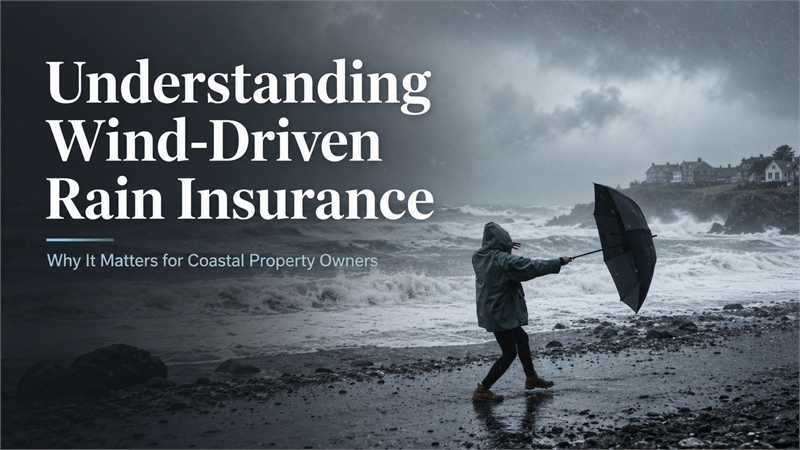
Understanding Wind-Driven Rain Insurance: Why It Matters for Coastal Property Owners
Wind-driven rain can cause major storm damage even when buildings look intact. Learn how policies treat this risk, how coastal condo associations insure storm damage, and why surplus lines carriers may offer coverage when standard insurers do not.
The Overlooked Insurance Risk Facing Coastal Property Owners
Living along the North Carolina coast offers incredible advantages — ocean views, coastal communities, and a lifestyle built around the water. But coastal living also comes with a reality that many property owners don’t fully understand until after a storm: not all water damage during storms is treated the same by insurance policies.
One of the most misunderstood causes of property damage along the coast is wind-driven rain. Many homeowners assume that if their property is insured for windstorm damage, then rain entering during that storm must also be covered. Unfortunately, insurance coverage often depends on how the water entered the building.
In many situations, rain damage is only covered if wind first damages the structure, creating an opening for water to enter. When rain enters a building without a storm-caused opening, the damage may fall into a different category known as wind-driven rain.
For coastal property owners, condominium associations, and commercial buildings, understanding how wind-driven rain works — and how insurance policies treat it — is an important part of protecting property from unexpected financial risk.
What Is Wind-Driven Rain?
Wind-driven rain occurs when strong winds push rain horizontally against a building, forcing water into small openings in the exterior envelope.
Instead of falling straight down like typical rainfall, storm winds can drive rain sideways or upward against a structure. Under these conditions, rain may enter through areas such as:
● window frames
● door seals
● roof flashing
● attic vents
● siding seams
● electrical or plumbing penetrations
Unlike typical storm damage, wind-driven rain often occurs without the building being structurally damaged first.
The building envelope may appear intact, but wind pressure pushes rain through small vulnerabilities in the exterior.
This difference is extremely important in insurance policies.
Many policies require that wind first create a storm-caused opening before water damage is covered. When rain enters without that opening, coverage may depend on specific policy language or endorsements.
To better understand how this situation can happen in real coastal storms, consider the following example…
A coastal condominium experiences heavy rain during a tropical storm. Wind does not tear off roofing or break windows, but rain is forced through roof flashing and attic vents. Several units experience ceiling leaks. Because no storm-created opening occurred, coverage may depend on policy language or wind-driven rain endorsements.
Why Wind-Driven Rain Is a Major Coastal Risk
Properties located near the ocean face weather conditions very different from inland areas.
Coastal storms frequently produce:
● sustained high winds
● strong gusts
● heavy rainfall
● long duration storm exposure
When these conditions combine, rain can be driven horizontally against buildings for extended periods.
This type of exposure can push water into places where normal rainfall would never reach.
Even well-constructed buildings can experience water intrusion during storms that produce:
● hours of wind-driven rain
● hurricane rain bands
● strong coastal wind pressure
Over time, water entering through small openings can cause significant interior damage.
This may include:
● soaked insulation
● damaged drywall
● warped flooring
● electrical system exposure
● mold growth
Because coastal buildings face these conditions regularly, wind-driven rain is one of the most common sources of interior water damage in coastal communities.
Wind Damage vs Wind-Driven Rain: Why the Difference Matters
One of the most confusing aspects of storm insurance coverage is the difference between wind damage and wind-driven rain damage.
While both occur during storms, insurance policies often treat them differently.
Wind Damage
Wind damage occurs when wind physically damages part of the structure, creating an opening in the building envelope.
Examples include:
● shingles blown off a roof
● a tree limb breaking a window
● siding torn away from a building
● doors forced open by wind
● roof sections lifted during a storm
When wind creates a structural opening, rain entering through that opening is usually covered under standard windstorm insurance coverage.
Wind-Driven Rain
Wind-driven rain occurs when rain enters the building without wind first damaging the structure.
Instead of a storm opening the building envelope, wind pressure forces rain through small vulnerabilities.
Examples include rain entering through:
● window seals
● roof seams
● flashing joints
● siding gaps
● ventilation openings
In these situations, the structure may appear intact, but wind pushes rain into the building through weak points.
This is the key distinction that many insurance policies rely on when determining coverage.
How Insurance Policies Handle Wind-Driven Rain
Insurance policies often distinguish between different types of water intrusion.
Coverage decisions typically depend on how the water entered the building.
Some policies cover rain damage only when:
● wind first damages the structure
● a storm-created opening exists
When rain enters without structural damage, coverage may depend on:
● policy exclusions
● endorsements
● special coverage provisions
This is why reviewing policy language carefully is important for coastal property owners.
Hurricane and Windstorm Deductibles
Another important factor for coastal property owners to understand is the role of hurricane and windstorm deductibles in insurance policies.
Unlike many other types of insurance deductibles that are fixed dollar amounts, hurricane deductibles are often calculated as a percentage of the insured value of the building.
For coastal properties, these deductibles commonly range from:
● 1% to 5% of the insured property value
For example, if a condominium building is insured for $10 million, a 3% hurricane deductible could mean the association is responsible for the first $300,000 in damages before insurance coverage begins.
Because of these large deductibles, even insured storm damage can result in significant out-of-pocket costs for property owners or condominium associations.
These deductibles are one reason coastal property owners should carefully review their insurance policies and understand how storm damage coverage applies before the next major storm occurs.
Understanding HO-3 Homeowners Insurance Policies
The HO-3 policy is the most common homeowners insurance policy used for single-family homes.
This policy generally covers:
● the structure of the home
● personal belongings
● liability protection
● additional living expenses if the home becomes uninhabitable
In many situations, HO-3 policies cover rain damage when wind first damages the structure.
For example, if wind blows shingles off the roof and rain enters the attic, the resulting water damage is typically covered.
However, if rain enters without structural wind damage, coverage may depend on the policy wording and exclusions.
This is one reason homeowners along the coast should review their policies carefully and discuss storm coverage with their insurance agent.
Understanding HO-6 Insurance for Condominium Owners
Condominium owners typically carry a different type of policy known as HO-6 insurance.
Unlike a homeowners policy, an HO-6 policy generally covers the interior portions of the unit, including:
● drywall
● flooring
● cabinets
● appliances
● personal belongings
● liability protection
The exterior structure of the building — including the roof and exterior walls — is usually insured by the condominium association through a master commercial insurance policy.
This creates a situation where two different policies may apply to storm damage:
● the HOA’s commercial policy
● the unit owner’s HO-6 policy
Understanding how these policies interact can become especially important when water intrusion occurs during storms.
Wind-Driven Rain and Condominium Buildings
Large condominium buildings can be particularly vulnerable to wind-driven rain.
These structures often include:
● large roof surfaces
● multiple exterior walls
● hundreds of windows and penetrations
● complex roofing systems
During storms, rain entering through roof seams or flashing can travel through insulation and framing cavities before appearing in units below.
This can make identifying the source of the leak extremely difficult.
A single intrusion point in the roof may affect multiple units, sometimes several floors apart.
Because of this complexity, wind-driven rain events in condominium buildings can lead to extensive repairs and complicated insurance claims.
Commercial Insurance Policies for Condominium Associations
Condominium associations typically insure the building through a commercial property insurance policy.
These policies may cover:
● building structures
● roofs
● exterior walls
● mechanical systems
● common areas
Because condominium buildings can represent millions of dollars in property value, these policies often involve significant coverage limits.
Commercial policies may also include special provisions such as:
● hurricane deductibles
● windstorm deductibles
● coverage endorsements
In some cases, associations may obtain coverage through specialty insurance markets that provide more flexible policy structures.
Why Coastal Properties Sometimes Use Surplus Lines Insurance
In high-risk coastal areas, traditional insurance companies may limit the types of coverage they offer.
When standard insurers decline coverage or impose significant restrictions, property owners sometimes obtain insurance through surplus lines insurers.
These specialty markets insure properties that traditional carriers consider higher risk.
While premiums may be higher, surplus lines insurers may offer:
● customized coverage structures
● specialty endorsements
● expanded coverage options for coastal buildings
These markets play an important role in insuring coastal properties that might otherwise struggle to obtain coverage.
Preventing Wind-Driven Rain Intrusion
Insurance coverage is only part of protecting a building from storm damage.
Maintaining the building envelope is critical for preventing water intrusion.
Important areas to inspect regularly include:
● roof systems
● flashing around penetrations
● window seals
● door seals
● siding joints
● attic ventilation openings
Routine inspections and maintenance can help identify small vulnerabilities before they allow storm water to enter the building.
For coastal properties exposed to wind and salt air, proactive maintenance is especially important.
Frequently Asked Questions About Wind-Driven Rain
What exactly is wind-driven rain?
Wind-driven rain occurs when strong winds force rain horizontally into a building through small openings in the exterior envelope.
Unlike typical rainfall, the water is pushed sideways or upward by wind pressure, allowing it to enter through areas such as windows, roof seams, or siding joints.
Why is wind-driven rain so common on the coast?
Coastal storms frequently produce strong winds combined with heavy rainfall.
These conditions create sustained horizontal rain that can push water into buildings through vulnerable areas of the structure.
Even storms that are not hurricanes can produce wind-driven rain conditions.
Isn’t rain during storms always covered by insurance?
Not always.
Many policies cover rain only if wind first damages the structure, creating an opening for water to enter.
If rain enters without structural wind damage, coverage may depend on the policy language or endorsements.
What is the difference between HO-3 and HO-6 insurance?
HO-3 policies insure single-family homes and cover both the structure and personal property.
HO-6 policies insure condominium units and generally cover only the interior of the unit and personal belongings.
The building structure itself is typically insured by the condominium association.
Who pays for wind-driven rain damage in a condominium?
Responsibility often depends on the condominium declaration and the insurance policies involved.
The association’s master policy usually covers structural elements, while the unit owner’s HO-6 policy covers interior finishes and personal property.
Determining responsibility can sometimes be complicated when water intrusion occurs.
Can wind-driven rain cause mold problems?
Yes.
Moisture trapped inside walls or ceilings can lead to mold growth within 24–48 hours if the area is not properly dried.
Because water can travel through building cavities, mold issues may sometimes appear far from the original leak source.
Does wind-driven rain require a storm-created opening?
Many insurance policies distinguish between water entering a building through a storm-created opening and water entering through existing vulnerabilities.
If wind damages the building — such as removing shingles or breaking a window — rain entering through that opening is typically covered under windstorm coverage.
However, if rain enters the building without structural wind damage, coverage may depend on whether the policy includes wind-driven rain coverage or endorsements.
This distinction is one of the most common sources of confusion for coastal property owners.
Can wind-driven rain damage occur even when a roof looks intact?
Yes.
Wind-driven rain can enter buildings through areas that appear structurally intact after a storm.
Common entry points include:
● roof flashing
● attic vents
● window seals
● siding seams
● exterior wall penetrations
Because these openings are often small, the building may not show obvious structural damage even though water has entered the structure.
Does the North Carolina Beach Plan cover wind-driven rain?
The North Carolina Beach Plan (NCJUA / NCIUA) primarily provides coverage for wind and hail damage for properties located in coastal areas where private insurers may limit coverage.
However, the specific endorsements and policy provisions available through the Beach Plan may differ from those offered through private commercial insurance policies.
Because of this, some property owners or condominium associations explore additional coverage options through other insurance markets.
Why do coastal condominium associations often use multiple insurance policies?
Large coastal condominium buildings often rely on multiple layers of insurance coverage.
These may include:
● the association’s master commercial policy
● unit owner HO-6 policies
● excess or umbrella coverage
● specialty endorsements or surplus lines policies
Because these buildings represent significant financial assets, insurance programs for condominium associations can be complex and may involve several different policies working together.
Why are coastal insurance premiums often higher?
Insurance premiums in coastal areas are influenced by several factors including:
● hurricane exposure
● windstorm risk
● storm surge potential
● historical storm losses
Because these risks are higher near the ocean, insurers often charge higher premiums or apply larger deductibles for coastal properties.
These pricing differences reflect the increased likelihood of storm-related claims.
What are surplus lines insurers?
Surplus lines insurers are insurance companies that specialize in covering risks that traditional insurance carriers may decline to insure.
These insurers commonly provide coverage for:
● coastal properties with hurricane exposure
● large condominium buildings
● high-value commercial properties
● properties with prior storm losses
Surplus lines markets play an important role in ensuring that coverage remains available for properties that may not qualify for traditional insurance programs.
Can wind-driven rain damage spread between condominium units?
Yes.
In multi-unit buildings, water entering through the roof or exterior walls can travel through structural cavities before appearing in a unit.
For example, water entering through roof flashing may travel through:
● attic insulation
● framing cavities
● ceiling spaces
before eventually appearing as a leak in a unit several floors below.
This can make determining the exact source of water intrusion more complicated in large buildings.
What should property owners do after a wind-driven rain event?
After a storm, property owners should inspect their property for signs of water intrusion.
Common warning signs include:
● ceiling stains
● damp drywall
● musty odors
● peeling paint
● wet insulation
If water intrusion is discovered, it is important to address the issue quickly to prevent further damage or mold growth.
Coastal Insurance Knowledge Protects Property Owners
For many coastal property owners, insurance policies are something they rarely think about until a storm causes damage.
But wind-driven rain represents one of the most misunderstood risks facing buildings near the ocean.
Storms that cause little visible structural damage can still produce significant interior water intrusion when wind pushes rain into vulnerable areas of a building.
By understanding how wind-driven rain works and how insurance policies treat this type of damage, homeowners, condominium associations, and businesses can better prepare for the unique risks of coastal living.
The Role of the North Carolina Beach Plan (NCJUA / NCIUA)
The North Carolina Joint Underwriting Association (NCJUA) and the North Carolina Insurance Underwriting Association (NCIUA) were created by the state to provide property insurance options for buildings located in coastal areas that cannot obtain coverage through the private insurance market.
Together, these programs are often referred to as the North Carolina Beach Plan.
The Beach Plan primarily provides wind and hail coverage for properties in coastal counties and high-risk areas where private insurers may limit their exposure.
However, the coverage options available through the Beach Plan may differ from those offered in the private insurance marketplace, and certain endorsements or policy provisions may not always be included in the same way as they might be in commercial policies offered through other insurers.
Because of these differences, property owners and condominium associations sometimes seek additional coverage options through other segments of the insurance market.
How Coastal Insurance Markets Work in North Carolina
Insurance coverage for coastal properties in North Carolina is typically provided through three different segments of the insurance market.
Understanding how these markets operate can help property owners better understand why coverage options may vary depending on the insurer involved.
Standard Insurance Carriers
Most homeowners and commercial properties obtain insurance through standard private insurance companies.
These insurers provide policies such as:
● homeowners insurance (HO-3 policies)
● condominium unit insurance (HO-6 policies)
● commercial property insurance
However, because coastal properties face higher exposure to hurricanes and severe storms, some insurers limit the types of coverage they offer in coastal areas or apply higher deductibles and underwriting restrictions.
The North Carolina Beach Plan (NCJUA / NCIUA)
When properties located in coastal areas cannot obtain wind coverage through standard insurance carriers, they may obtain coverage through the North Carolina Joint Underwriting Association (NCJUA) and the North Carolina Insurance Underwriting Association (NCIUA).
Together, these programs are commonly referred to as the North Carolina Beach Plan.
The Beach Plan was created by the state to ensure that coastal properties have access to essential wind and hail insurance coverage when the private insurance market is limited.
While the Beach Plan provides an important safety net for coastal insurance availability, its coverage structure may differ from policies offered through private insurers.
Surplus Lines and Specialty Insurance Markets
In situations where standard insurers or Beach Plan policies do not offer certain coverages, property owners may obtain insurance through surplus lines or specialty insurers.
These insurers operate in a specialized segment of the insurance industry designed to insure higher-risk properties that standard insurers may decline to cover.
Surplus lines insurers commonly provide coverage for:
● coastal condominium associations
● large commercial buildings
● high-value coastal real estate
● properties with significant storm exposure
While these policies may involve higher premiums or stricter underwriting requirements, they play an important role in ensuring that coverage options remain available for properties located in higher-risk coastal areas.
Clarifying the Availability of Wind-Driven Rain Coverage
In researching the availability of wind-driven rain coverage in coastal North Carolina, I recently contacted the North Carolina Department of Insurance seeking clarification about the current insurance marketplace.
I presented the following question to the Department:
If possible, could you please confirm whether the following statement is accurate from a regulatory or market-availability perspective:
“Wind-driven rain coverage for commercial condominium associations in coastal North Carolina has remained available through surplus lines or specialty carriers since approximately 2020, even if it was not offered through certain standard market carriers.”
The inquiry was directed to Barry Smith, Deputy Director of Communications and Safety Officer at the North Carolina Department of Insurance.
Mr. Smith returned my inquiry and confirmed that this statement accurately reflects the North Carolina insurance marketplace, noting that wind-driven rain coverage can still be obtained through surplus lines or specialty insurance carriers, even when certain standard market insurers or programs may not offer that coverage.
Why Surplus Lines Markets Exist
Surplus lines insurers operate in a specialized segment of the insurance industry designed to insure risks that standard market carriers may not be willing to underwrite.
These markets commonly insure properties such as:
● coastal condominium associations
● commercial buildings in hurricane-prone areas
● high-value coastal real estate
● properties with prior storm losses
Because surplus lines insurers focus on higher-risk exposures, they often provide more flexible policy structures than standard insurers.
However, this flexibility typically comes with trade-offs, including:
● higher premiums
● higher deductibles
● coverage sublimits
● stricter underwriting requirements
Despite these factors, surplus lines markets play a critical role in providing insurance options for coastal properties that may otherwise have limited coverage availability.
Understanding the Source of the Confusion
Much of the confusion surrounding wind-driven rain insurance stems from the difference between coverage not being offered by a particular insurer and coverage not existing in the insurance marketplace at all.
A specific insurance carrier, program, or underwriting association may choose not to offer a particular endorsement based on its risk tolerance or underwriting guidelines.
However, that does not necessarily mean that the coverage is unavailable through other segments of the insurance industry.
In many cases, insurance brokers who specialize in coastal or commercial property insurance may explore additional coverage options through specialty or surplus lines insurers.
These insurers exist specifically to insure higher-risk properties and often provide coverage options that standard market carriers decline.
For coastal property owners and condominium associations, understanding how these different insurance markets operate can help ensure that insurance decisions are based on a full understanding of the available options within the broader insurance marketplace.
Wind-driven rain remains one of the most misunderstood causes of storm damage for coastal properties. By understanding how wind-driven rain differs from traditional windstorm damage—and how coverage may exist across standard insurers, the North Carolina Beach Plan, and surplus lines markets—coastal homeowners, condominium associations, and commercial property owners can make more informed insurance decisions. In coastal communities where storms are inevitable, clarity about insurance coverage can make a significant difference when the next storm arrives.
Keep reading