Flood Zones, Elevation, and Coastal Risk on Topsail Island
An educational guide explaining flood zones, elevation, insurance, and coastal risk considerations buyers must understand before purchasing on Topsail Island.
What Home Buyers Must Understand Before Purchasing
Flood risk is one of the most critical—and often misunderstood—factors when purchasing coastal property. On Topsail Island, flood zones, elevation, and coastal exposure directly affect insurance costs, financing eligibility, long-term ownership risk, and resale value.
This guide explains how flood designations work, why elevation matters, and what buyers should evaluate before purchasing property on Topsail Island or nearby coastal communities.
Understanding Flood Zones on Topsail Island
Flood zones are established by the Federal Emergency Management Agency (FEMA) and published on Flood Insurance Rate Maps (FIRMs). These zones identify areas with varying levels of flood risk.
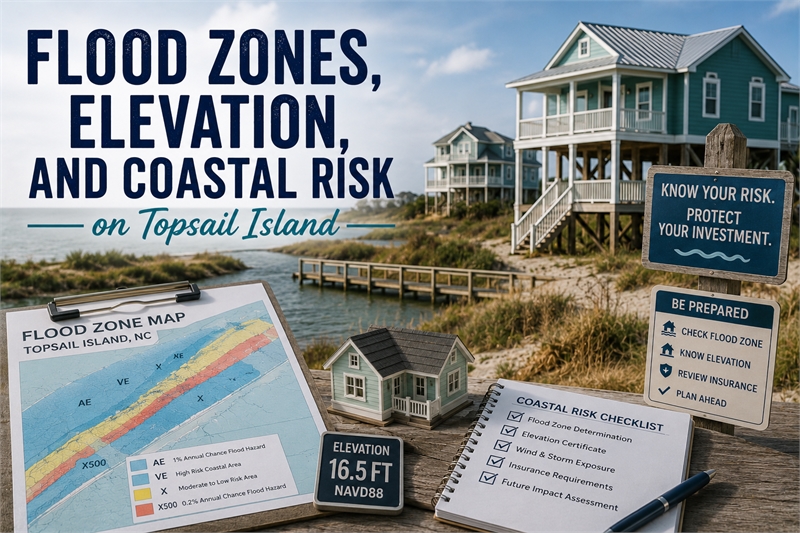
Common Flood Zone Designations
- VE Zones – High-risk coastal areas subject to wave action
- AE Zones – High-risk flood areas without wave velocity
- X Zones – Moderate to minimal flood risk areas
Flood zone classification affects:
- Flood insurance requirements
- Insurance premiums
- Lender requirements
- Building and renovation standards
Flood zone status applies to the structure, not the owner.
Why Elevation Matters More Than Flood Zone Alone
Flood zone designation is only part of the risk equation. Elevation relative to Base Flood Elevation (BFE) often has a greater impact on insurance cost and risk exposure.
Key Elevation Concepts
- Base Flood Elevation (BFE): Estimated height floodwaters may reach during a base flood event
- Finished Floor Elevation: Height of the lowest living floor
- Elevation Certificate: Survey document showing structure height relative to BFE
Homes elevated above BFE often qualify for:
- Lower flood insurance premiums
- Broader insurance options
- Improved long-term insurability
Two homes in the same flood zone can have very different insurance costs based solely on elevation.
Coastal Risk Factors Buyers Should Evaluate
Flood risk is not uniform across Topsail Island. Buyers should evaluate multiple factors together:
- Proximity to ocean, sound, or inlet
- Dune systems and shoreline stability
- Historical flood claims (property-specific)
- Storm surge exposure
- Local drainage patterns
Flood risk assessment is property-specific, not neighborhood-wide.
How Flood Zones Affect Financing
Most lenders require flood insurance when a structure is located in a high-risk flood zone (AE or VE).
Implications include:
- Mandatory flood insurance coverage
- Increased monthly ownership costs
- Lender-mandated coverage limits
- Potential loan restrictions for non-conforming structures
Flood zone determination is made by the lender using FEMA maps at the time of loan underwriting.
Flood Insurance Considerations
Flood insurance is regulated separately from homeowners insurance.
Key points buyers should understand:
- Flood insurance is typically issued through the National Flood Insurance Program (NFIP) or private carriers
- Premiums vary based on elevation, zone, and structure type
- Prior flood claims can affect availability and cost
- Coverage limits may differ from property value
Buyers should request insurance quotes before closing, not after.
Renovations, Improvements, and Compliance
For existing homes, renovations can trigger compliance requirements.
Potential implications include:
- Elevation requirements for substantial improvements
- Increased insurance costs after renovations
- Permit and code compliance thresholds
Buyers planning renovations should confirm:
- Current elevation status
- Local permitting rules
- FEMA substantial improvement thresholds
Frequently Asked Questions (FAQ)
Does being in a flood zone mean a property will flood?
No. Flood zones indicate statistical risk, not certainty. Many properties in high-risk zones never experience flooding, while some in low-risk zones do.
Is flood insurance required in X zones?
Typically no, unless required by a lender. However, flood damage can still occur in X zones, and insurance may still be advisable.
Can flood insurance premiums change over time?
Yes. Premiums can change due to:
- FEMA map updates
- Policy reforms
- Claims history
- Changes in elevation documentation
Flood insurance should be reviewed periodically.
Does elevation eliminate flood risk?
No. Elevation reduces risk and insurance cost but does not eliminate flood exposure entirely, especially during extreme events.
Can I get an elevation certificate after purchasing?
Yes. A licensed surveyor can prepare one, but costs and timing should be considered. Having it before purchase is preferable.
Are condos treated differently than single-family homes?
Yes. Condominium flood insurance is often structured differently, with master policies and individual unit considerations depending on HOA coverage.
Key Takeaways for Buyers
Before purchasing on Topsail Island, buyers should:
- Verify flood zone designation
- Review elevation relative to BFE
- Obtain flood insurance estimates early
- Understand lender requirements
- Evaluate long-term ownership and resale implications
Flood risk is manageable—but only when properly understood.
This article is part of a broader real estate education series covering coastal ownership risks, insurance considerations, and buying strategies for Topsail Island and surrounding coastal communities. For more information check out The Complete Buyer’s Guide to Topsail Island Real Estate, a broader resource designed to help buyers understand the local market, property options, and ownership considerations.
Keep reading