
Wind-Driven Rain vs Roof Leaks
Wind-driven rain and roof leaks are often investigated differently during storm damage claims. Learn how insurance companies determine the cause of water intrusion.
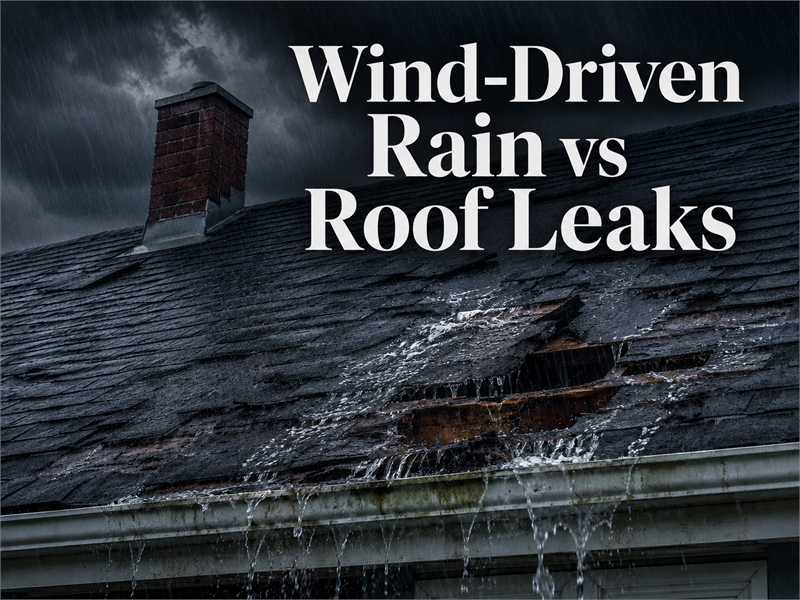
How Insurance Companies Determine the Difference During Storm Damage Claims
Why the Difference Between Wind-Driven Rain and Roof Leaks Matters
When coastal storms strike homes and condominium buildings, property owners sometimes discover water damage inside their structures even when the building appears largely intact.
Ceiling stains, wet insulation, or dripping water may appear during or shortly after a storm event.
When this occurs, one of the most important questions becomes how the water entered the building.
Insurance companies often investigate whether the damage resulted from wind-driven rain during the storm or from a pre-existing roof leak caused by deterioration or maintenance issues.
This distinction can be extremely important because insurance policies often treat these situations differently.
Understanding how insurers evaluate these scenarios can help property owners better understand the insurance claims process following coastal storms.
What Is Wind-Driven Rain?
Wind-driven rain occurs when strong winds push rain horizontally against buildings.
During hurricanes and severe coastal storms, sustained winds can drive rain against roofs, walls, windows, and doors for extended periods of time.
Unlike normal rainfall that falls vertically, wind-driven rain can penetrate building components that are normally protected from water exposure.
Common entry points for wind-driven rain include:
• flashing seams around roof penetrations
• window and door frames
• siding joints
• attic ventilation openings
• roof edges and valleys
If rain is forced into these areas during a storm, water may enter the building envelope even if the roof structure itself remains largely intact.
What Is a Roof Leak?
A roof leak typically refers to water entering a building due to a failure or deterioration in the roofing system.
Roof leaks may occur for several reasons unrelated to storms, including:
• aging roofing materials
• deteriorated flashing
• improper roof installation
• long-term maintenance issues
• structural movement over time
In these situations, rainwater may enter through openings that developed gradually over time rather than being caused by a sudden storm event.
Because roof leaks can develop slowly, they sometimes go unnoticed until heavy rainfall exposes the vulnerability.
Why Insurance Companies Distinguish Between These Causes
Insurance policies generally cover sudden and accidental damage caused by covered events.
Storm damage caused by wind or wind-driven rain may fall within this category depending on the policy language.
However, insurance policies often exclude damage caused by long-term deterioration, wear and tear, or lack of maintenance.
Because of these distinctions, insurers must determine whether the water intrusion resulted from a sudden storm event or from a pre-existing condition in the roofing system.
This determination often plays a key role in how a claim is evaluated.
How Insurance Adjusters Investigate Water Intrusion Claims
When an insurance claim involves interior water damage after a storm, adjusters often conduct a detailed investigation to determine the source of the moisture.
The investigation may include several steps.
Exterior Roof Inspection
The adjuster may inspect the roof to identify visible storm damage such as:
• lifted shingles
• missing roofing materials
• damaged flashing
• punctures from debris
Evidence of storm damage can support the conclusion that wind created an opening through which water entered.
Interior Damage Inspection
Interior inspections may focus on identifying the location and pattern of water damage.
Adjusters may look for:
• ceiling stains
• wet insulation
• water trails on framing
• moisture in wall cavities
These patterns may help investigators trace the path of the water intrusion.
Building Envelope Inspection
Adjusters may also inspect the building envelope for vulnerabilities such as deteriorated sealants, siding seams, or flashing failures.
These areas can sometimes allow water intrusion during storms even without visible structural damage.
Why Water Intrusion Paths Can Be Difficult to Trace
Water entering a building rarely travels in a straight line.
Instead, moisture may move along structural components such as roof decking, framing members, or insulation before becoming visible inside the building.
For example, water entering near a roof penetration may travel several feet before appearing as a ceiling stain.
In multi-story buildings, water entering near the roof may travel through wall cavities before appearing in lower units.
Because of these factors, identifying the original entry point of water intrusion can require careful investigation.
Wind-Driven Rain vs Roof Leaks: Key Differences
Wind-driven rain and roof leaks can both cause interior water damage, but they usually involve different causes, timing, entry points, and investigation issues.
Cause: Wind-driven rain is usually caused by storm winds pushing rain into small openings in the building envelope. A roof leak, however, is often caused by gradual deterioration or failure of the roofing system.
Timing: Wind-driven rain typically occurs during severe storms, hurricanes, tropical systems, or strong coastal rain events. Roof leaks may occur during ordinary rainfall if the roofing system has aged, failed, or developed weak points over time.
Entry points: Wind-driven rain may enter through window frames, flashing seams, attic vents, siding joints, roof edges, or other small openings exposed to wind pressure. Roof leaks more commonly involve damaged roofing materials, deteriorated flashing, worn seams, or other roofing system failures.
Investigation focus: When investigating wind-driven rain, adjusters usually look at storm conditions, wind direction, building envelope vulnerabilities, and how rain may have been forced into the structure. When investigating a roof leak, they often focus more heavily on maintenance history, prior leaks, roof age, deterioration, and the condition of the roofing system.
Understanding these differences helps explain why insurance companies may treat storm-related water intrusion differently from water damage caused by long-term roof deterioration.
Why Coastal Buildings Experience Wind-Driven Rain More Often
Coastal communities experience environmental conditions that make wind-driven rain more common than in many inland areas.
These conditions include:
• sustained hurricane winds
• prolonged heavy rainfall
• exposure to ocean moisture
• wind pressure against large building surfaces
During major storms, rain may be forced against buildings from multiple directions for extended periods of time.
Even well-maintained buildings may experience water intrusion if storm conditions are severe enough.
How Building Maintenance Can Influence Investigations
Maintenance history is often reviewed during storm damage investigations.
If records show that a roof had existing problems before the storm, insurers may consider whether those conditions contributed to the damage.
Examples of maintenance issues may include:
• long-standing roof leaks
• deteriorated flashing
• prior repair history
• aging roofing materials
Conversely, documentation showing regular inspections and maintenance may help demonstrate that the building was in good condition prior to the storm.
Why Condominium Buildings Present Unique Challenges
Multi-unit condominium buildings often present more complex water intrusion investigations.
Water entering the roof or exterior walls may travel through structural cavities before appearing in interior units.
This can create situations where:
• the source of water is far from where it becomes visible
• multiple units experience water damage
• the building envelope contains numerous potential entry points
Because of these complexities, engineers or building envelope specialists may sometimes assist in investigations involving large condominium buildings.
Frequently Asked Questions About Wind-Driven Rain and Roof Leaks
Is wind-driven rain the same as a roof leak?
No.
Wind-driven rain occurs when storm winds push rain into building openings, while roof leaks typically result from deterioration or failure of the roofing system.
Can wind-driven rain enter a building even if the roof looks intact?
Yes.
Wind-driven rain may enter through flashing seams, window frames, vents, or siding joints without visible roof damage.
Why do insurance companies investigate water intrusion claims carefully?
Because policies often distinguish between sudden storm damage and long-term deterioration.
Determining the cause of the water intrusion helps insurers apply policy coverage correctly.
Can water appear far from where it entered the building?
Yes.
Water may travel through structural cavities before becoming visible inside the building.
Why are wind-driven rain issues more common in coastal areas?
Strong winds and prolonged storms along the coast can push rain horizontally against buildings for extended periods of time.
Why Understanding the Difference Helps Property Owners
For coastal property owners, understanding how insurance companies evaluate storm damage claims can help clarify the investigation process that occurs after major storms.
The distinction between wind-driven rain and roof leaks often plays an important role in determining how water intrusion claims are evaluated.
By understanding how investigators analyze storm conditions, building envelope vulnerabilities, and roof maintenance history, property owners can better understand how insurance policies are applied to storm damage scenarios.
In hurricane-prone coastal regions, knowledge of these insurance concepts can provide valuable insight into the complex relationship between storms, building construction, and property insurance coverage.
This article is part of our larger wind-driven rain insurance feature guide for coastal property owners: Understanding Wind-Driven Rain Insurance: Why It Matters for Coastal Property Owners
Keep reading