
Water Intrusion in Coastal Buildings: Why Storm Damage Often Starts Small
Water intrusion is one of the most common causes of storm damage in coastal buildings. Learn how wind-driven rain enters structures and why hidden moisture damage occurs after coastal storms.
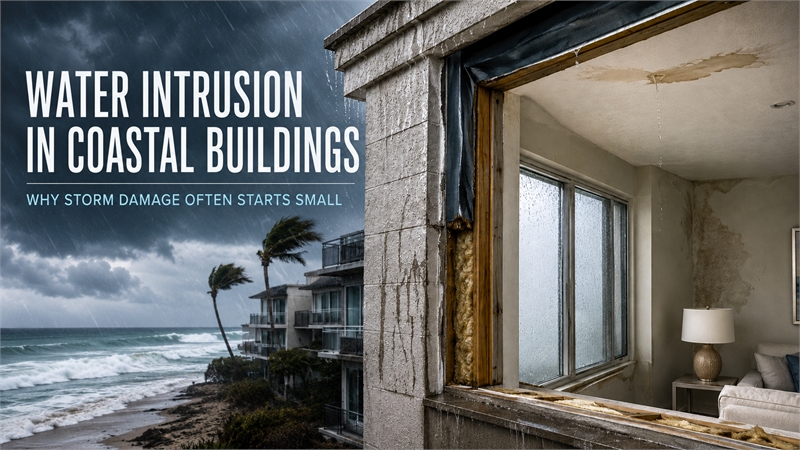
Why Coastal Storms Often Cause Water Intrusion
Coastal communities along the North Carolina shoreline experience some of the most powerful weather conditions in the eastern United States. Hurricanes, tropical storms, and strong coastal weather systems can expose buildings to sustained winds, heavy rainfall, and prolonged storm conditions.
While dramatic structural damage from hurricanes often receives the most attention, many storm-related property losses actually occur due to a quieter and less visible problem: water intrusion.
Water intrusion occurs when rain or moisture enters a building through openings or vulnerabilities in the building envelope. During coastal storms, strong winds can drive rain horizontally against structures for hours, allowing water to penetrate areas that may normally remain dry during ordinary rainfall.
This type of intrusion can affect homes, condominium buildings, and commercial properties across coastal North Carolina. Even buildings that appear structurally intact after a storm may experience hidden moisture damage inside walls, ceilings, or insulation.
Understanding why water intrusion occurs—and how coastal buildings become vulnerable to it—can help property owners better protect their investments from storm damage.
What Is Water Intrusion in Buildings?
Water intrusion refers to the entry of water into a building through openings, cracks, or weaknesses in the exterior building envelope.
The building envelope includes the components of a structure designed to keep weather outside and protect the interior environment. These components typically include:
• roof systems
• exterior walls
• windows and doors
• flashing around penetrations
• siding and exterior cladding
• vents and utility openings
When these components fail or deteriorate, rainwater can enter the building structure.
In coastal storms, strong wind pressure can push water into these small openings even when the building appears undamaged.
This process is one of the primary causes of interior storm damage in coastal communities.
What Is the Building Envelope?
The building envelope is the outer shell of a building that separates the interior space from the outside environment.
Its purpose is to protect the structure from:
• rain
• wind
• temperature changes
• humidity
• environmental exposure
A typical building envelope includes several layers designed to prevent moisture penetration. These layers may include roofing materials, waterproof membranes, flashing, siding, and sealants around windows and doors.
If any component of this protective system deteriorates or becomes damaged, water may be able to enter the structure during heavy storms.
Because coastal buildings face strong winds and salt-air exposure, maintaining the building envelope is especially important in seaside environments.
How Wind-Driven Rain Causes Water Intrusion
One of the most common sources of water intrusion during coastal storms is wind-driven rain.
Unlike normal rainfall, wind-driven rain occurs when strong winds force rain horizontally against the sides and roofs of buildings.
This horizontal rain exposure allows water to enter areas that would not normally experience direct rainfall.
Examples of vulnerable entry points include:
• window frames
• roof flashing
• attic vents
• siding seams
• exterior wall penetrations
• door seals
During prolonged storms, wind-driven rain can continue pushing moisture into these openings for hours.
Even small vulnerabilities in the building envelope can allow water to penetrate the structure under these conditions.
Why Water Intrusion Often Goes Undetected
One of the challenges associated with storm-related water intrusion is that damage may not be immediately visible.
Water entering a building may travel through structural cavities before becoming visible inside the structure.
For example, water entering through a roof seam may travel along roof decking or framing members before appearing as a ceiling stain several feet away.
In multi-story condominium buildings, water entering near the roof may appear inside units several floors below.
Because of this, the location where water becomes visible inside a building is not always the location where it originally entered.
This can make diagnosing storm-related water intrusion difficult after a storm.
Common Sources of Water Intrusion in Coastal Buildings
Several building components are particularly vulnerable to water intrusion during coastal storms.
Understanding these vulnerabilities can help property owners identify potential risks.
Roof Flashing Failures
Flashing is a thin material installed around roof penetrations such as vents, chimneys, and skylights.
Its purpose is to direct water away from vulnerable areas of the roof.
If flashing deteriorates or becomes improperly sealed, rainwater may enter the roof structure during storms.
Window and Door Seal Deterioration
Sealants around windows and doors can degrade over time due to sun exposure, salt air, and weathering.
If seals fail, wind-driven rain may enter around window frames during storms.
Siding and Exterior Wall Seams
Exterior siding systems include joints and seams that must remain properly sealed.
When these seals fail, water may enter the wall cavity during prolonged storm exposure.
Roof Membrane Failures
Many coastal buildings rely on waterproof roof membranes.
If these membranes deteriorate or develop seams that separate, water intrusion may occur during heavy rainfall.
Ventilation Openings
Attic vents and ventilation openings allow air to circulate through the building.
During strong storms, wind-driven rain may enter through these openings if protective barriers fail.
Why Coastal Buildings Are Especially Vulnerable
Buildings located near the ocean face environmental conditions that accelerate wear and tear on exterior components.
Salt air, humidity, and strong coastal winds can cause materials to deteriorate more quickly than in inland environments.
These conditions may affect:
• sealants and caulking
• metal flashing components
• roofing materials
• exterior fasteners
As these components age, the likelihood of water intrusion during storms increases.
Routine inspections and preventative maintenance are therefore essential for coastal buildings.
Water Intrusion vs Structural Storm Damage
Many property owners assume that storm damage must involve dramatic structural damage.
However, some of the most costly property damage results from water intrusion that occurs without visible structural damage.
Structural Storm Damage
Examples of structural damage include:
• roofs torn off during hurricanes
• broken windows caused by debris
• siding ripped from buildings
• structural framing damage
These types of damage are typically easy to identify after a storm.
Water Intrusion Damage
Water intrusion damage may occur when:
• rain enters through flashing seams
• moisture penetrates siding joints
• water enters through ventilation openings
These issues may not be immediately visible but can still cause significant interior damage.
How Water Intrusion Can Lead to Mold Growth
Moisture trapped inside walls, ceilings, or insulation can create ideal conditions for mold growth.
Mold can begin developing within 24 to 48 hours if moisture is not properly removed.
Mold growth may lead to:
• damage to drywall and insulation
• deterioration of building materials
• indoor air quality concerns
Because water intrusion can remain hidden inside structural cavities, mold problems sometimes develop long after the initial storm event.
Why Regular Inspections Are Important
Routine inspections can help identify potential water intrusion risks before storms occur.
Property owners and condominium associations often inspect:
• roofing systems
• flashing around penetrations
• window and door seals
• siding seams
• attic ventilation openings
Early detection of deteriorated sealants or damaged flashing can prevent small vulnerabilities from becoming major sources of water intrusion during storms.
Frequently Asked Questions About Water Intrusion
What is the difference between a roof leak and water intrusion?
A roof leak typically refers to water entering through a specific failure point in the roofing system.
Water intrusion is a broader term that describes water entering the building through any part of the building envelope.
Can water intrusion occur even if the roof looks intact?
Yes.
Wind-driven rain can enter through flashing, vents, or other small openings even when the roof appears undamaged.
Why is water intrusion common in coastal storms?
Strong winds combined with heavy rainfall can push water horizontally against buildings for extended periods, allowing water to enter through small vulnerabilities.
How can property owners reduce water intrusion risk?
Regular inspections, maintenance of roof systems, and replacement of deteriorated sealants can significantly reduce the likelihood of water intrusion.
Why can water appear far from where it entered the building?
Water can travel through insulation, framing cavities, or ceiling spaces before becoming visible inside the building.
This can make identifying the original entry point difficult.
Why Understanding Water Intrusion Helps Protect Coastal Properties
Storm damage along the coast is not always dramatic or immediately visible. In many cases, the most significant damage occurs when water enters the building envelope and spreads through structural cavities.
Understanding how water intrusion occurs can help property owners take proactive steps to protect their buildings.
Regular maintenance, inspection of exterior components, and awareness of common vulnerability points can reduce the likelihood of costly interior damage during storms.
For coastal property owners, recognizing the risks associated with water intrusion is an important part of protecting buildings from the unique weather conditions that accompany life near the ocean.
This article is part of our larger wind-driven rain insurance feature guide for coastal property owners: Understanding Wind-Driven Rain Insurance: Why It Matters for Coastal Property Owners
Keep reading