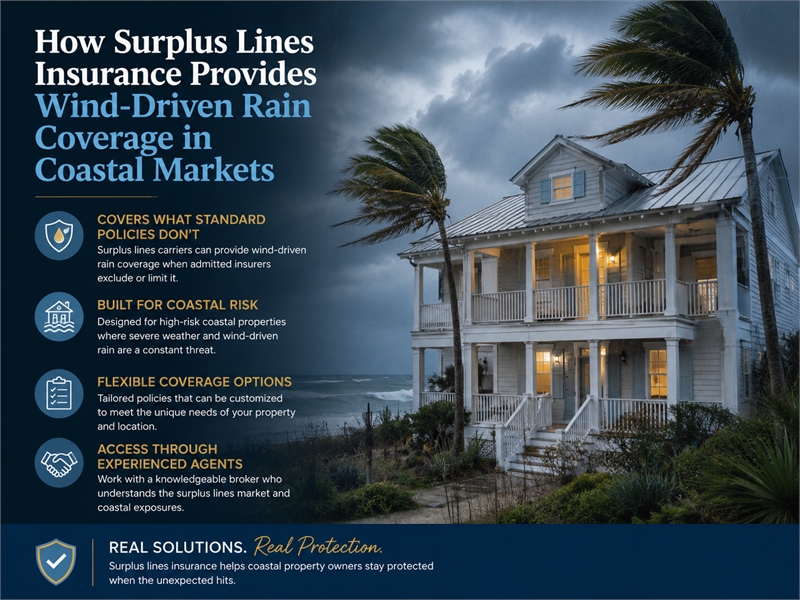
How Surplus Lines Insurance Provides Wind-Driven Rain Coverage in Coastal Markets
Surplus lines insurance provides coverage for higher-risk coastal properties when standard insurers cannot. Learn how specialty markets insure complex coastal risks.
Understanding Specialty Insurance for Coastal Property Risks
Property owners in coastal regions often face unique insurance challenges that do not occur in many inland areas. Hurricanes, tropical storms, and prolonged wind events can expose buildings to severe wind damage, storm surge, and wind-driven rain.
Because of these risks, certain types of coverage may not always be available through traditional insurance markets. In some situations, property owners, commercial building managers, and condominium associations may obtain coverage through what are known as surplus lines or specialty insurance markets.
Surplus lines insurance plays an important role in coastal insurance markets by providing coverage for risks that standard insurance companies may not be able to insure.
Understanding how surplus lines insurance works can help property owners better understand how certain specialized coverages may be available in coastal environments.
What Is Surplus Lines Insurance?
Surplus lines insurance refers to coverage provided by insurance companies that are not licensed as admitted insurers in a particular state but are still authorized to insure certain types of risks through licensed surplus lines brokers.
These insurers often specialize in insuring risks that are considered unusual, complex, or higher risk than those typically insured by standard insurance companies.
Surplus lines insurers may provide coverage for properties such as:
• large commercial buildings
• coastal properties exposed to hurricane risk
• condominium associations with complex insurance needs
• industrial facilities
• specialty business operations
These insurers operate within a regulatory framework that allows them to insure risks that may not be available through standard admitted insurance markets.
Why Coastal Properties Sometimes Require Specialty Insurance
Coastal properties often face environmental risks that can make them more difficult to insure through standard insurance carriers.
These risks may include:
• hurricane-force winds
• prolonged heavy rainfall
• wind-driven rain exposure
• coastal flooding risks
• salt air exposure affecting building materials
Because of these factors, standard insurance carriers sometimes limit the types of coverage they provide in coastal regions.
In these situations, property owners may work with insurance brokers to explore coverage options available through specialty insurance markets.
How Surplus Lines Markets Differ from Standard Insurance Markets
Standard insurance companies that are licensed in a state are often referred to as admitted insurers.
Admitted insurers must follow state regulations governing policy forms, pricing structures, and underwriting requirements.
Surplus lines insurers operate differently.
While they are still regulated in important ways, surplus lines insurers may have greater flexibility in underwriting risks and structuring policy terms.
Some key differences include:
Feature
Admitted Insurance
Surplus Lines Insurance
State licensing
Licensed in the state
Not licensed as admitted insurers
Policy forms
Often standardized
May be customized
Rate regulation
Typically regulated
Greater flexibility
Types of risks
Standard risks
Higher or specialized risks
Because of this flexibility, surplus lines insurers may provide coverage for risks that admitted insurers decline to insure.
How Surplus Lines Insurance Is Accessed
Property owners cannot usually purchase surplus lines insurance directly.
Instead, coverage is typically arranged through licensed surplus lines brokers.
The general process often involves several steps.
Risk Evaluation
The insurance broker evaluates the property and its risk characteristics.
For coastal buildings, this may include factors such as:
• proximity to the ocean
• construction materials
• roof systems
• prior loss history
• hurricane exposure
Market Search
The broker may first attempt to obtain coverage through admitted insurance companies.
If admitted insurers decline the risk or cannot offer the desired coverage, the broker may explore options through surplus lines markets.
Specialty Underwriting
Surplus lines insurers evaluate the risk and may offer policy terms tailored to the property.
These policies may sometimes include:
• higher premiums
• specialized deductibles
• coverage limitations or sublimits
• customized endorsements
Wind-Driven Rain Coverage in Coastal Insurance Markets
Wind-driven rain is a storm condition that occurs when strong winds push rain horizontally against buildings.
During hurricanes and severe coastal storms, sustained winds can force rain against roofs, exterior walls, windows, and ventilation openings for extended periods.
Under these conditions, rainwater may enter buildings through small openings in the building envelope.
Because wind-driven rain can cause interior water damage even when the building appears structurally intact, some property owners seek insurance coverage that addresses this exposure.
In some situations, certain specialty insurance markets may offer policy endorsements addressing wind-driven rain exposure for commercial buildings or condominium associations.
The availability and terms of these endorsements may vary depending on the insurer and underwriting conditions.
Why Surplus Lines Markets Play an Important Role in Coastal Insurance
Surplus lines insurers often help fill gaps in insurance availability when certain types of coverage are difficult to obtain through standard markets.
In coastal regions, these markets may help insure risks associated with:
• hurricane wind exposure
• large commercial buildings
• complex condominium properties
• specialized coastal construction
Because coastal storm risks can be complex, surplus lines insurers may play a role in providing insurance solutions tailored to these environments.
Considerations When Evaluating Surplus Lines Insurance
Property owners considering surplus lines coverage may review several factors with their insurance broker.
These factors may include:
• policy coverage scope
• deductibles and sublimits
• financial strength of the insurer
• premium costs
• policy exclusions
Because surplus lines policies may differ from standard policies, reviewing the policy language carefully is important.
Insurance brokers who specialize in commercial or coastal insurance markets often assist property owners in evaluating these options.
Surplus Lines Insurance and Condominium Associations
Many condominium associations insure large multi-unit buildings that can involve significant property values and complex building systems.
Because of the size and exposure of these properties, associations sometimes obtain insurance through specialty markets.
Surplus lines insurers may provide coverage options for certain condominium associations when standard insurance markets cannot offer coverage for specific risks.
The availability of these policies can depend on many factors, including building construction, location, loss history, and market conditions at the time coverage is sought.
Frequently Asked Questions
What is surplus lines insurance?
Surplus lines insurance is coverage provided by insurers that specialize in higher-risk or specialized properties that may not be insured through standard insurance markets.
Why do coastal properties sometimes use surplus lines insurance?
Coastal properties often face hurricane risks and other exposures that may make coverage more difficult to obtain through standard insurance companies.
Can surplus lines insurers provide coverage for commercial buildings?
Yes. Surplus lines insurers commonly insure commercial properties, large buildings, and complex risks that require specialized underwriting.
Are surplus lines insurers regulated?
Yes. Surplus lines insurers operate within regulatory frameworks that govern how surplus lines coverage is placed and sold.
Do condominium associations sometimes use surplus lines insurance?
Yes. Some condominium associations obtain insurance through surplus lines markets when standard insurance markets cannot provide coverage for certain risks.
Why Understanding Specialty Insurance Markets Matters
Insurance availability in coastal regions can change over time as insurers evaluate storm exposure and underwriting risks.
Surplus lines markets play an important role in providing insurance options for properties that may not fit within standard insurance programs.
For property owners, commercial building managers, and condominium associations located in hurricane-prone coastal regions, understanding how specialty insurance markets operate can provide valuable insight into how coverage options may be structured for complex coastal risks.
Keep reading