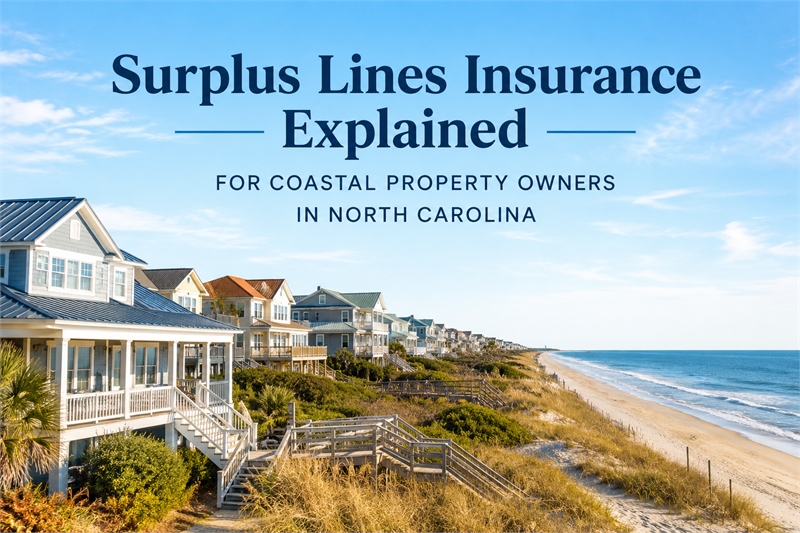
Surplus Lines Insurance Explained for Coastal Property Owners in North Carolina
Surplus lines insurance helps insure coastal properties when traditional insurers restrict coverage. Learn how specialty insurance markets work and why they matter for coastal buildings in North Carolina.
As a local North Carolina coastal property owner with multiple beachfront properties on barrier islands, I have seen firsthand how difficult and expensive coastal insurance can become when hurricanes, wind-driven rain, salt air, and storm exposure are part of everyday ownership. Specialty insurance markets, including surplus lines insurers, exist because some coastal properties carry risks that traditional insurance companies may limit, restrict, or decline altogether. This article explains how these specialty markets help insure higher-risk coastal homes, condominium associations, commercial buildings, and beachfront properties when standard coverage options are not enough.
Why Coastal Properties Sometimes Need Specialized Insurance
Property insurance for coastal buildings is often very different from insurance coverage for inland homes and businesses. Buildings located near the ocean face higher exposure to hurricanes, strong winds, salt air corrosion, and prolonged storm conditions.
Because of these risks, traditional insurance companies sometimes limit the types of coverage they offer for coastal properties.
When standard insurers restrict coverage or decline to insure certain risks, property owners may obtain coverage through what are known as surplus lines insurers.
Surplus lines insurance plays a critical role in the coastal insurance marketplace. These insurers provide coverage for properties that standard insurers may consider too risky to insure under traditional underwriting guidelines.
For property owners in coastal North Carolina—including condominium associations, commercial buildings, and high-value coastal real estate—surplus lines insurance markets can provide important coverage options that might not otherwise be available.
Understanding how these specialty insurance markets work can help coastal property owners make more informed decisions about protecting their buildings from storm risks.
What Is Surplus Lines Insurance?
Surplus lines insurance refers to insurance coverage provided by companies that operate outside the traditional admitted insurance market.
Admitted insurers are insurance companies licensed and regulated directly by the state in which they operate. These insurers must file policy forms and rates with state regulators and comply with certain underwriting rules.
Surplus lines insurers operate under a different regulatory structure.
Rather than being admitted insurers within the state, surplus lines insurers provide coverage through licensed surplus lines brokers when coverage cannot be obtained through standard insurers.
This structure allows surplus lines insurers to offer policies for higher-risk properties that traditional insurers may decline to cover.
Common characteristics of surplus lines insurance include:
• coverage for higher-risk properties
• flexible underwriting structures
• customized policy language
• specialized endorsements
• coverage options not always available in the standard market
Because surplus lines insurers operate in specialized segments of the insurance industry, they often provide coverage solutions for risks that fall outside the guidelines of traditional insurance companies.
Why Coastal Properties Often Require Surplus Lines Insurance
Coastal properties face unique environmental risks that can make them difficult to insure through traditional insurance markets.
Some of the most common risks evaluated by insurers include:
• hurricane exposure
• windstorm damage potential
• storm surge exposure
• prolonged wind-driven rain events
• corrosion from salt air
• prior storm loss history
These factors increase the potential cost of insurance claims.
As a result, some standard insurance companies choose to limit their exposure in coastal areas or decline certain types of coverage.
When this occurs, insurance brokers may turn to surplus lines insurers to obtain coverage for the property.
Surplus lines markets help ensure that coastal property owners still have access to insurance coverage even when traditional insurers restrict their underwriting.
Types of Properties Commonly Insured Through Surplus Lines Markets
Surplus lines insurers commonly provide coverage for properties that involve higher levels of risk or specialized insurance needs.
Examples include:
• coastal condominium associations
• large commercial buildings
• beachfront hotels and resorts
• high-value coastal homes
• properties with prior storm losses
• buildings with complex construction features
In coastal North Carolina communities such as Topsail Island, Surf City, and Wrightsville Beach, surplus lines markets play an important role in maintaining access to property insurance coverage.
Without these specialty markets, many coastal buildings might struggle to obtain adequate insurance protection.
How Surplus Lines Insurance Differs From Standard Insurance
Although surplus lines policies often provide similar types of coverage to standard property insurance policies, there are several important differences.
Regulatory Structure
Standard insurers must file their policy forms and rates with state insurance regulators.
Surplus lines insurers are not required to file rates or policy forms in the same way, which allows them greater flexibility when designing coverage for complex risks.
Policy Customization
Surplus lines insurers often provide customized policy wording or endorsements tailored to specific risks.
This flexibility can allow coverage for exposures that standard insurers decline.
For example, certain types of water intrusion or wind-driven rain exposures may be addressed through specialized policy structures in surplus lines markets.
Premium Levels
Because surplus lines insurers often insure higher-risk properties, premiums may be higher than those offered by traditional insurance companies.
These higher premiums reflect the increased risk associated with insuring coastal buildings exposed to storms.
Deductible Structures
Surplus lines policies may also include larger deductibles, particularly for hurricane or windstorm claims.
Percentage-based hurricane deductibles are common for coastal properties insured through both standard and surplus lines markets.
How Surplus Lines Insurance Is Regulated
Although surplus lines insurers operate outside the admitted insurance market, they are still subject to important regulatory safeguards.
Surplus lines insurance transactions are typically conducted through licensed surplus lines brokers who are authorized to place coverage with approved surplus lines insurers.
These brokers must comply with regulatory requirements designed to ensure transparency and consumer protection.
In many cases, surplus lines coverage can only be used when the broker confirms that the coverage is not available through standard admitted insurers.
This process helps maintain a balance between the traditional insurance market and the specialty insurance market.
Why Surplus Lines Markets Are Important for Coastal Communities
Surplus lines insurers play a critical role in maintaining access to property insurance in areas where storm risk is higher.
Without these markets, many coastal communities might face significant challenges obtaining insurance coverage for buildings exposed to hurricanes and severe weather.
Surplus lines markets help fill this gap by providing coverage options for properties that traditional insurers may decline to insure.
This ensures that property owners, condominium associations, and businesses in coastal regions can continue to protect their buildings from potential losses.
How Surplus Lines Insurance May Address Coastal Storm Risks
Because surplus lines insurers specialize in higher-risk properties, they often develop policy structures that address the specific risks associated with coastal buildings.
These risks may include:
• hurricane wind damage
• wind-driven rain exposure
• water intrusion risks
• high-value coastal real estate
Depending on the policy structure, surplus lines insurers may offer endorsements or specialized coverage provisions addressing these exposures.
However, coverage terms can vary significantly between insurers, which makes it important for property owners to review policies carefully with experienced insurance professionals.
Why Insurance Brokers Are Important in Coastal Insurance Markets
Insurance brokers who specialize in coastal or commercial property insurance often play a key role in helping property owners navigate complex insurance markets.
These professionals may help evaluate:
• available insurance carriers
• coverage structures
• deductible options
• policy exclusions
• endorsement options
When standard insurers restrict coverage, brokers may explore options through surplus lines markets to identify alternative coverage solutions.
Working with experienced brokers can help property owners better understand the insurance options available for coastal buildings.
Why Coastal Insurance Premiums Can Be Higher
Insurance premiums are influenced by the likelihood of claims and the potential severity of losses.
Because coastal buildings face higher exposure to hurricanes and severe storms, insurers often charge higher premiums to reflect the increased risk.
Several factors influence coastal insurance pricing, including:
• proximity to the ocean
• elevation and flood exposure
• building construction type
• prior storm damage history
• building age and maintenance
Surplus lines insurers evaluate these factors when determining premiums and coverage terms for coastal properties.
Frequently Asked Questions About Surplus Lines Insurance
What is the difference between admitted and surplus lines insurers?
Admitted insurers are licensed directly by the state and must file their policy forms and rates with regulators.
Surplus lines insurers operate outside the admitted insurance market and provide coverage through licensed surplus lines brokers when standard insurance options are not available.
Why would a property need surplus lines insurance?
Properties may require surplus lines insurance when standard insurers decline coverage due to higher risk factors.
This is common for coastal buildings exposed to hurricanes or severe storms.
Are surplus lines insurers legitimate insurance companies?
Yes.
Many surplus lines insurers are large, financially strong companies that specialize in insuring complex risks.
They operate under regulatory frameworks designed to ensure that coverage remains available for higher-risk properties.
Is surplus lines insurance more expensive?
Surplus lines insurance often involves higher premiums than standard insurance policies.
This reflects the increased risk associated with the properties being insured.
However, these policies provide important coverage options that might not otherwise be available.
Can condominium associations use surplus lines insurance?
Yes.
Large condominium associations, particularly those located in coastal areas, sometimes obtain insurance coverage through surplus lines markets when traditional insurers restrict certain coverage options.
Understanding Coastal Insurance Markets Helps Property Owners Protect Their Investment
Insurance coverage is one of the most important financial protections for property owners in coastal regions.
Because hurricanes and severe storms are part of life along the North Carolina coast, understanding how the insurance marketplace works can help property owners make informed decisions about protecting their buildings.
Surplus lines insurance markets play a critical role in ensuring that coverage remains available for properties facing higher levels of risk.
By understanding how these specialty insurance markets operate, coastal property owners can better evaluate their insurance options and work with professionals to obtain coverage that reflects the unique challenges of coastal living.
Keep reading