
Hurricane Deductibles Explained: How Hurricane Deductibles Work for Coastal Insurance
Hurricane deductibles are percentage-based deductibles applied during named storms. Learn how they affect insurance claims for coastal properties.
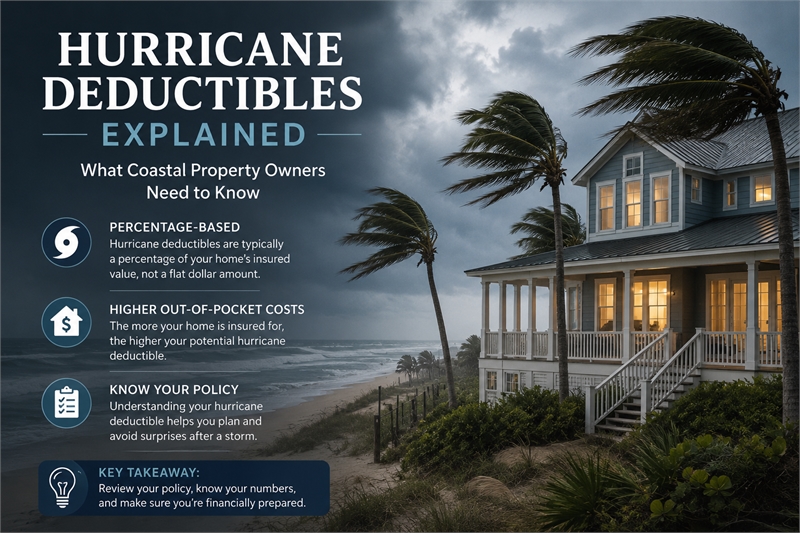
How Hurricane Deductibles Work for Coastal Property Insurance Policies
Why Hurricane Deductibles Exist
Property owners along the coast face insurance risks that differ significantly from those in inland areas. Hurricanes and tropical storms can produce widespread damage affecting thousands of homes and buildings at the same time.
Because hurricanes can generate extremely large insurance losses, many coastal property insurance policies include a special type of deductible known as a hurricane deductible.
Unlike standard insurance deductibles, hurricane deductibles are usually calculated as a percentage of the insured value of the property, rather than a fixed dollar amount.
Understanding how hurricane deductibles work can help property owners better understand how insurance coverage applies when a major storm causes damage.
What a Hurricane Deductible Is
A hurricane deductible is the portion of storm-related damage that the policyholder is responsible for paying before insurance coverage applies.
In many coastal insurance policies, this deductible is expressed as a percentage of the insured value of the structure.
For example:
• A property insured for $400,000 with a 2% hurricane deductible would have a deductible of $8,000
• A property insured for $1,000,000 with a 3% hurricane deductible would have a deductible of $30,000
These deductibles apply specifically to damage caused by hurricanes or named tropical storms, depending on how the policy defines storm events.
Why Hurricane Deductibles Are Percentage-Based
Insurance companies use percentage-based hurricane deductibles to help manage the financial risk associated with catastrophic storm losses.
A single hurricane can damage thousands of properties across a region. If every policy had only a small fixed deductible, insurers could face extremely large losses from a single event.
By applying a percentage deductible tied to the value of the property, insurers help ensure that deductibles scale appropriately with the size and value of the insured structure.
This approach spreads the financial risk between the policyholder and the insurer during major storm events.
When Hurricane Deductibles Apply
Hurricane deductibles typically apply when damage occurs during an officially declared hurricane or named tropical storm.
The exact trigger depends on the policy language, but it commonly involves factors such as:
• the storm being officially named by the National Hurricane Center
• the storm affecting the geographic area where the property is located
• the storm occurring during a specified time period defined in the policy
Policies often define the start and end of a hurricane event to determine when the deductible applies.
How Hurricane Deductibles Affect Storm Claims
When storm damage occurs, the hurricane deductible is applied to the covered damage amount before the insurance company pays the claim.
For example:
If a coastal property experiences $50,000 in covered hurricane damage and the policy includes a $10,000 hurricane deductible, the insurer may pay the remaining $40,000 after the deductible is applied.
This deductible represents the portion of the loss that the property owner is responsible for covering.
Hurricane Deductibles vs Standard Deductibles
Most property insurance policies include both a standard deductible and a hurricane deductible.
The standard deductible generally applies to most types of claims, such as:
• fire damage
• theft
• non-storm water damage
• certain accidental losses
The hurricane deductible applies specifically to damage caused by hurricanes or named tropical storms as defined in the policy.
Because hurricane deductibles are usually percentage-based, they are often larger than standard deductibles.
Hurricane Deductibles for Different Types of Coastal Properties
Hurricane deductibles may apply to many types of insured properties, including:
• residential homes
• rental properties
• commercial buildings
• mixed-use properties
• condominium association buildings
For large commercial or condominium properties with high insured values, percentage-based deductibles can represent significant amounts.
For example, a condominium building insured for $10 million with a 3% hurricane deductible would have a deductible of $300,000.
Because of this, understanding deductible structures is an important part of evaluating coastal insurance coverage.
How Deductibles May Vary by Policy
Hurricane deductibles can vary depending on several factors, including:
• the location of the property
• the insurer issuing the policy
• the level of risk associated with the building
• underwriting guidelines for coastal properties
Policies may include hurricane deductibles ranging from 1% to 5% of the insured value, depending on the insurer and the property’s exposure to storm risk.
Why Coastal Properties Often Have Higher Deductibles
Insurance companies must account for the increased risk associated with insuring properties located in hurricane-prone areas.
Higher deductibles help reduce the overall cost of insurance coverage and allow insurers to manage the financial exposure associated with catastrophic storms.
For property owners, this means that hurricane deductibles are often an important factor to consider when evaluating insurance policies for coastal properties.
Hurricane Deductibles and Large Storm Events
Major hurricanes can produce widespread damage affecting entire communities.
During these events, thousands of insurance claims may be filed across a region at the same time.
Percentage-based hurricane deductibles help insurance systems manage the financial impact of these large-scale events by distributing a portion of the loss across insured properties.
This structure allows insurers to continue offering coverage in areas where hurricane risk is significant.
Frequently Asked Questions
What is a hurricane deductible?
A hurricane deductible is the portion of storm-related damage that the policyholder must pay before insurance coverage applies when a hurricane or named tropical storm causes damage.
Why are hurricane deductibles based on percentages?
Percentage-based deductibles allow the deductible amount to scale with the insured value of the property, helping insurers manage large catastrophic losses.
Do hurricane deductibles apply to all types of property?
Hurricane deductibles may apply to residential homes, commercial buildings, rental properties, and condominium association properties located in coastal regions.
Are hurricane deductibles larger than standard deductibles?
Yes. Because they are often calculated as a percentage of the insured value, hurricane deductibles are usually larger than standard deductibles.
When does a hurricane deductible apply?
The deductible typically applies when damage occurs during a named hurricane or tropical storm as defined in the insurance policy.
Why Understanding Hurricane Deductibles Matters
Hurricane deductibles play an important role in how coastal property insurance policies function.
Because these deductibles can represent significant amounts—especially for large residential, commercial, or condominium properties—property owners benefit from understanding how they are calculated and when they apply.
For owners of coastal properties, knowledge of hurricane deductible structures can help clarify how insurance coverage works when major storms occur and how financial responsibility is shared between policyholders and insurers.
Keep reading