
How HO-3 Homeowners Insurance Treats Wind-Driven Rain and Storm Damage
HO-3 homeowners insurance policies commonly insure single-family homes. Learn how wind damage, wind-driven rain, and storm-created openings affect storm damage claims.
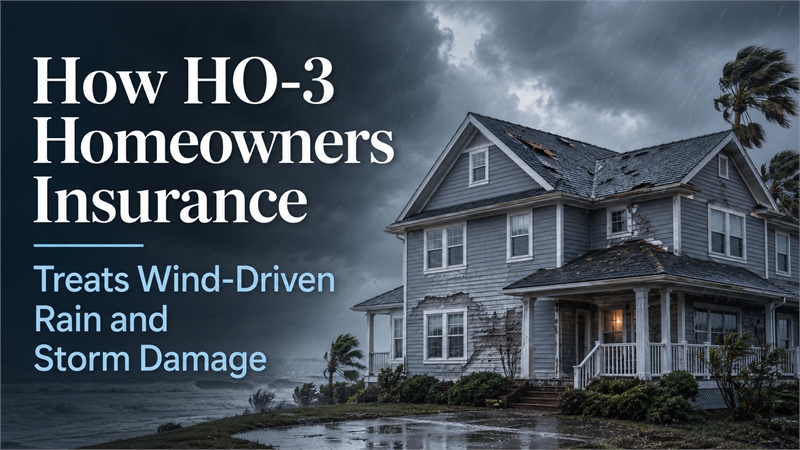
Understanding Storm Coverage in Residential Property Insurance
Homeowners living in coastal regions often face complex insurance questions after major storms. Hurricanes, tropical storms, and severe wind events can cause a wide range of damage to residential properties, including roof damage, broken windows, siding failures, and interior water intrusion.
One common concern after storms is water damage appearing inside the home even when the structure initially appears intact. Ceiling stains, wet insulation, or moisture inside walls may develop during or shortly after the storm.
In these situations, the way a homeowner’s insurance policy evaluates the damage may depend on how the water entered the building.
Most single-family homes in the United States are insured under a type of policy commonly known as an HO-3 homeowners insurance policy. Understanding how these policies treat wind damage, wind-driven rain, and water intrusion can help homeowners better understand how storm claims are evaluated.
What Is an HO-3 Homeowners Insurance Policy?
An HO-3 policy is the most common type of homeowners insurance used for single-family homes in the United States.
These policies typically provide coverage for:
• the dwelling structure
• attached structures such as garages
• personal property inside the home
• additional living expenses if the home becomes uninhabitable
• liability protection for accidents occurring on the property
HO-3 policies are often referred to as “open-peril” policies for the structure. This means the dwelling is generally covered for any cause of loss unless that cause is specifically excluded in the policy.
However, while the structure is typically insured on an open-peril basis, personal property coverage within the home is often insured on a named-peril basis, meaning only certain causes of loss are covered.
Because of these distinctions, understanding how wind and rain are addressed within the policy is important.
Wind Damage Coverage in HO-3 Policies
Wind damage is commonly one of the major causes of loss addressed in homeowners insurance policies.
Wind damage can occur during events such as:
• hurricanes
• tropical storms
• severe thunderstorms
• tornadoes
• strong wind events
Examples of wind damage to residential homes may include:
• shingles blown off the roof
• roof decking exposed after roofing materials are removed
• siding torn from exterior walls
• windows broken by wind-borne debris
• damage to gutters or roof flashing
When wind physically damages the structure, the resulting damage to the building may fall within the scope of coverage provided by the policy, subject to policy limits, deductibles, and exclusions.
How Wind-Driven Rain Can Affect Homes
Wind-driven rain occurs when strong winds push rain horizontally against a building.
Unlike normal rainfall that falls vertically, storm winds can force rain against roofs, exterior walls, windows, and doors for extended periods of time.
Under severe storm conditions, wind-driven rain may enter a building through areas such as:
• roof flashing seams
• window frames and seals
• door thresholds
• attic ventilation openings
• siding joints
• small gaps in the building envelope
When water enters through these areas, the building may appear structurally intact even though rain has entered the interior.
This type of water intrusion can sometimes create questions during storm damage claims.
Storm-Created Opening Provisions in Homeowners Policies
Many homeowners insurance policies contain language addressing rain entering a building during storms.
In many cases, rain entering a building may be covered when wind first damages the structure and creates an opening through which rain enters.
This concept is often described in insurance policies as a storm-created opening.
For example:
• hurricane winds remove shingles from a roof
• rain enters through the exposed roof area
• interior water damage occurs as a result
In this situation, the rain entering through the wind-damaged area may be treated as part of the windstorm loss.
Because of this, insurance investigations following storms often focus on determining whether wind first caused structural damage that allowed water to enter.
How Insurance Adjusters Evaluate Storm Damage Claims
When homeowners file insurance claims after major storms, adjusters often investigate several aspects of the property to determine how the damage occurred.
Roof Inspection
The roof is often one of the first areas examined during a storm damage investigation.
Adjusters may look for:
• missing or lifted shingles
• displaced roofing materials
• damaged flashing around roof penetrations
• punctures from wind-borne debris
Evidence of wind damage may help determine whether a storm-created opening occurred.
Exterior Building Inspection
Adjusters may also inspect exterior building components such as:
• siding and exterior wall systems
• windows and doors
• roof edges and valleys
• attic ventilation openings
Damage to these components can sometimes create pathways for water intrusion.
Interior Inspection
Interior inspections may focus on identifying patterns of moisture damage.
Investigators may look for:
• ceiling stains
• wet insulation
• moisture inside wall cavities
• water trails along framing members
These patterns can sometimes help determine how water traveled through the structure.
Why Water Intrusion Paths Can Be Difficult to Identify
Water entering a building during storms does not always appear where it entered.
Instead, moisture may travel along structural components such as:
• roof decking
• insulation layers
• framing members
• ceiling cavities
For example, water entering near a roof penetration may travel several feet before becoming visible as a ceiling stain.
Because of this, determining the exact entry point of storm water intrusion can sometimes require detailed inspection.
Why Coastal Homes Face Greater Storm Exposure
Homes located in coastal areas often experience environmental conditions that increase the risk of wind and rain damage.
These conditions may include:
• sustained hurricane winds
• prolonged heavy rainfall
• exposure to ocean moisture
• strong winds impacting large exterior surfaces
Storms affecting coastal communities may expose homes to wind and rain for extended periods, increasing the potential for both wind damage and wind-driven rain intrusion.
How Deductibles May Apply to Storm Damage
Many homeowners insurance policies include specific deductibles that apply to windstorm or hurricane losses.
Unlike standard deductibles, hurricane deductibles are often calculated as a percentage of the insured value of the home.
For example, a policy with a 2 percent hurricane deductible on a $400,000 home would result in an $8,000 deductible.
Because of this, storm damage claims can sometimes involve significant out-of-pocket costs before insurance coverage applies.
Frequently Asked Questions
What is an HO-3 homeowners insurance policy?
An HO-3 policy is the most common type of homeowners insurance for single-family homes. It generally provides open-peril coverage for the dwelling structure, subject to exclusions.
Does homeowners insurance cover wind damage?
Wind damage is often covered under homeowners insurance policies, subject to policy terms, deductibles, and exclusions.
What happens if rain enters a home after wind damages the roof?
In many policies, rain entering through an opening created by wind damage may be treated as part of the windstorm loss.
Can wind-driven rain enter a home without visible damage?
Yes. Rain can sometimes enter through flashing seams, window seals, or other small openings during severe storms.
Why do insurance adjusters inspect roofs after storms?
Roof inspections help determine whether wind damaged the structure and created openings that allowed water to enter.
Why Understanding Homeowners Insurance Coverage Matters
For homeowners living in coastal regions, storms are a recurring reality.
Understanding how homeowners insurance policies evaluate wind damage and water intrusion can help property owners better understand the claims process following severe weather.
By understanding the role of wind damage, storm-created openings, and wind-driven rain, homeowners can gain a clearer picture of how insurance policies treat storm-related property damage.
For homes located in hurricane-prone coastal areas, this knowledge can provide valuable insight into the relationship between severe weather, building construction, and property insurance coverage.
Keep reading