
How Commercial Property Insurance Treats Wind-Driven Rain and Storm Damage
Commercial property insurance often distinguishes between wind damage and rain entering buildings during storms. Learn how insurers evaluate storm water intrusion claims.
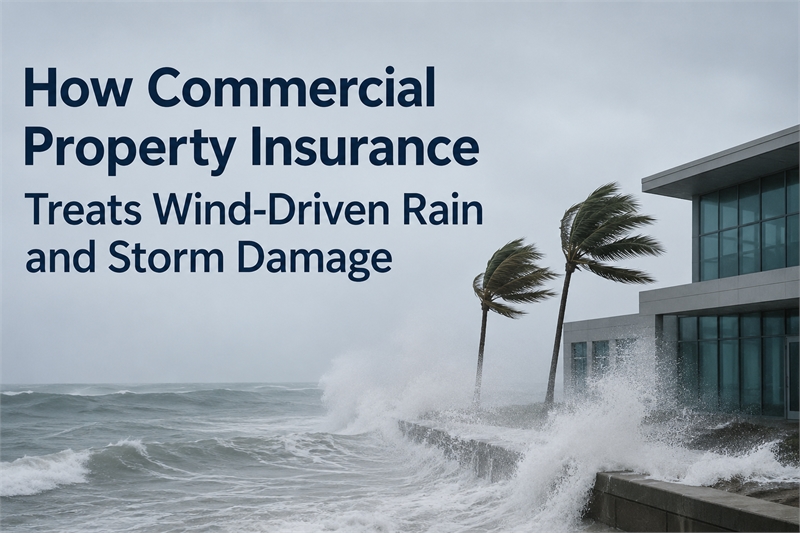
Understanding Storm Coverage for Commercial Buildings and Condominium Associations
Commercial buildings located in coastal regions face unique insurance risks during hurricanes, tropical storms, and severe wind events. High winds, prolonged rainfall, and wind-driven rain can expose large building structures to significant storm damage.
After major storms pass, building owners and property managers sometimes discover interior water damage even when the structure appears largely intact. Ceiling leaks, wet insulation, or moisture inside walls may appear during or shortly after the storm.
When this occurs, insurance companies often investigate how the water entered the building. Commercial property insurance policies frequently distinguish between structural wind damage and rain entering through existing building vulnerabilities. Because of this, the sequence of events during the storm can influence how a claim is evaluated.
These insurance concepts apply to many types of commercial properties, including:
• office buildings
• retail centers
• warehouses and industrial facilities
• apartment complexes
• condominium association buildings
• mixed-use commercial properties
Understanding how commercial property insurance treats wind damage and wind-driven rain can help building owners and condominium associations better understand the claims process following severe storms.
What Is Commercial Property Insurance?
Commercial property insurance provides coverage for buildings and business property used in commercial operations.
These policies are designed to protect physical structures as well as certain business-related property located inside those structures.
Commercial property policies may cover:
• building structures
• permanent building fixtures
• mechanical and electrical systems
• equipment used in business operations
• certain inventory or contents
• loss of business income following a covered loss
Commercial property insurance is commonly used by business owners, property investors, and condominium associations that insure multi-unit residential buildings.
The specific terms and coverage limits depend on the policy language and the underwriting requirements of the insurer.
Wind Damage in Commercial Buildings
Wind damage occurs when storm winds physically damage components of the building structure.
Examples of wind damage to commercial properties may include:
• roofing systems damaged or lifted by wind
• metal roofing panels torn loose
• siding or exterior cladding damaged by wind pressure
• windows broken by wind-borne debris
• rooftop equipment displaced or damaged
These types of structural damages can create openings in the building envelope that allow rainwater to enter during the storm.
When wind damage creates these openings, the resulting water intrusion may be evaluated as part of the windstorm loss.
Wind-Driven Rain and Commercial Buildings
Wind-driven rain occurs when strong winds push rain horizontally against buildings.
During hurricanes and severe coastal storms, sustained winds may drive rain against building surfaces for extended periods of time.
Under these conditions, rain may enter buildings through areas such as:
• roof flashing seams
• wall joints and cladding systems
• window frames and seals
• door thresholds
• ventilation openings
• roof penetrations for mechanical systems
In these situations, rainwater may enter the building envelope even when the structure appears largely intact.
Because commercial buildings often contain large roof surfaces and extensive exterior wall systems, wind-driven rain exposure can be significant during major storms.
Storm-Created Openings in Commercial Property Policies
Many commercial property insurance policies contain provisions addressing rain entering buildings during storms.
In many policies, rain damage may be covered when wind first damages the building and creates an opening through which rain enters.
This type of provision is often referred to as a storm-created opening clause.
For example:
• hurricane winds tear roofing materials from a commercial building
• rain enters through the exposed roof area
• interior water damage occurs inside the building
In this scenario, the rain entering through the wind-damaged area may be treated as part of the windstorm damage.
Because of this, storm damage investigations often focus on determining whether wind first created structural damage that allowed water intrusion.
How Insurance Adjusters Investigate Commercial Storm Claims
When commercial buildings experience water intrusion following storms, insurance adjusters typically conduct a detailed investigation to determine the cause of the damage.
Roof Inspection
The roof is often one of the first areas inspected after a storm.
Adjusters may look for:
• missing roofing materials
• lifted or displaced roof panels
• damaged flashing around roof penetrations
• punctures caused by wind-borne debris
Evidence of wind damage may help determine whether a storm-created opening occurred.
Exterior Building Inspection
Investigators may also inspect other exterior components of the building, including:
• exterior wall systems
• siding or cladding
• windows and doors
• roof edges and drainage systems
Damage to these areas may sometimes create pathways for rain to enter during storms.
Interior Damage Evaluation
Interior inspections often focus on identifying patterns of water intrusion.
Investigators may look for:
• ceiling stains
• wet insulation
• moisture inside wall cavities
• water trails on structural framing
These patterns can sometimes help determine how water traveled through the building.
Why Water Intrusion Can Be Difficult to Trace
Water entering a building during storms may travel along structural components before becoming visible.
Common pathways may include:
• roof decking
• insulation layers
• framing members
• mechanical penetrations
• interior wall cavities
For example, water entering near a rooftop mechanical unit may travel several feet before appearing as interior ceiling damage.
Because of this, identifying the original entry point of water intrusion can sometimes require detailed inspection.
Why Coastal Commercial Buildings Face Greater Storm Risk
Buildings located near coastal areas often face environmental conditions that increase exposure to wind and rain during storms.
These conditions may include:
• sustained hurricane winds
• prolonged heavy rainfall
• exposure to ocean moisture and salt air
• strong wind pressure against large building surfaces
These conditions can affect many types of properties, including commercial buildings, apartment complexes, and condominium association structures.
Because coastal storms may last for many hours or even days, buildings can be exposed to prolonged wind-driven rain during major weather events.
Condominium Associations and Commercial Insurance Policies
Many condominium associations carry commercial property insurance policies that insure the building structure and common elements of the property.
These policies often cover components such as:
• roofing systems
• exterior walls
• structural framing
• shared mechanical systems
• common areas and hallways
Individual condominium unit owners may carry separate insurance policies covering the interior portions of their units.
Because of this insurance structure, storm damage affecting condominium buildings may involve both the association’s commercial policy and individual unit owner policies.
Frequently Asked Questions
What is commercial property insurance?
Commercial property insurance provides coverage for buildings and certain business-related property used in commercial operations.
Does commercial property insurance cover wind damage?
Wind damage is commonly covered under commercial property insurance policies, subject to policy terms, deductibles, and exclusions.
What happens if rain enters after wind damages the building?
If wind damages the structure and creates an opening through which rain enters, the resulting water damage may be treated as part of the windstorm loss.
Can wind-driven rain enter a building without visible damage?
Yes. Rain may sometimes enter through flashing seams, window seals, or other building envelope openings during severe storms.
Do condominium associations carry commercial insurance policies?
Yes. Many condominium associations carry commercial property insurance policies that insure the building structure and shared property.
Why Understanding Commercial Storm Coverage Matters
For owners of commercial buildings and condominium associations located in coastal regions, severe storms can create complex insurance questions.
Understanding how commercial property insurance policies treat wind damage, wind-driven rain, and storm-created openings can help building owners and property managers better understand the claims process following severe weather.
For buildings located in hurricane-prone coastal areas, knowledge of these insurance concepts provides valuable insight into how property insurance policies evaluate storm-related damage.
Keep reading