Risk Management for Topsail Island Vacation Rentals Without Hurting Guest Experience
Risk management for Topsail Island vacation rentals should protect the property, guests, owner, and income without making the rental feel cold, restrictive, or difficult to enjoy.
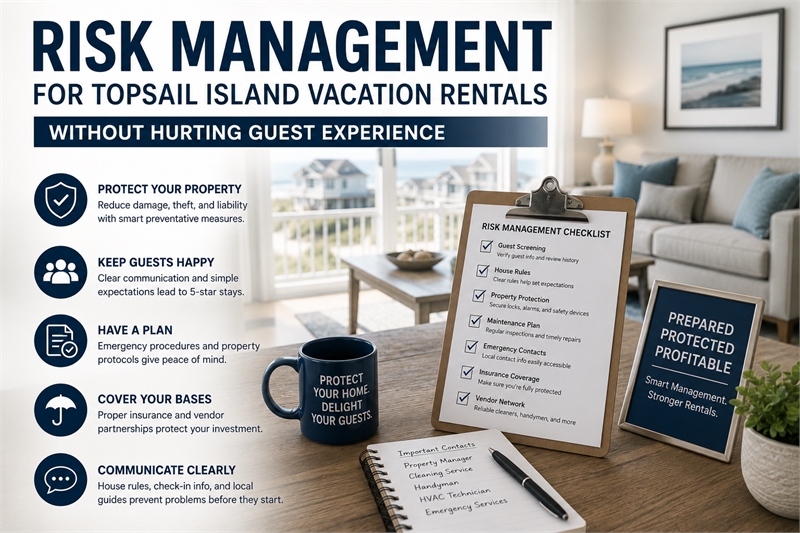
Risk management is one of the most important parts of owning a vacation rental on Topsail Island.
It is also one of the most misunderstood.
Some owners think risk management means strict rules, warning signs, security devices, long guest agreements, and constant reminders about what guests cannot do. Other owners go too far in the opposite direction and treat risk casually until something goes wrong. The best approach is somewhere in the middle.
A successful vacation rental should feel welcoming, comfortable, and easy for guests to enjoy. At the same time, the owner needs to protect the property, reduce liability, comply with rules, maintain insurance coverage, prevent avoidable damage, and create systems for emergencies.
On Topsail Island, risk management matters because vacation rentals are exposed to a unique mix of coastal conditions, guest turnover, weather, water, decks, stairs, pools, balconies, parking limits, HOA rules, storm risk, cleaning demands, and heavy seasonal use. A beach property may be beautiful, but it still needs thoughtful protections.
At Discover Topsail Island, our real estate and vacation rental articles are written from firsthand local experience. We understand Topsail Island as residents, licensed North Carolina real estate brokers, coastal property owners, vacation rental investors, and local small business owners. We know that risk management is not about making a property feel unfriendly. It is about creating a safer, smoother, more predictable guest experience while protecting the owner’s long-term investment.
This guide explains how Topsail Island vacation rental owners can manage risk without hurting guest experience.
Risk Management Should Support the Guest Experience
Good risk management should make a vacation rental feel more organized, not less welcoming.
Guests do not want to feel like they are staying in a property filled with threats, warnings, and restrictions. But they do appreciate clear instructions, safe spaces, working locks, reliable lighting, clean conditions, accurate listings, and quick communication when something goes wrong.
The best risk management systems often go unnoticed because they simply make the stay easier.
Examples include:
- Clear check-in instructions
- Accurate parking information
- Working smoke detectors
- Secure locks
- Proper lighting
- Stable furniture
- Safe railings
- Clear house rules
- Clean outdoor spaces
- Emergency contact information
- Reliable Wi-Fi
- Proper trash instructions
- Easy maintenance reporting
- Honest listing descriptions
These details protect the owner, but they also help the guest. A guest who knows where to park, how to access the property, where beach access is located, how to handle trash, and who to call for help is less likely to become frustrated.
Good risk management reduces confusion.
Start With an Accurate Listing
One of the simplest risk management tools is an accurate listing.
A vacation rental listing should clearly describe what the property offers and what it does not offer. Overpromising may create bookings, but it can also create complaints, refund requests, bad reviews, and liability concerns.
Owners should be accurate about:
- Bedroom count
- Sleeping arrangements
- Bed sizes
- Bathroom count
- Stairs
- Elevators
- Parking
- Beach access
- Pool access
- Pet policy
- Maximum occupancy
- Amenities
- Wi-Fi reliability
- Outdoor spaces
- HOA rules
- Noise expectations
- Accessibility limitations
- Construction or known limitations, when relevant
If the property has several flights of stairs, say that clearly. If parking is limited, explain it clearly. If beach access requires a walk, be honest. If the pool is seasonal or controlled by an HOA, describe it correctly.
Guests are more understanding when expectations are clear before booking. They are less forgiving when they feel misled.
Accuracy protects the guest experience and the owner’s reputation.
Clear House Rules Without Overwhelming Guests
House rules matter, but they should be clear, reasonable, and easy to understand.
A guest should not have to read pages of harsh rules to understand how to use the property. Too many rules can make a rental feel cold and uninviting. Too few rules can create confusion and increase risk.
Strong house rules should cover the most important issues:
- Maximum occupancy
- Parking limits
- Pet rules, if applicable
- Smoking policy
- Parties and events
- Noise expectations
- Trash instructions
- Pool or hot tub rules, if applicable
- Deck and balcony safety
- Grill rules, if applicable
- Check-in and checkout times
- HOA rules
- Damage reporting
- Storm or emergency procedures
The tone matters. Rules should be firm but professional. The goal is not to scold guests. The goal is to prevent misunderstandings.
For example, instead of writing, “Do not park extra cars or you will be fined,” a better tone may be: “Parking is limited to two vehicles per HOA rules. Please make sure all vehicles remain in the assigned areas so we can avoid towing, fines, or issues with neighboring properties.”
That language still protects the owner, but it sounds more helpful.
Safety Devices Should Be Reliable and Properly Maintained
Basic safety devices are essential in any vacation rental.
Guests expect the property to be safe, and owners should take safety seriously. Safety devices should not be treated as a once-a-year checklist item. They need to be inspected, tested, and maintained.
Important safety items may include:
- Smoke detectors
- Carbon monoxide detectors, where appropriate
- Fire extinguishers
- Exterior lighting
- Working locks
- Handrails
- Stair lighting
- GFCI outlets in appropriate areas
- Pool safety items, if applicable
- First aid kit, if provided
- Emergency contact information
- Posted address information for emergency responders
- Clear exit paths
Owners should document when safety devices are inspected or replaced. Batteries should be checked regularly. Fire extinguishers should be accessible and not hidden in an unknown closet.
Safety should be integrated into the property naturally. A safe property does not have to feel institutional. It simply feels well cared for.
Decks, Stairs, Balconies, and Railings Require Extra Attention
Topsail Island vacation rentals often include decks, balconies, exterior stairs, porches, railings, and elevated living areas.
These features are part of the coastal experience, but they also create risk if not maintained properly. Salt air, sun, rain, wind, and heavy guest use can all affect exterior structures over time.
Owners should regularly check:
- Loose railings
- Soft deck boards
- Rusted fasteners
- Wobbly stairs
- Loose handrails
- Splintering wood
- Damaged composite materials
- Poor lighting
- Slick surfaces
- Unstable outdoor furniture
- Balcony furniture placement
- Deteriorated exterior steps
Guests may include children, older adults, or people unfamiliar with the property. A loose railing or poorly lit stairway can create a serious problem.
For owners, exterior safety should be part of routine maintenance, especially before peak season and after storms.
A beautiful deck is an asset only if it is safe and functional.
Water, Sand, and Slippery Surfaces Are Part of Beach Rental Risk
Beach rentals naturally involve water and sand.
Guests come in from the ocean, rinse off in outdoor showers, walk across decks with wet feet, carry coolers, use stairs after rain, and track sand inside. These conditions can create slips, falls, clogged drains, damaged floors, and cleaning challenges.
Owners can reduce risk by thinking through how guests move through the property.
Helpful features may include:
- Outdoor shower or rinse area
- Durable entry mats
- Clear towel hooks
- Non-slip bathroom mats
- Well-maintained stairs
- Good outdoor lighting
- Easy beach gear storage
- Clear instructions about wet towels
- Durable flooring
- Regular deck cleaning
- Proper drainage
Risk management should make the property easier to use. If guests have a place to rinse off, hang towels, store beach gear, and enter the property safely, they are less likely to create mess, damage, or accidents.
Small details can reduce problems.
Parking Rules Should Be Clear Before Arrival
Parking is one of the most common sources of vacation rental confusion.
On Topsail Island, parking can be limited depending on the property type, town, HOA, beach access, and guest count. A property may sleep a certain number of guests, but that does not mean it can support unlimited vehicles.
Owners should clearly explain:
- Number of allowed vehicles
- Assigned parking spaces
- Overflow parking rules
- Street parking limitations
- HOA parking restrictions
- Towing risks
- Golf cart rules, if applicable
- Trailer or boat parking limitations
- Check-in parking instructions
- Where not to park
Parking rules should be included before arrival, not discovered after the guest shows up.
Clear parking information protects the owner from HOA fines, neighbor complaints, towing issues, and guest frustration. It also helps guests plan properly.
If parking is limited, be honest. It is better to lose a booking that is not a good fit than to create a bad stay for a guest who arrives with too many vehicles.
Pet Policies Need Specific Risk Planning
Pet-friendly vacation rentals can perform well, but they require extra planning.
Allowing pets may increase bookings, but it can also increase risk related to damage, odors, scratches, stains, allergies, noise complaints, fleas, furniture wear, and cleaning time.
Owners who allow pets should have clear policies for:
- Number of pets
- Pet size, if applicable
- Pet fees
- Furniture rules
- Crate expectations, if any
- Waste cleanup
- Leash rules
- HOA pet rules
- Beach pet rules
- Damage responsibility
- Excessive barking
- Restricted areas
Pet-friendly properties should also be furnished and maintained accordingly. Durable flooring, washable rugs, protective covers, strong cleaning systems, and odor control are important.
A pet-friendly policy should be welcoming to responsible pet owners while still protecting the property.
If the property is not set up for pets, allowing them just to increase bookings may create more risk than reward.
Pool and Hot Tub Rules Should Be Simple and Serious
If a vacation rental has a pool, hot tub, community pool, or spa access, safety rules are essential.
Water amenities can increase rental appeal, but they also create risk. Owners should make sure rules are clear, visible, and consistent with HOA requirements, local rules, insurance requirements, and vendor guidance.
Pool and hot tub rules may include:
- No unsupervised children
- No glass near pool areas
- No diving, if applicable
- Posted hours
- Maximum occupancy
- Hot tub temperature warnings
- Cover rules
- Shower-before-use requests
- Community amenity rules
- Access instructions
- Emergency contact information
If the pool or hot tub is maintained by an HOA or vendor, the listing should accurately explain what the owner controls and what the owner does not control.
Guests should not be surprised by pool closures, seasonal limits, wristband requirements, access codes, or HOA enforcement.
Water amenities can improve guest experience, but they require clear communication.
Insurance Should Match the Actual Rental Use
Insurance is a major part of risk management.
A standard homeowners policy may not be enough for a vacation rental. Owners should confirm that their insurance coverage matches how the property is being used. Short-term rental activity, guest occupancy, liability exposure, personal property, wind, hail, flood, loss of use, and business-related issues may all require careful review.
Owners should speak with qualified insurance professionals about:
- Short-term rental use
- Liability coverage
- Property coverage
- Wind and hail
- Flood insurance
- Contents coverage
- Loss of rental income
- Guest injury claims
- Pet-related issues
- Pool or hot tub exposure
- Umbrella coverage
- HOA master policy gaps
- Loss assessment coverage
- Deductibles
Insurance should not be reviewed only after a claim. It should be evaluated before guests begin staying at the property.
On Topsail Island, coastal insurance issues can be complex. Owners should make sure they understand deductibles, exclusions, named storm provisions, flood coverage, and any rental-use limitations.
Insurance is not a substitute for good property management, but it is an essential layer of protection.
Storm Risk Requires a Practical Plan
Storms are part of coastal ownership.
Owners should have a plan for preparing the property before storms and checking it afterward. This is especially important for vacation rentals because guests may be scheduled before, during, or after weather events.
A storm plan may include:
- Monitoring weather
- Securing outdoor furniture
- Communicating with guests
- Checking cancellation policies
- Coordinating with cleaners or local contacts
- Inspecting after storms
- Checking for leaks
- Documenting damage
- Contacting insurance if needed
- Coordinating repairs
- Managing guest arrivals after the storm
- Removing debris
- Confirming utilities and internet
Guests should not be left confused during serious weather. Owners or managers should communicate clearly and calmly.
A practical storm plan protects the property and helps guests feel supported.
Security Devices Must Be Used Carefully and Transparently
Security devices can help protect a vacation rental, but they must be used carefully.
Exterior cameras, smart locks, noise monitoring devices, doorbell cameras, and similar tools may support operations and safety. However, guest privacy must be respected, and owners must follow platform rules, applicable laws, and disclosure requirements.
Owners should never use hidden cameras inside a property. Any permitted exterior devices should be disclosed clearly and accurately.
Security technology should be used to protect the property, not to make guests feel watched.
Good practices include:
- Disclosing exterior cameras
- Avoiding cameras in private areas
- Following platform rules
- Using smart locks responsibly
- Keeping access codes updated
- Having backup access plans
- Using noise monitors only where allowed and properly disclosed
- Explaining devices professionally
Transparency protects both the guest and the owner.
If guests feel surprised by security devices, trust can be damaged quickly.
Damage Prevention Starts With Property Setup
The way a property is set up can reduce damage risk.
Owners should not rely only on rules. The property itself should make good guest behavior easier.
Damage prevention may include:
- Durable furniture
- Easy-clean flooring
- Mattress protectors
- Pillow protectors
- Washable rugs
- Secure outdoor furniture
- Clear towel hooks
- Proper trash bins
- Beach gear storage
- Stable dining chairs
- Strong bed frames
- Limited fragile décor
- Clear appliance instructions
- Owner closets for private items
- Luggage racks
- Coasters or durable surfaces
A property filled with fragile items, delicate furniture, light-colored upholstery, and no storage will be harder to protect.
A guest-friendly property should be designed for real use. That means it can still look warm and attractive while being durable and practical.
Cleaning and Inspections Are Risk Management Tools
Cleaning is not only about appearance.
Cleaners and inspectors are often the first people to notice damage, leaks, missing items, stains, odors, pests, broken furniture, or maintenance problems. A strong turnover process can help catch issues before they become bigger.
Cleaning and inspection can help identify:
- Water leaks
- Running toilets
- Broken furniture
- Damaged linens
- Stained mattresses
- Missing remotes
- Trash problems
- Pet damage
- Moisture issues
- Mold or mildew concerns
- HVAC problems
- Appliance issues
- Safety concerns
- Guest damage
- Door or lock problems
Owners should have a clear reporting system so cleaners know what to report and how quickly to report it.
A good cleaning team helps protect reviews, revenue, and the property itself.
Maintenance Should Be Preventive, Not Only Reactive
Risk increases when maintenance is delayed.
A small leak can become water damage. A loose railing can become a safety concern. A weak deck board can become a liability issue. A poorly maintained HVAC system can fail during peak season. A slow drain can become a guest complaint.
Owners should regularly review:
- HVAC systems
- Plumbing
- Electrical systems
- Decks
- Railings
- Stairs
- Windows
- Doors
- Locks
- Appliances
- Water heaters
- Outdoor showers
- Lighting
- Flooring
- Roof or ceiling stains
- Moisture concerns
Preventive maintenance may not be exciting, but it is one of the best ways to manage risk.
It also improves guest experience because fewer things break during stays.
Guest Communication Reduces Risk
Clear communication is one of the best risk management tools.
Many problems happen because guests do not understand the property, the rules, the area, or the expectations. Good communication prevents confusion.
Owners or managers should clearly communicate:
- Check-in instructions
- Parking rules
- Wi-Fi details
- Trash schedule
- Beach access
- Pet rules
- Smoking policy
- Maximum occupancy
- HOA rules
- Pool or amenity rules
- Emergency contacts
- Checkout instructions
- How to report maintenance
- Storm or weather guidance
The tone should be helpful, not harsh.
When guests understand how the property works, they are more likely to use it properly. They are also more likely to report problems early instead of waiting until checkout or leaving a negative review.
Avoid Overcrowding the Property
Overcrowding increases risk.
A property should not be advertised for more guests than it can safely and comfortably handle. Higher occupancy may look attractive from a revenue standpoint, but it can create problems with parking, plumbing, HVAC, furniture, noise, trash, sleeping arrangements, HOA rules, and guest comfort.
Owners should consider:
- Number of bathrooms
- Parking capacity
- Dining seating
- Living room seating
- Bed quality
- HOA occupancy rules
- Septic or plumbing capacity, where applicable
- Water heater capacity
- Noise concerns
- Guest safety
- Fire safety
- Wear and tear
A rental that is overcrowded may generate more short-term income but create more long-term risk.
The better approach is to match occupancy to the property’s true function.
Protect the Property Without Making It Feel Unfriendly
There is a balance between protection and hospitality.
A vacation rental should not feel like a place where every surface has a warning sign and every instruction feels like a threat. Guests are paying for a vacation. They want to feel trusted and welcomed.
Owners can protect the property with:
- Clear but friendly rules
- Good design choices
- Durable materials
- Proper insurance
- Smart access systems
- Maintenance routines
- Cleaning inspections
- Accurate listings
- Strong communication
- Simple instructions
- Well-placed reminders
The goal is to create a property that is easy to enjoy and hard to misuse.
Risk management should be built into the systems, not forced onto the guest through constant negative messaging.
Document Important Property Conditions
Documentation can help owners manage risk.
Before peak season, after repairs, before and after major storms, and between guest stays when needed, owners may benefit from photos, inspection notes, maintenance records, and communication logs.
Useful documentation may include:
- Property condition photos
- Cleaning reports
- Maintenance receipts
- Safety device checks
- HVAC service records
- Appliance repairs
- Deck and railing inspections
- Storm preparation photos
- Post-storm inspection photos
- Guest damage reports
- HOA communications
- Insurance documents
- Vendor invoices
Documentation can help with insurance claims, guest disputes, maintenance planning, and resale confidence.
Owners do not need to overcomplicate it. They simply need a consistent way to track important property information.
Understand HOA Rules and Community Risk
For condos, townhomes, and some neighborhoods, HOA rules are a major part of risk management.
Owners should understand and communicate rules related to:
- Parking
- Pets
- Pools
- Elevators
- Balconies
- Grills
- Trash
- Noise
- Amenity access
- Occupancy
- Guest registration
- Minimum stays
- Common areas
- Beach access
- Smoking
- Exterior storage
If guests violate HOA rules, the owner may face fines, complaints, or restrictions. Guests may also have a poor experience if rules are unclear.
Owners should provide HOA rules in a guest-friendly way. Do not simply send a dense document and expect guests to read it. Highlight the most important points in plain language.
HOA compliance protects the owner and helps guests avoid problems.
Local Knowledge Helps Reduce Guest Problems
Guests often need practical local guidance.
On Topsail Island, guests may have questions about beach access, public parking, trash pickup, turtle nesting rules, beach driving restrictions, pets on the beach, fishing, boating, storms, restaurants, grocery stores, medical care, and local ordinances.
Providing helpful local information can reduce risk and improve experience.
A good guest guide may include:
- Beach access information
- Trash and recycling schedule
- Emergency contacts
- Local urgent care information
- Grocery stores
- Parking guidance
- Weather resources
- Pet rules
- Restaurant suggestions
- Boat ramp information
- Local town reminders
- Quiet hours, where applicable
- Checkout expectations
Guests who understand the area are less likely to make mistakes.
Local guidance can feel like hospitality while also reducing preventable problems.
Practical Risk Management Checklist for Owners
Topsail Island vacation rental owners should regularly review:
- Insurance coverage
- Liability protection
- Flood and wind exposure
- Deductibles
- Accurate listing details
- House rules
- Parking rules
- HOA rules
- Pet policies
- Safety devices
- Decks and railings
- Stairs and lighting
- Locks and access codes
- Wi-Fi and smart devices
- Pool or hot tub rules
- Cleaning inspections
- Maintenance reporting
- Storm preparation plan
- Guest communication
- Emergency contacts
- Trash instructions
- Maximum occupancy
- Documentation systems
- Vendor contacts
Risk management should not be handled once and forgotten. It should be part of regular vacation rental operations.
FAQ: Risk Management for Topsail Island Vacation Rentals
What does risk management mean for a vacation rental?
Risk management means taking practical steps to protect guests, the property, the owner, rental income, insurance coverage, and long-term value. It includes safety, maintenance, insurance, communication, rules, inspections, documentation, and emergency planning.
Why is risk management important for Topsail Island vacation rentals?
Topsail Island vacation rentals face coastal weather, storms, salt air, humidity, heavy guest use, decks, stairs, parking limitations, HOA rules, and seasonal turnover pressure. These factors make risk management especially important.
Can strict rules hurt guest experience?
Yes, if they are written harshly or presented poorly. Rules should be clear, reasonable, and guest-friendly. The goal is to prevent confusion without making the property feel unwelcoming.
What safety items should a vacation rental have?
Important safety items may include smoke detectors, carbon monoxide detectors where appropriate, fire extinguishers, working locks, exterior lighting, handrails, GFCI outlets, emergency contacts, and clear exit paths.
How can owners reduce damage without making guests uncomfortable?
Owners can reduce damage by using durable furnishings, mattress protectors, washable materials, clear instructions, good storage, reasonable house rules, cleaning inspections, and fast maintenance reporting.
Are security cameras allowed in vacation rentals?
Security camera rules depend on platform policies, applicable laws, and disclosure requirements. Interior hidden cameras should not be used. Any permitted exterior cameras or devices should be clearly disclosed and should respect guest privacy.
Why do parking rules matter for vacation rentals?
Parking rules matter because many Topsail Island properties have limited parking or HOA restrictions. Clear parking instructions help prevent towing, fines, neighbor complaints, and guest frustration.
How should owners handle storm risk?
Owners should have a storm plan that includes monitoring weather, communicating with guests, securing outdoor furniture, inspecting after storms, documenting damage, coordinating repairs, and confirming the property is safe before arrivals.
Should vacation rental insurance be different from regular homeowners insurance?
Often, yes. Owners should confirm that their insurance covers short-term rental use, liability, property damage, contents, wind, flood, loss of rental income, and other risks related to vacation rental activity.
How can cleaning help with risk management?
Cleaners and inspectors often notice damage, leaks, odors, pests, missing items, safety issues, and maintenance problems between guests. A strong cleaning and inspection process helps catch problems early.
Why is maximum occupancy important?
Maximum occupancy affects safety, parking, plumbing, HVAC, noise, guest comfort, HOA compliance, and property wear. Advertising too many guests can increase risk and lead to poor reviews.
How can owners manage risk without hurting reviews?
Owners can manage risk by being accurate, clear, responsive, well maintained, and guest-focused. Guests generally respond well to rules and systems when they are explained professionally and make the stay easier.
Protect the Property and Preserve the Stay
Risk management for Topsail Island vacation rentals is not about making the property feel restrictive. It is about creating a safer, smoother, more predictable experience for both guests and owners.
The best systems protect the property without taking away from the vacation. Clear instructions, accurate listings, safe spaces, reliable maintenance, thoughtful rules, proper insurance, and strong communication all help reduce problems before they happen.
For owners, risk management protects income, reviews, insurance, property condition, and long-term value. For guests, it creates confidence, clarity, and a better stay.
A well-managed Topsail Island vacation rental should feel welcoming, comfortable, and easy to enjoy.
It should also be protected by smart systems behind the scenes.
Keep reading