
How a 5-Star Topsail Island Guest Experience Starts Before Check-In
A 5-star Topsail Island guest experience begins before check-in. Clear communication, accurate expectations, parking details, arrival instructions, and local guidance can shape the entire stay.
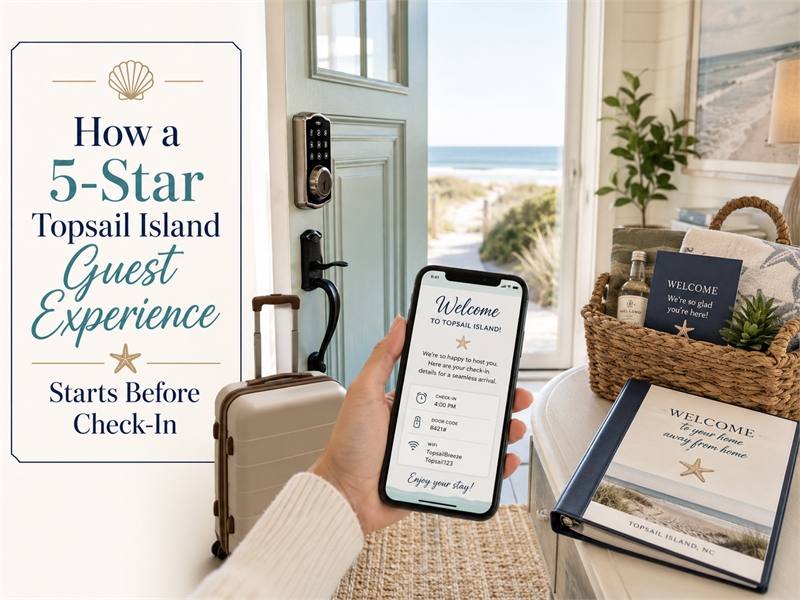
A 5-star vacation rental experience does not begin when guests unlock the door.
It begins much earlier.
It starts when guests first view the listing, ask a question, book the property, receive confirmation, plan their trip, read arrival instructions, understand parking, learn what to bring, and feel confident that the property will be ready when they arrive.
For Topsail Island vacation rentals, this matters because many guests are traveling with families, children, pets, groceries, beach gear, coolers, luggage, and high expectations. They may be arriving after a long drive, navigating summer traffic, crossing the bridge, looking for beach access, trying to understand parking, and hoping the property looks exactly like the listing.
If the pre-arrival experience is confusing, guests can arrive frustrated before they ever step inside. If the pre-arrival experience is clear, organized, and helpful, the stay begins with confidence.
At Discover Topsail Island, our real estate and vacation rental articles are written from firsthand local experience. We understand Topsail Island as residents, licensed North Carolina real estate brokers, coastal property owners, vacation rental investors, and local small business owners. We know that strong reviews are not created by the property alone. They are created by the full guest experience, including everything that happens before check-in.
This guide explains how Topsail Island vacation rental owners can create a better guest experience before arrival, reduce confusion, improve reviews, and make the stay feel smoother from the beginning.
The Guest Experience Begins With the Listing
Before a guest books, they are already forming expectations.
The listing is the first part of the guest experience. Photos, descriptions, pricing, amenities, rules, reviews, and captions all shape what guests believe the stay will be like.
A strong listing should be accurate, complete, and easy to understand. It should not simply promote the property. It should help guests decide whether the property is the right fit.
Guests should understand:
- Where the property is located
- How close it is to the beach
- What the sleeping arrangements are
- How many vehicles can park
- Whether pets are allowed
- Whether there are stairs or elevators
- What amenities are included
- What is not included
- What the outdoor spaces offer
- What community rules apply
- Whether the property is suitable for families, remote work, or longer stays
A listing that oversells the property may generate bookings, but it can also create disappointment. A listing that is honest and well presented helps attract guests who are a better fit.
The best guest experiences begin with accurate expectations.
Clear Communication Builds Confidence
Guest communication is one of the most important parts of vacation rental success.
Guests want to feel like the owner, co-host, or manager is organized and responsive. They do not want to wonder whether the property is real, whether their reservation is secure, whether check-in instructions will arrive on time, or whether someone will respond if they have a question.
Clear communication helps guests relax before they arrive.
Strong pre-arrival communication may include:
- Booking confirmation
- Thank-you message
- Arrival timeline
- Check-in instructions
- Parking details
- Wi-Fi information
- House rules
- Beach access guidance
- Trash schedule
- Pet rules, if applicable
- Local recommendations
- Weather or storm guidance when needed
- Contact information
- What to bring
- What is provided
The goal is not to overwhelm guests with too much information at once. The goal is to provide the right information at the right time.
A guest who feels prepared is more likely to arrive with a positive mindset.
Guests Need to Know What to Expect Before They Pack
A large part of the pre-arrival experience is helping guests understand what they need to bring.
Vacation rental guests often want to know whether linens, towels, beach towels, paper products, soap, coffee, laundry detergent, kitchen supplies, beach chairs, grills, baby items, or pet items are provided.
If this information is unclear, guests may overpack, underpack, or become frustrated after arrival.
Owners should clearly explain:
- Whether linens are provided
- Whether bath towels are provided
- Whether beach towels are provided
- Whether starter supplies are included
- What kitchen basics are available
- Whether coffee filters or coffee makers are provided
- Whether beach gear is included
- Whether a grill is available and allowed
- Whether baby items are available
- Whether pet supplies are provided
- What guests should bring for their stay
Guests do not expect every property to provide everything. They do expect the listing and arrival information to be clear.
Clear packing guidance helps prevent disappointment.
Arrival Instructions Should Be Simple and Complete
Arrival instructions should be easy to follow, especially for guests who may be tired, traveling with children, or arriving after dark.
Good check-in instructions should answer the most important arrival questions without making guests search through long messages.
Arrival instructions should include:
- Property address
- Check-in time
- Access code or lockbox instructions
- Parking instructions
- Unit number, if applicable
- Building name, if applicable
- Elevator or stair instructions
- Gate codes, if applicable
- Community access instructions
- Wi-Fi information
- Emergency contact information
- Any arrival restrictions
- What to do if the code does not work
For condos and townhomes, the instructions may need to be more detailed because guests may need to understand parking areas, elevators, stairwells, building entrances, luggage carts, pool access, trash areas, and HOA rules.
The easier the arrival process feels, the better the first impression.
Parking Confusion Can Start the Stay Poorly
Parking is one of the most common sources of guest confusion.
On Topsail Island, parking can be limited depending on the property, town, HOA, beach access, and guest count. Some properties have assigned parking. Some have narrow driveways. Some allow only a certain number of vehicles. Some prohibit trailers, boats, golf carts, or overflow parking.
Guests need parking information before they arrive.
Owners should clearly explain:
- How many vehicles are allowed
- Where guests should park
- Where guests should not park
- Whether parking passes are required
- Whether trailers or boats are allowed
- Whether street parking is allowed
- Whether towing is enforced
- Whether golf carts are permitted
- Whether guests need to register vehicles
- Whether there are HOA restrictions
Parking confusion can create immediate frustration. It can also lead to neighbor complaints, HOA fines, towing issues, or a stressful start to the trip.
A simple parking map or photo can be helpful when the parking layout is not obvious.
Beach Access Should Be Explained Clearly
For many guests, beach access is one of the most important parts of the stay.
Guests want to know how to get to the beach, how long the walk is, whether access is public or private, whether stairs or dunes are involved, whether they can drive to access points, and whether they need to bring carts or wagons.
Owners should clearly explain:
- Closest beach access
- Walking route
- Approximate distance
- Whether access is public or private
- Whether there are stairs
- Whether there is a dune crossover
- Whether beach carts are practical
- Where guests can rinse off
- Whether parking is available near the access
- Any local rules guests should know
Do not assume guests understand Topsail Island. Many guests are visiting for the first time or staying in a different part of the island than before.
Clear beach access guidance helps guests feel oriented quickly.
Local Guidance Adds Real Value
Guests often appreciate local information, especially when it feels practical and helpful.
A guest guide does not need to be complicated. It should answer common questions and help guests enjoy the area with less stress.
Helpful local guidance may include:
- Grocery stores
- Restaurants
- Coffee shops
- Beach access points
- Public parking
- Boat ramps
- Fishing information
- Surf shops
- Ice cream shops
- Rainy day ideas
- Family activities
- Local events
- Urgent care or pharmacy information
- Pet-friendly places
- Trash pickup details
- Turtle nesting reminders
- Local town rules
This kind of information can improve the guest experience before and during the stay.
It also positions the owner or manager as helpful and locally knowledgeable, which can influence reviews.
The Tone of Communication Matters
Guests respond not only to what is said, but how it is said.
Pre-arrival messages should be professional, friendly, and clear. They should not sound cold, threatening, or overly automated.
There is a difference between saying:
“Failure to follow checkout rules will result in additional charges.”
and saying:
“To help our cleaning team prepare the home for the next guests, please place trash in the designated bins and load used dishes into the dishwasher before checkout.”
Both communicate expectations. One feels harsher. The other feels practical.
Tone matters because guests are preparing for a vacation. They want to feel welcome, not warned at every step.
Good communication can still be firm. It should simply be written in a way that feels helpful and respectful.
Do Not Overwhelm Guests With Too Much Information at Once
Clear communication is important, but too much information can overwhelm guests.
A long message with every rule, instruction, recommendation, warning, and policy may cause guests to skim or ignore important details.
A better approach is to organize information by timing and importance.
For example:
After booking:
- Thank the guest
- Confirm the reservation
- Mention that arrival details will be sent before check-in
- Share any important early planning details
A few days before arrival:
- Send check-in instructions
- Provide address and access details
- Explain parking
- Include Wi-Fi and house guide link
- Remind guests what to bring
Day of arrival:
- Send a short welcome message
- Confirm check-in time
- Provide quick access reminder
- Share contact information
During the stay:
- Be available for questions
- Respond quickly to issues
Before checkout:
- Send simple checkout instructions
Organized communication reduces confusion and improves compliance.
Check-In Should Feel Easy, Not Complicated
A guest’s check-in experience can shape the entire stay.
After hours of travel, guests want to arrive, park, enter the property, unload, and settle in. If they cannot find the unit, cannot open the door, do not know where to park, or cannot reach anyone for help, frustration can build quickly.
A smooth check-in should be:
- Timely
- Simple
- Accurate
- Clearly explained
- Easy to access on a phone
- Supported by backup contact information
- Tested before arrival when possible
Smart locks and keypads can work well, but codes should be correct and batteries should be checked. Lockboxes can work, but guests need clear instructions. Condos may require more explanation about buildings, elevators, carts, or parking.
The easier the check-in, the better the first impression.
A Clean Arrival Is Part of Pre-Arrival Trust
Guests expect the property to be clean when they arrive.
That may sound obvious, but cleanliness is closely connected to pre-arrival trust. If communication has been organized and professional, guests expect the property to match that standard. If they arrive to a clean, well-prepared space, trust is reinforced.
If they arrive to sand, odors, dirty bathrooms, stained linens, trash, or signs that the property was rushed, trust is damaged immediately.
Owners should make sure the turnover process supports the check-in promise.
That may include:
- Reliable cleaning
- Final inspection
- Linen checks
- Trash removal
- Supply restocking
- Odor checks
- Thermostat settings
- Lights and access checks
- Maintenance reporting
- Photo confirmation, if needed
The guest experience starts before check-in, but the arrival condition confirms whether the pre-arrival communication was trustworthy.
Maintenance Issues Should Be Caught Before Guests Arrive
A 5-star experience is difficult when guests arrive to obvious maintenance problems.
Some issues are unexpected, but many can be caught before check-in through proper inspection.
Before arrival, owners or managers should confirm:
- HVAC is working
- Wi-Fi is working
- Smart locks or keys work
- Appliances are working
- Toilets flush properly
- Showers drain properly
- Lights work
- TVs and remotes are functional
- Outdoor furniture is usable
- Decks and stairs are safe
- Trash is handled
- Supplies are stocked
- No obvious leaks or odors are present
Guests do not want to spend the first hour of vacation reporting problems.
A pre-arrival inspection reduces that risk.
Technology Should Be Ready Before Arrival
Technology is now part of the guest experience.
Guests expect Wi-Fi, smart TVs, streaming access, smart locks, thermostats, and other basic systems to work. If technology fails at check-in, it can create immediate frustration.
Before arrival, owners should confirm:
- Wi-Fi network is working
- Password is correct
- Smart TVs are connected
- Remotes have batteries
- Smart lock code is active
- Thermostat is set appropriately
- Streaming instructions are clear
- Router is powered on
- Any workspace is ready
- Charging areas are functional
This is especially important for guests arriving with children, remote workers, or longer-stay guests.
Technology does not need to be complicated. It needs to work.
Guests Appreciate Knowing Who to Contact
Guests should know who to contact if they need help.
This should be clear before check-in. They should not have to search through messages or platform threads in an emergency.
Owners should provide:
- Primary contact
- Backup contact, if applicable
- Emergency maintenance process
- Local emergency numbers when appropriate
- HOA or building contact information, if relevant
- Instructions for urgent issues
- Instructions for non-urgent issues
Guests feel more comfortable when they know help is available.
This does not mean owners need to be available for every minor question immediately. It means guests should understand how communication works and who can help if something important happens.
House Rules Should Be Clear Before Guests Arrive
House rules should not surprise guests after check-in.
Important rules should be communicated before arrival in a clear, professional way. This helps prevent misunderstandings and protects the property.
Important pre-arrival rules may include:
- Maximum occupancy
- Parking limits
- Pet rules
- Smoking policy
- Party and event restrictions
- Noise expectations
- Trash schedule
- Pool or amenity rules
- HOA rules
- Grill rules
- Balcony or deck safety
- Checkout responsibilities
Rules should be written in a guest-friendly tone. They should protect the property without making the guest feel unwelcome.
A guest who understands the rules before arrival is more likely to follow them.
Pre-Arrival Messages Can Reduce Refund Requests
Many guest complaints are tied to mismatched expectations.
If the guest thought linens were provided and they were not, frustration may follow. If the guest expected four parking spaces and there are only two, that can create conflict. If the guest thought the beach was directly outside but access requires a longer walk, disappointment can affect the stay.
Clear pre-arrival communication reduces these problems.
Owners should confirm important expectations before arrival:
- What is provided
- What is not provided
- Parking limits
- Beach access details
- Pet rules
- Check-in time
- Checkout time
- Amenities
- HOA restrictions
- Any known limitations
When guests know what to expect, they are less likely to feel misled.
That can reduce complaints, refund requests, and negative reviews.
Better Pre-Arrival Experience Can Lead to Better Reviews
Reviews are shaped by the full stay.
A clean property, great location, and nice furnishings matter, but the guest’s emotional experience matters too. If the process feels easy, organized, and helpful from the beginning, guests are more likely to view the stay positively.
A strong pre-arrival experience can help create review comments like:
- “Check-in was easy.”
- “The host was very helpful.”
- “Communication was clear.”
- “Everything was exactly as described.”
- “The property was easy to find.”
- “We knew exactly what to expect.”
- “Great local recommendations.”
- “Very organized stay.”
These comments help future guests feel confident.
Pre-arrival communication is not just customer service. It is part of reputation building.
Repeat Guests Often Remember How Easy the Stay Felt
Repeat guests are valuable.
They may book again, refer friends, leave stronger reviews, and require less explanation during future stays. A smooth pre-arrival process can help create repeat guest loyalty.
Guests often remember whether the stay felt easy.
They remember:
- Easy booking
- Clear communication
- Simple check-in
- Helpful instructions
- Clean arrival
- Good local recommendations
- Fast responses
- Accurate expectations
- Simple checkout
A vacation rental that feels organized is easier to trust.
For owners, repeat guests can reduce marketing pressure and help stabilize income over time.
A Guest Guide Can Improve the Entire Stay
A guest guide is one of the best tools for improving the experience before and during check-in.
It can be printed, digital, or both. The format matters less than the quality and usefulness of the information.
A strong guest guide may include:
- Welcome message
- Wi-Fi information
- Parking instructions
- Beach access directions
- Trash schedule
- Checkout instructions
- House rules
- Appliance instructions
- TV and streaming instructions
- Local restaurants
- Grocery stores
- Emergency contacts
- Pet rules
- HOA amenity information
- Rainy day ideas
- Local beach reminders
A good guide reduces guest questions and makes the property feel professionally managed.
It also helps guests enjoy Topsail Island more confidently.
Local Recommendations Should Feel Personal and Useful
Local recommendations can make a guest experience feel more thoughtful.
Guests do not always want a long generic list. They want useful suggestions that help them make decisions quickly.
Helpful recommendations may include:
- Best nearby coffee options
- Family-friendly restaurants
- Casual seafood spots
- Grocery stores
- Ice cream shops
- Rainy day activities
- Beach access tips
- Boat ramps
- Fishing areas
- Places for kids
- Pet-friendly options
- Local shops
- Quiet areas
- Sunset spots
Owners should avoid overpromising or guaranteeing experiences outside their control. But thoughtful local guidance can make guests feel supported.
Local knowledge is one of the easiest ways to add value without major expense.
Set the Right Expectations for Peak Season
Peak season on Topsail Island can be busy.
Guests may deal with traffic, crowded restaurants, grocery store lines, beach parking limits, check-in delays, storms, or high heat. Owners cannot control all of that, but they can help guests prepare.
Pre-arrival communication can include gentle reminders about:
- Summer traffic
- Bridge congestion
- Grocery planning
- Restaurant wait times
- Parking limits
- Check-in timing
- Trash schedules
- Weather awareness
- Beach rules
- Patience during turnover days
The tone should be helpful, not negative.
For example: “Summer Saturdays can be busy on the island, so we recommend planning extra travel time and reviewing parking instructions before arrival.”
That kind of message prepares guests without discouraging them.
Do Not Let Automation Replace Hospitality
Automation can be useful, but it should not make the guest experience feel cold.
Automated messages can help ensure guests receive information on time. However, guests still appreciate personal touches and responsive communication.
A good system may use automation for:
- Booking confirmation
- Arrival instructions
- Wi-Fi information
- Checkout reminders
- House guide links
But owners or managers should still be available to answer real questions.
A short personal note can go a long way. Guests want to feel like there is a real person behind the stay, especially if something goes wrong.
Efficiency matters, but hospitality still matters too.
Practical Pre-Check-In Checklist for Owners
Topsail Island vacation rental owners should review the following before guests arrive:
- Booking confirmation sent
- Arrival instructions sent
- Address confirmed
- Parking instructions clear
- Access code active
- Backup access plan ready
- Wi-Fi information correct
- Beach access explained
- House rules provided
- Pet rules confirmed, if applicable
- Linens and supplies explained
- Cleaning completed
- Final inspection completed
- Trash handled
- HVAC working
- Appliances working
- Smart TVs and remotes working
- Outdoor spaces checked
- Local guide available
- Emergency contact information provided
- Checkout instructions prepared
The goal is simple: guests should arrive feeling confident, not confused.
FAQ: Topsail Island Guest Experience Before Check-In
When does the guest experience begin for a vacation rental?
The guest experience begins before check-in. It starts with the listing, photos, booking process, communication, arrival instructions, parking details, local guidance, and the expectations created before the guest arrives.
Why does pre-arrival communication matter?
Pre-arrival communication matters because it helps guests feel prepared and confident. It reduces confusion about check-in, parking, beach access, Wi-Fi, supplies, rules, and what to expect during the stay.
What should be included in check-in instructions?
Check-in instructions should include the property address, check-in time, access code or key instructions, parking information, unit or building details, Wi-Fi information, emergency contact information, and any important arrival notes.
How can owners make check-in easier?
Owners can make check-in easier by sending instructions ahead of time, keeping messages simple, testing access codes, providing clear parking details, offering a backup contact, and making sure the property is clean and ready.
Why is parking information so important on Topsail Island?
Parking can be limited on Topsail Island depending on the property, HOA, town, or guest count. Clear parking information helps prevent confusion, towing issues, fines, neighbor complaints, and guest frustration.
Should owners explain beach access before arrival?
Yes. Guests should understand how to reach the beach, how far the access is, whether it is public or private, whether there are stairs or dunes, and what route to use from the property.
What should guests know before packing?
Guests should know whether linens, bath towels, beach towels, starter supplies, kitchen items, beach gear, baby items, pet supplies, or grills are provided. Clear packing information helps prevent disappointment.
Can pre-arrival communication affect reviews?
Yes. Guests often mention easy check-in, clear communication, accurate instructions, and helpful local guidance in reviews. A smooth pre-arrival experience can help create a better overall stay.
Should vacation rentals have a guest guide?
A guest guide is highly helpful. It can include Wi-Fi information, parking, beach access, trash schedules, house rules, checkout instructions, local restaurants, emergency contacts, and area recommendations.
How can owners avoid overwhelming guests with too much information?
Owners can organize communication by timing. Send basic confirmation after booking, detailed arrival instructions shortly before check-in, a simple welcome message on arrival day, and checkout instructions near departure.
Why does tone matter in guest communication?
Tone matters because guests are preparing for a vacation. Clear, friendly, professional communication feels helpful. Harsh or overly strict language can make the stay feel less welcoming before it begins.
What is the biggest pre-check-in mistake owners make?
One of the biggest mistakes is assuming guests already understand the property or the island. Clear instructions about parking, access, supplies, beach routes, rules, and expectations can prevent many common problems.
Better Stays Begin Before the Door Opens
A 5-star Topsail Island guest experience does not start when guests walk inside the rental.
It starts with the expectations created before they arrive.
Clear communication, honest listing details, helpful arrival instructions, accurate parking information, beach access guidance, local recommendations, and a clean, ready property all shape the way guests feel before the vacation truly begins.
For owners, the pre-check-in experience is one of the easiest ways to improve reviews, reduce complaints, prevent confusion, and create a more professional rental operation.
A guest who arrives confident, informed, and welcomed is much more likely to enjoy the stay.
And that is where 5-star experiences begin.
Keep reading