
How to Furnish a Topsail Island Vacation Rental for Guests, Durability, and Revenue
Furnishing a Topsail Island vacation rental is about more than decorating. Owners need durable, guest-friendly, coastal-appropriate furnishings that photograph well, improve reviews, support revenue, and protect long-term property value.
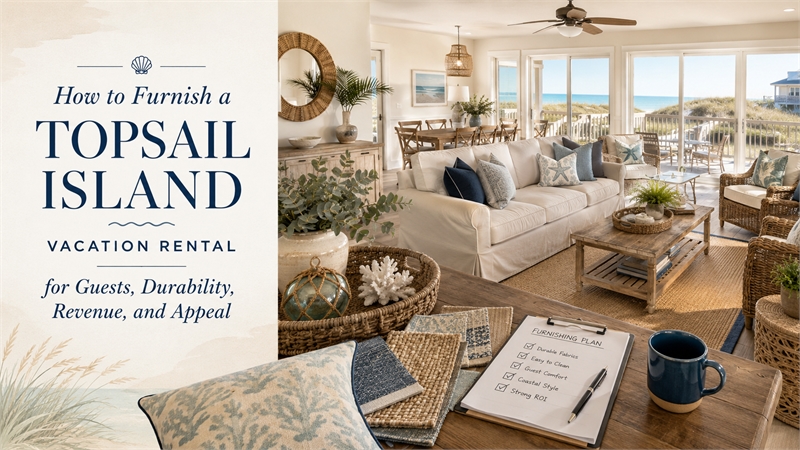
Furnishing a vacation rental on Topsail Island is not the same as furnishing a personal beach house.
A personal beach home can be designed around the owner’s preferences. A vacation rental has to work for guests, cleaners, photographers, maintenance teams, future buyers, and the owner’s long-term investment goals. It has to look good online, feel comfortable in person, hold up to repeated use, and support rental income without creating constant replacement costs.
That balance is harder than many new owners expect.
On Topsail Island, vacation rental furnishings face a lot of wear. Sand, salt air, humidity, sunscreen, wet towels, beach gear, children, pets, large families, quick turnovers, and peak season occupancy can all take a toll. Furniture that looks beautiful in a showroom may not survive well in a busy coastal rental. Cheap furniture may save money upfront but break quickly, photograph poorly, and hurt guest reviews.
At Discover Topsail Island, our real estate and vacation rental articles are written from firsthand local experience. We understand Topsail Island as residents, licensed North Carolina real estate brokers, coastal property owners, vacation rental investors, and local small business owners. We know that furnishing a rental property is not just about style. It is about guest experience, durability, revenue, maintenance, cleaning, and resale appeal.
The best Topsail Island vacation rentals are not always the most expensive or overly decorated. They are clean, comfortable, practical, attractive, durable, and designed around the way guests actually use the property.
This guide explains how to furnish a Topsail Island vacation rental with the right balance of guest comfort, durability, revenue potential, and long-term property appeal.
Furnishing Is an Investment Strategy, Not Just Decorating
Many owners treat furnishing like a final step after buying the property.
They close on the home or condo, buy furniture quickly, add some coastal décor, take photos, and list the property. That approach can work, but it often leads to missed opportunities.
Furnishing should be part of the investment strategy from the beginning.
The right furnishings can help:
- Improve listing photos
- Increase guest confidence
- Support stronger nightly rates
- Improve reviews
- Reduce guest complaints
- Make cleaning easier
- Reduce replacement costs
- Improve repeat guest appeal
- Protect the property
- Strengthen resale presentation
The wrong furnishings can do the opposite. They can make a property look cheap, dated, uncomfortable, cluttered, or poorly maintained. They can break easily, stain quickly, hold odors, create cleaning problems, or make guests feel like the property was assembled without thought.
For a Topsail Island vacation rental, furnishing choices should answer four questions:
- Will guests like it?
- Will it hold up?
- Will it photograph well?
- Will it help the property earn and maintain value?
If a furnishing choice does not support at least one of those goals, it may not belong in the rental.
Understand How Guests Actually Use a Beach Rental
Beach guests use a property differently than a traditional homeowner.
They come in from the beach with sandy feet, wet towels, sunscreen, coolers, beach bags, fishing gear, chairs, umbrellas, and children who may not be careful with furniture. They cook easy meals, gather in living rooms, sit on balconies, watch TV after long beach days, use outdoor showers, pile up laundry, and move between indoor and outdoor spaces constantly.
That means furnishings need to support real guest behavior.
Owners should think about:
- Where guests will drop bags
- Where wet towels will go
- Where families will eat
- Where people will sit together
- Where children will sleep
- Where beach gear will be stored
- Where guests will charge devices
- Where people will work remotely
- How easily furniture can be cleaned
- Whether the layout feels crowded
- Whether the home photographs well
- Whether the property feels relaxing
A well-furnished rental feels easy. Guests do not have to struggle to find a place to sit, sleep, eat, store items, or enjoy the view.
The more functional the property feels, the better the guest experience usually becomes.
Furnishings Must Photograph Well
Vacation rental decisions often begin with photos.
Guests scroll quickly. They compare dozens of listings. They judge comfort, cleanliness, value, and style based on images before they ever read the full description.
Furnishings play a major role in that first impression.
A property with bright, comfortable, coordinated furnishings can feel more valuable online. A property with mismatched furniture, worn sofas, dark rooms, cluttered décor, old bedding, or weak lighting may look less appealing, even if the location is strong.
Furnishings that photograph well usually have:
- Clean lines
- Light or balanced colors
- Coastal warmth
- Comfortable scale
- Good spacing
- Fresh bedding
- Coordinated décor
- Simple styling
- Functional layout
- Natural light
- Uncluttered surfaces
The goal is not to create a staged museum. The goal is to create a property that looks inviting, clean, comfortable, and vacation-ready.
For Topsail Island rentals, photos should help guests imagine themselves enjoying the space. Furnishings are a major part of that story.
Beds and Mattresses Are One of the Most Important Investments
Beds matter more than many owners realize.
Guests may spend the day at the beach, but they remember whether they slept well. A beautiful rental can lose review strength quickly if guests complain about uncomfortable mattresses, squeaky beds, flat pillows, poor bedding, or cramped sleeping arrangements.
Owners should invest in mattresses that are:
- Comfortable
- Supportive
- Durable
- Protected with quality mattress protectors
- Easy to maintain
- Appropriate for the room and guest type
Primary bedrooms often benefit from king beds when the room size allows. Guest rooms may work well with queens. Bunk rooms can be useful for families, but they should be sturdy, safe, and honestly represented in the listing.
Owners should avoid making sleeping arrangements look better on paper than they feel in person. Advertising high occupancy with uncomfortable sleeper sofas, crowded bunk rooms, or weak mattresses can lead to guest dissatisfaction.
Bedding also matters. Fresh, clean, simple bedding usually photographs better and cleans more easily than overly complicated bedding with too many decorative layers. White or light bedding can create a clean hotel-like feel, but owners should consider cleaning systems and stain management.
A comfortable bed can help produce better reviews. A bad bed can show up in reviews quickly.
Linens, Towels, and Mattress Protection Should Not Be an Afterthought
Linens and towels are part of the guest experience.
Guests notice whether towels feel clean, whether sheets are comfortable, whether bedding smells fresh, and whether there are enough linens for the stay. They also notice stains, worn fabrics, thin towels, missing pillowcases, and musty smells.
For vacation rentals, linens need to balance comfort, durability, and cleaning efficiency.
Owners should consider:
- Quality sheets
- Durable towels
- Extra pillowcases
- Mattress protectors
- Pillow protectors
- Backup sets
- Stain-resistant choices
- Easy laundering
- Consistent inventory
- Guest expectations
- Cleaning team workflow
Mattress protectors are especially important. They help protect the owner’s investment, extend mattress life, and reduce the risk of damage from spills, accidents, sweat, sand, or guest misuse.
A rental should never feel like the owner cut corners on sleep or bathing. Guests may not praise every towel, but they will notice if linens feel cheap, stained, or poorly managed.
Choose Living Room Furniture for Real Use
The living room is one of the most important gathering spaces in a vacation rental.
Families want a place to relax after the beach, watch movies, talk, play games, or spend time together during rainy days. If the living room does not seat the number of guests the property sleeps, the rental may feel uncomfortable.
Owners should choose sofas and chairs that are:
- Comfortable
- Durable
- Easy to clean
- Appropriately sized
- Stain-resistant where possible
- Not overly fragile
- Supportive for adults
- Attractive in photos
A common mistake is advertising a property for eight or ten guests but providing seating for only four or five in the living area. That may look acceptable in photos, but it can create real guest frustration.
Owners should also consider traffic flow. A room packed with furniture may technically seat more people but feel crowded and awkward. A better layout balances seating, openness, and usability.
For coastal rentals, slipcovers, performance fabrics, washable covers, leather-like materials, or durable upholstery may be worth considering depending on the property style and guest profile.
The living room should feel like a place people actually want to use.
Dining Space Should Match the Guest Count
Dining space matters, especially for family vacation rentals.
Guests may not eat every meal at the property, but they often gather for breakfast, snacks, seafood dinners, takeout, board games, or rainy-day meals. If a property sleeps ten but only seats four at the dining table, guests may notice.
Owners should think about:
- Dining table size
- Bar seating
- Outdoor dining
- Family meals
- Children’s seating
- Space for games or laptops
- Durability of chairs
- Ease of cleaning
- Traffic flow around the table
Dining furniture should be sturdy. Lightweight or delicate chairs may not survive heavy rental use. Tables should be easy to wipe down and resistant to moisture, food spills, and repeated use.
If the indoor dining area is limited, outdoor dining can help — but only if the outdoor space is comfortable, clean, and protected enough to be useful.
A good dining setup helps the property feel more functional and family-friendly.
The Kitchen Must Be Stocked for Real Guests
A vacation rental kitchen does not need to be a commercial kitchen, but it should be functional.
Many Topsail Island guests cook during their stay. Families may prepare breakfast before the beach, pack lunches, cook seafood, make coffee, or eat in to save money. If the kitchen is poorly stocked, guests may feel frustrated.
A strong rental kitchen should include:
- Adequate plates and bowls
- Drinking glasses
- Coffee mugs
- Silverware
- Cooking utensils
- Pots and pans
- Baking sheets
- Cutting boards
- Knives
- Mixing bowls
- Measuring cups
- Can opener
- Wine opener
- Coffee maker
- Toaster
- Blender, if appropriate
- Storage containers
- Kid-friendly items, if appropriate
Kitchen supplies should be durable and replaceable. Owners should expect items to break, disappear, or wear out. A good inventory system helps keep the kitchen ready.
A well-stocked kitchen can improve reviews because it shows guests the property was prepared thoughtfully.
Outdoor Furniture Can Increase Guest Appeal
Outdoor spaces are a major part of the Topsail Island vacation experience.
Guests want to sit outside, enjoy ocean breezes, drink coffee, watch the sunrise, relax after the beach, or gather on decks and balconies. Outdoor furniture can make a property feel more valuable, especially if there are views.
Owners should choose outdoor furniture that is:
- Weather-resistant
- Salt-air appropriate
- Comfortable
- Easy to clean
- Heavy enough to be practical
- Not overly prone to rust
- Appropriate for the deck or balcony size
- Attractive in photos
Cheap outdoor furniture often fails quickly near the coast. Rust, fading, broken straps, cracked plastic, and unstable chairs can make the property look neglected.
Outdoor furniture should also be safe. Railings, decks, balconies, and furniture placement should be considered carefully, especially for families with children.
If a property has a great deck or balcony but no comfortable seating, it is missing an opportunity.
Coastal Style Should Feel Warm, Not Generic
Guests expect a beach rental to feel coastal, but that does not mean every room needs anchors, seashells, blue signs, and mass-produced beach décor.
A warm coastal style can make a property feel inviting without feeling generic. The best coastal rentals often use texture, light, natural materials, soft colors, local photography, clean lines, and thoughtful details.
Owners should aim for a style that feels:
- Fresh
- Comfortable
- Coastal
- Clean
- Uncluttered
- Warm
- Timeless
- Easy to maintain
- Appropriate for the property
Overdecorating can create cleaning problems and make the property feel cluttered. Too much small décor can break, collect dust, disappear, or make turnovers harder.
A few thoughtful coastal touches usually work better than filling every shelf.
The goal is to create a Topsail Island feel without turning the property into a souvenir shop.
Lighting Can Change the Entire Property
Lighting is one of the most underrated furnishing decisions.
A property with poor lighting can feel dark, dated, or less clean. A property with good lighting feels brighter, more comfortable, and more professional in photos.
Owners should consider:
- Natural light
- Lamps in bedrooms
- Reading lights
- Living room lighting
- Kitchen lighting
- Bathroom lighting
- Outdoor lighting
- Entry lighting
- Warm bulbs
- Consistent bulb color
- Lighting for photos
- Lighting for guest comfort
Guests should not have to search for lamps, deal with dim bedrooms, or rely only on harsh overhead lighting. Good lighting improves comfort and makes the property feel more intentional.
Lighting is also important for photography. A well-lit property usually photographs better and feels more inviting online.
Choose Materials That Are Easy to Clean
In a vacation rental, cleanability matters.
Furniture and décor should not make turnovers harder than necessary. If items are fragile, difficult to move, hard to wipe down, or prone to staining, they may not be practical for a busy rental.
Owners should consider cleanability when choosing:
- Sofas
- Rugs
- Dining chairs
- Bedding
- Throw pillows
- Outdoor cushions
- Coffee tables
- Nightstands
- Bar stools
- Flooring
- Window treatments
Rugs can make a room feel warmer, but they also collect sand and stains. Upholstered dining chairs may look nice but can be harder to clean than wood, metal, or performance fabric options. Too many decorative pillows can create laundry and inspection problems.
A rental should be comfortable, but it also has to be reset quickly and consistently.
Cleanability supports better turnovers and better reviews.
Storage Helps Guests Stay Organized
Storage is often overlooked.
Guests arrive with luggage, groceries, beach gear, coolers, towels, fishing equipment, children’s items, and personal belongings. If there is nowhere to put anything, the property can feel cluttered quickly.
Useful storage may include:
- Dressers
- Nightstands
- Closets
- Hooks
- Entry benches
- Luggage racks
- Pantry space
- Owner closets
- Beach gear storage
- Laundry baskets
- Bathroom shelving
- Towel hooks
- Outdoor storage bins
Hooks are especially useful in beach rentals. Guests need places for towels, hats, bags, wet swimsuits, and jackets.
Owners should also clearly separate guest storage from owner storage. Locked owner closets can be helpful, but guests should still have adequate space for their belongings.
A well-organized rental feels easier to use.
Technology Should Be Simple and Reliable
Guests expect technology to work.
That does not mean a vacation rental needs complicated systems. In fact, simple and reliable is usually better.
Owners should think about:
- Strong Wi-Fi
- Smart TVs
- Clear streaming instructions
- Easy remote controls
- Charging areas
- Workspace needs
- Smart locks
- Backup keys or access plans
- Thermostat instructions
- Noise devices, if used legally and appropriately
- Clear house guide information
Too many complicated devices can create guest confusion and support calls. A rental should be easy to use without a long explanation.
Wi-Fi is especially important. Even beach guests want reliable internet for streaming, remote work, kids’ devices, weather updates, and communication.
Technology should improve the stay, not frustrate guests.
Pet-Friendly Furnishing Requires Extra Planning
If a property is pet-friendly, furnishing choices matter even more.
Pet-friendly rentals can perform well, but they need durable surfaces and clear expectations. Owners should think carefully before allowing pets in a property filled with fragile rugs, delicate upholstery, light-colored furniture, or expensive décor.
Pet-friendly furnishing may include:
- Durable flooring
- Washable rugs
- Performance fabric
- Easy-clean sofa covers
- Pet-friendly entry area
- Fewer fragile items
- Clear pet rules
- Extra cleaning expectations
- Odor management
- Furniture protection
Pet-friendly does not have to mean lower quality. It means the property should be set up intentionally for the type of guest it is accepting.
A poorly prepared pet-friendly rental can lead to odors, stains, damage, and negative reviews. A well-prepared pet-friendly rental can attract more guests while still protecting the property.
Family-Friendly Furnishing Can Increase Appeal
Topsail Island is a strong family vacation market.
Many guests are traveling with children, grandparents, cousins, and multiple households. Furnishings should support family use when the property is marketed that way.
Family-friendly features may include:
- Bunk beds
- Durable dining chairs
- Easy-clean flooring
- Games
- Smart TVs
- Outdoor shower
- Towel hooks
- Washer and dryer
- Extra seating
- Kid-friendly dishes
- Pack-and-play, if offered
- High chair, if offered
- Safe furniture placement
- Clear sleeping arrangements
Owners should avoid overly delicate furnishings if the property is intended for families. Families need comfort, function, and durability.
A family-friendly rental should feel easy, not fragile.
Remote-Work Appeal Can Help Extend the Season
More guests are looking for properties where they can combine travel with remote work.
This can be especially helpful outside peak summer weeks. If a Topsail Island rental has strong Wi-Fi and a comfortable workspace, it may appeal to guests looking for longer stays, work-from-beach trips, or off-season visits.
Remote-work furnishing may include:
- Small desk
- Comfortable chair
- Good lighting
- Nearby outlet
- Strong Wi-Fi
- Quiet bedroom corner
- Dining table workspace
- Simple background for video calls
A dedicated office is not always necessary. But if the property can support remote work, owners should make that visible in the listing photos and description.
A small workspace can help a rental stand out in shoulder seasons.
Durability Should Guide Every Major Purchase
Durability is one of the most important parts of vacation rental furnishing.
A rental property is not used like a personal home. Guests may be careful, but they are still temporary users. They may not treat furniture the way an owner would. Over time, repeated use adds up.
Durable choices may include:
- Sturdy bed frames
- Commercial-style mattresses
- Strong dining chairs
- Solid coffee tables
- Easy-clean sofas
- Moisture-resistant materials
- Washable rugs
- Corrosion-resistant outdoor furniture
- Quality hardware
- Simple replaceable décor
Durability does not mean the property has to look plain. It means owners should choose pieces that can survive real guest use while still looking good.
Replacing cheap furniture every season can cost more than buying better furniture once.
Furnishing Should Support Revenue, Not Just Appearance
The best furnishing decisions support revenue.
They help the property photograph better, review better, book more confidently, and justify stronger rates. They may also reduce complaints, refund requests, maintenance issues, and replacement costs.
Revenue-supporting furnishing choices often include:
- Better mattresses
- Updated bedding
- Comfortable living room seating
- Strong outdoor furniture
- A well-stocked kitchen
- Durable dining setup
- Smart TVs
- Reliable work area
- Attractive coastal design
- Good lighting
- Clean, uncluttered presentation
Owners should avoid spending heavily on items that do not improve guest experience, photos, durability, or resale appeal.
A beautiful but fragile coffee table may not be a good rental choice. A high-end decorative item that guests barely notice may not be worth the risk. A trendy chair that looks good but is uncomfortable may not help reviews.
Every furnishing dollar should work for the property.
Furnish With Resale Value in Mind
A vacation rental is also a real estate asset.
At some point, the owner may sell. When that happens, the property’s presentation matters. A well-furnished rental can help buyers imagine the property as an income-producing asset. A worn, cluttered, or poorly furnished rental can make the property feel tired.
Furnishings can influence resale appeal by making the property feel:
- Well maintained
- Guest ready
- Income ready
- Comfortable
- Stylish
- Clean
- Functional
- Easy to continue operating
- Professionally presented
This does not mean furniture alone creates value. But presentation matters, especially for buyers considering vacation rental use.
If the property has a strong rental history and looks turnkey, that can be attractive to investor buyers.
Owners should furnish in a way that helps the property perform now and show well later.
Create an Inventory and Replacement Plan
Vacation rental furnishings need ongoing management.
Items break, disappear, wear out, stain, rust, or become outdated. Owners should not wait until guests complain before replacing obvious problem items.
A good inventory and replacement plan may include:
- Furniture list
- Linen inventory
- Kitchen inventory
- Remote controls
- Outdoor furniture
- Décor items
- Spare bedding
- Extra pillows
- Backup towels
- Replacement light bulbs
- Batteries
- Small appliances
- Maintenance notes
Owners should inspect regularly and budget for replacement. This is part of operating a vacation rental.
A property that is never refreshed will eventually feel tired. A property that is updated consistently can stay competitive longer.
Furnishing Priorities for Topsail Island Owners
If you are furnishing a Topsail Island vacation rental, focus on what matters most first.
Highest priorities usually include:
- Comfortable mattresses
- Clean bedding
- Durable living room seating
- Dining space that fits the guest count
- Functional kitchen supplies
- Good lighting
- Durable outdoor furniture
- Smart TVs
- Reliable Wi-Fi
- Easy-clean materials
- Storage and hooks
- Professional presentation
- Simple coastal style
- Guest-friendly layout
- Regular replacement planning
A rental does not need to be perfect to perform well. It needs to feel clean, comfortable, durable, thoughtful, and appropriate for the rate being charged.
Guests want to feel like the owner cared enough to prepare the property properly.
FAQ: Furnishing a Topsail Island Vacation Rental
How should I furnish a Topsail Island vacation rental?
A Topsail Island vacation rental should be furnished for guest comfort, durability, easy cleaning, strong photos, and long-term value. Focus on comfortable beds, durable seating, practical dining space, a well-stocked kitchen, outdoor furniture, good lighting, and a clean coastal style.
What furniture matters most in a vacation rental?
Beds, mattresses, living room seating, dining furniture, outdoor furniture, and kitchen supplies are among the most important. These items directly affect guest comfort, reviews, photos, and overall rental experience.
Should I buy cheap furniture for a vacation rental?
Cheap furniture may save money upfront, but it can break quickly, look worn, and hurt reviews. Vacation rental furniture should be durable enough for repeated guest use while still looking attractive online.
What kind of mattresses should I use in a vacation rental?
Choose comfortable, supportive, durable mattresses with quality mattress protectors. Guests remember whether they slept well, and mattress complaints can hurt reviews. King beds are often appealing in primary bedrooms when space allows.
How important is outdoor furniture for a Topsail Island rental?
Outdoor furniture is very important because guests want to enjoy decks, balconies, porches, views, and ocean breezes. Outdoor furniture should be durable, comfortable, weather-resistant, and appropriate for salt-air conditions.
Should a vacation rental have a coastal design?
A coastal design can help a Topsail Island rental feel more appealing, but it should not be overdone. Warm, clean, simple coastal style usually works better than cluttered beach-themed décor.
How do furnishings affect vacation rental income?
Furnishings affect income by influencing photos, guest confidence, comfort, reviews, repeat bookings, and perceived value. A well-furnished property may support stronger pricing and better booking performance.
What should I include in a vacation rental kitchen?
A vacation rental kitchen should include enough plates, bowls, glasses, silverware, pots, pans, utensils, knives, cutting boards, coffee maker, toaster, baking sheets, storage containers, and basic cooking tools for the advertised guest count.
Should I furnish differently for pet-friendly rentals?
Yes. Pet-friendly rentals should use durable, easy-clean materials, washable rugs or covers, strong flooring, odor-control systems, and fewer fragile items. Pet-friendly furnishing should be intentional, not accidental.
How often should vacation rental furniture be replaced?
Replacement depends on wear, guest volume, material quality, and property condition. Owners should inspect regularly and replace items before they become review problems. Bedding, pillows, towels, rugs, and outdoor furniture often need more frequent attention.
Can good furnishings help resale value?
Good furnishings can improve presentation and make a property feel more turnkey, especially for investor buyers. While furniture itself may not determine value, a well-presented rental can support buyer confidence and resale appeal.
What is the biggest furnishing mistake vacation rental owners make?
One of the biggest mistakes is furnishing based only on appearance or upfront cost. A vacation rental needs furniture that looks good, feels comfortable, cleans easily, holds up to guests, and supports revenue over time.
Furnish for the Way Guests Actually Stay
Furnishing a Topsail Island vacation rental is about creating a property that works in the real world.
It should look good online, feel comfortable in person, hold up to beach use, support strong reviews, and protect the owner’s long-term investment. The best furnishings are not always the most expensive or the trendiest. They are the pieces that help guests enjoy the property while helping the owner reduce problems and maintain value.
For Topsail Island owners, the right furnishing strategy can improve photos, increase guest confidence, support stronger income, reduce replacement costs, and strengthen resale appeal.
A well-furnished vacation rental does not just look better.
It performs better.
Keep reading