
The Downside of Self-Managing Your Topsail Island Vacation Rental Property
Self-managing a Topsail Island vacation rental may seem cheaper, but the hidden workload, guest demands, maintenance issues, cleaning problems, and revenue mistakes can cost owners more than they realize.
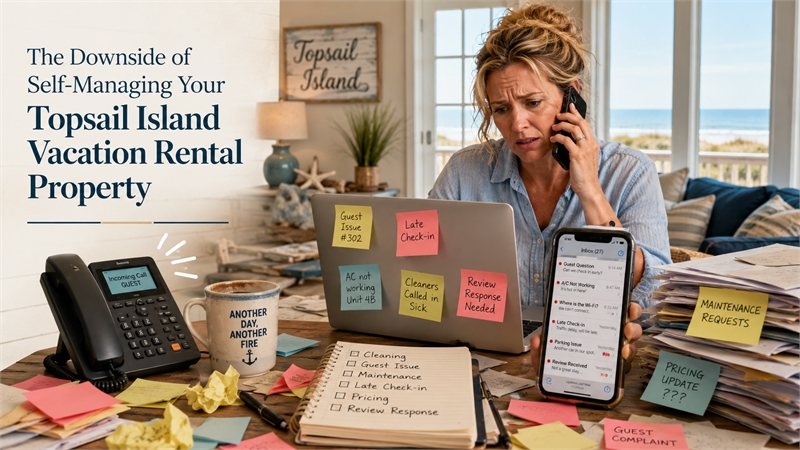
Self-managing a Topsail Island vacation rental property can sound appealing at first. Many owners look at management fees and think, “Why pay someone else when I can handle the bookings, messages, cleanings, pricing, and maintenance myself?” On paper, it seems like an easy way to keep more of the rental income.
But owning a vacation rental on Topsail Island is very different from managing one successfully.
Topsail Island is a seasonal, weather-sensitive, guest-driven, maintenance-heavy coastal market. Whether your property is in North Topsail Beach, Surf City, or Topsail Beach, the realities of managing a beach rental can become overwhelming very quickly. Guests expect fast communication, spotless cleaning, accurate listings, smooth check-ins, reliable Wi-Fi, working appliances, well-maintained furnishings, and immediate help when something goes wrong.
As a local Topsail Island property owner, vacation rental investor, and licensed North Carolina real estate broker, I have seen firsthand that self-management can work for some owners. But I have also seen where it breaks down. The downside is not always obvious at the beginning. It usually shows up during peak season, turnover day, a guest complaint, a maintenance emergency, a bad review, or a slow booking month when the property should have been performing better.
Self-management is not just about avoiding a management fee. It is about whether you have the time, systems, local support, and market knowledge to protect your property, your revenue, and your guest experience.
Why Topsail Island Vacation Rentals Are Not Passive Investments
One of the biggest misconceptions about vacation rentals is that they are passive income. They can be strong investments, but they are rarely passive, especially in a coastal vacation market like Topsail Island.
A Topsail Island vacation rental needs constant attention. Guest messages come in before, during, and after stays. Cleaners need scheduling and quality control. Maintenance issues need to be addressed quickly. Pricing needs to adjust based on seasonality, competition, occupancy trends, events, weather, and booking windows. Listings need updated photos, descriptions, amenities, and platform optimization.
Then there is the property itself. Salt air, humidity, storms, sand, wind, heavy guest use, and constant turnover all create wear and tear. A beach property can deteriorate much faster than an inland home if it is not watched closely.
Self-managing owners often underestimate how much work happens behind the scenes. The booking is only one piece of the process. The real work is making sure every guest arrival goes smoothly and every problem gets handled before it becomes a bad review.
The Hidden Time Commitment of Self-Management
The first major downside of self-managing your Topsail Island vacation rental is the amount of time it takes.
Many owners assume self-management means answering a few guest messages and checking the calendar. In reality, it can involve:
Managing Airbnb, VRBO, direct booking, or other platform messages
Updating pricing and availability
Coordinating cleaners
Checking turnover quality
Scheduling maintenance vendors
Restocking supplies
Troubleshooting Wi-Fi, TVs, locks, thermostats, and appliances
Handling guest complaints
Managing refunds, cancellations, and review responses
Watching market demand and adjusting strategy
Responding to emergencies during nights, weekends, and holidays
Peak season on Topsail Island is when owners expect the strongest revenue, but it is also when the workload is heaviest. Saturday turnovers, back-to-back stays, traffic delays, late checkouts, early arrivals, cleaner shortages, and maintenance calls can all happen at the same time.
If you live out of town, the workload becomes even harder. You may be trying to coordinate everything remotely while relying on cleaners, neighbors, handymen, or vendors to tell you what is happening at the property. That can work temporarily, but over time, it creates gaps.
The biggest issue is that guests do not care whether you are busy, out of town, working another job, or dealing with another problem. They expect answers and solutions immediately.
Guest Expectations Are Higher Than Many Owners Realize
Vacation rental guests on Topsail Island are not just paying for a place to sleep. They are paying for their vacation. That changes the level of expectation.
Guests may have saved all year for a week at the beach. They may be traveling with children, grandparents, pets, friends, or extended family. When something goes wrong, emotions run high because their limited vacation time feels disrupted.
Small problems can become major review issues if they are not handled correctly. A dirty floor, missed trash pickup, weak Wi-Fi, broken coffee maker, uncomfortable mattress, confusing parking instructions, or delayed response can turn into a complaint.
This is one of the hardest parts of self-management. Owners may see an issue as minor. Guests may see it as a failure of the entire stay.
Good vacation rental management requires more than being polite. It requires fast communication, calm problem-solving, realistic expectations, and knowing when to offer help, compensation, or a firm boundary. The way a problem is handled often matters as much as the problem itself.
Cleaning Problems Can Destroy Reviews
Cleaning is one of the most important parts of managing a Topsail Island vacation rental. It is also one of the most common places self-management breaks down.
A guest can forgive dated décor more easily than a dirty property. Cleanliness affects the first impression immediately. When guests walk in and see sand on the floor, hair in the bathroom, crumbs in the kitchen, stained bedding, dirty windows, or a missed trash bag, their confidence in the entire property drops.
On Topsail Island, cleaning is especially challenging because of sand, salt air, high humidity, heavy summer use, and fast turnover schedules. Many properties have same-day departures and arrivals. That leaves only a few hours to clean, inspect, reset, restock, and identify damage.
Self-managing owners often rely on cleaners without a strong inspection process. The problem is that even good cleaners can miss things during a rushed turnover. Without local eyes on the property, owners may not know there is a problem until the guest sends photos or leaves a bad review.
The downside is not just one unhappy guest. A pattern of cleaning complaints can hurt your ranking, lower your booking conversion, reduce repeat stays, and force you to discount the property.
Maintenance Emergencies Are Harder From a Distance
Maintenance is another major downside of self-managing a Topsail Island vacation rental.
Things break in vacation rentals. That is not a possibility. It is a certainty. Guests use the property hard, especially during peak season. Appliances fail. HVAC systems struggle. Toilets clog. Garbage disposals jam. Internet drops. Door locks malfunction. Furniture breaks. Plumbing leaks. Refrigerators stop cooling. TVs and remotes disappear or stop working.
In a coastal market, there is also the added pressure of humidity, salt air, storms, wind-driven rain, corrosion, and exterior wear.
If you are self-managing, you need reliable local vendors who will answer the phone and show up quickly. That is not always easy. During peak season, local plumbers, HVAC companies, electricians, appliance repair companies, cleaners, and handymen are busy. If you do not already have trusted relationships, you may find yourself calling around while a guest is waiting for a solution.
The real downside is not just the repair cost. It is the guest experience, the review risk, the potential refund request, and the possibility that a small issue becomes a bigger property damage problem because nobody local caught it early.
Pricing Mistakes Can Cost More Than Management Fees
Many owners self-manage because they want to save money. But poor pricing can quietly cost far more than a management fee.
Topsail Island is not a flat, predictable market. Demand changes by season, week, location, property type, bedroom count, amenities, view, pet policy, beach access, pool access, calendar gaps, and booking window. A beachfront home in North Topsail Beach does not price the same way as a condo in Surf City or a canal home in Topsail Beach.
Self-managing owners often make one of three pricing mistakes.
First, they price too high and miss early bookings. The property sits open while competing rentals fill up. By the time the owner realizes the issue, they are forced to discount closer to arrival.
Second, they price too low and leave money on the table. The calendar fills quickly, but the owner may not realize they could have earned significantly more during high-demand weeks.
Third, they fail to adjust pricing often enough. Vacation rental pricing is not something you set once and forget. It needs regular review.
This is where self-management can become expensive. Saving a percentage on management means very little if the property underperforms by thousands of dollars because of weak pricing, poor listing optimization, bad photos, or missed demand trends.
Listing Quality Matters More Than Owners Think
A vacation rental listing is not just a description. It is your sales page.
On Airbnb, VRBO, Google, and direct booking sites, guests make fast decisions based on photos, title, reviews, amenities, location, and perceived trust. If your listing does not clearly communicate the value of the property, guests will move on to the next one.
Self-managing owners sometimes write listings from the owner’s perspective instead of the guest’s perspective. They describe what they personally love about the property but fail to answer the questions guests actually care about.
How close is the beach access?
Is there parking?
Is it good for families?
Are linens included?
Is there an elevator?
Is the Wi-Fi strong enough for remote work?
Are pets allowed?
How many stairs are there?
What is nearby?
Is the property suitable for older guests?
What happens if there is bad weather?
A strong listing reduces confusion and increases bookings. A weak listing creates uncertainty. In a competitive market, uncertainty lowers conversion.
The downside of self-management is that many owners do not realize their listing is costing them revenue. They may blame the market when the real issue is photography, positioning, pricing, or missing information.
Bad Reviews Are Hard to Recover From
Reviews are one of the most valuable assets a Topsail Island vacation rental can have. They create trust before the guest ever speaks with the owner. They influence search placement, booking confidence, and pricing power.
The problem is that reviews are fragile.
One bad stay can create a review that stays attached to the property for a long time. Even if the issue was fixable, the review can influence future guests. A complaint about cleanliness, poor communication, inaccurate description, uncomfortable beds, maintenance problems, or lack of responsiveness can reduce bookings.
Self-managing owners are often emotionally attached to the property. That can make it harder to respond professionally to criticism. It is natural to feel defensive when a guest complains about a home you own, maintain, and care about. But review management requires calm, strategic communication.
A bad response can make the situation worse. Future guests are not only reading the complaint. They are reading how the owner handled it.
Self-Management Can Hurt Owner Enjoyment
Many owners buy a Topsail Island property because they love the beach, want a second home, or hope to create a long-term investment. But self-management can change the way the owner experiences the property.
Instead of enjoying the home, the owner becomes the reservation manager, guest support line, cleaner coordinator, maintenance dispatcher, pricing analyst, complaint department, and emergency contact.
Even when the owner is not physically at the property, the property is always present. A guest message can come in during dinner. A cleaner can cancel on a turnover day. A storm can create concern about water intrusion. An HVAC issue can happen on a holiday weekend. A guest can lock themselves out late at night.
Over time, some owners realize they no longer feel like they own a beach property. They feel like they own a second job.
That does not mean self-management is always wrong. But owners need to be honest about the lifestyle tradeoff.
The Risk of Not Having Local Eyes on the Property
For Topsail Island vacation rentals, local oversight matters.
A property may look fine online but have issues developing in real life. Salt air corrosion, loose railings, damaged screens, worn furniture, soft decking, water stains, HVAC condensation, musty odors, pest activity, appliance issues, and exterior damage can go unnoticed if nobody is regularly checking the property.
Cleaners may report obvious issues, but their job is not a full property inspection. Guests may report problems, but by then the issue has already affected their stay.
Self-managing from a distance creates blind spots. Those blind spots can lead to property damage, safety concerns, bad reviews, and unnecessary expenses.
A local management or co-hosting approach can help close that gap because someone is paying attention between stays, during turnovers, and when problems come up.
Vendor Relationships Are a Major Advantage
One of the most underestimated parts of vacation rental management is having reliable vendor relationships.
On Topsail Island and in the surrounding coastal communities, good vendors matter. When a property has an urgent issue, the owner needs someone who will respond quickly and do quality work. That usually comes from established relationships, not last-minute internet searches.
Self-managing owners may struggle to find help during peak season because vendors are already busy. A local manager or experienced co-host may already have relationships with cleaners, HVAC technicians, plumbers, electricians, appliance repair companies, handymen, landscapers, and other service providers.
That does not guarantee every problem is solved instantly, but it can make a major difference.
In vacation rental management, response time matters. A working relationship with the right vendor can protect the guest experience and prevent a small issue from becoming a major problem.
Self-Managing Can Create Legal, Safety, and Insurance Oversights
Vacation rental owners also need to think about legal, safety, and insurance responsibilities.
This may include occupancy limits, smoke detectors, carbon monoxide detectors, pool rules, balcony and stair safety, parking restrictions, HOA rules, pet policies, guest injury risks, hurricane preparation, cancellation language, local regulations, tax collection, and proper insurance coverage.
Self-managing owners may not realize what they are missing until something goes wrong.
For example, if a guest is injured, if a storm causes damage, if an HOA rule is violated, or if a property is not properly insured for short-term rental use, the consequences can be serious. Vacation rentals are businesses, not just personal homes occasionally rented to guests.
Owners should always consult the appropriate professionals for legal, insurance, tax, and compliance guidance. But from a practical management standpoint, having systems in place matters.
Self-Management vs. Co-Hosting vs. Full-Service Management
There are generally three paths for Topsail Island vacation rental owners.
The first is full self-management. The owner handles everything directly. This gives the owner the most control and avoids management fees, but it also creates the highest workload and risk of burnout.
The second is co-hosting. This can be a flexible middle ground where the owner remains involved but gets help with key areas such as guest communication, listing support, pricing input, cleaning coordination, inspections, maintenance coordination, and local problem-solving. For many owners, this is the most balanced option.
The third is full-service property management. This can be helpful for owners who want a more hands-off experience. However, full-service management can also come with higher fees, less direct control, and a more standardized approach that may not fit every property or owner.
The right choice depends on the owner’s goals, location, availability, experience, property condition, and tolerance for involvement.
When Self-Management May Still Make Sense
Self-management is not always a bad choice. It can work well for certain owners.
It may make sense if the owner lives nearby, has flexible time, understands the Topsail Island market, has strong vendor relationships, enjoys guest communication, can inspect the property regularly, and is willing to treat the rental like an active business.
It may also work for owners with fewer bookings, longer stays, repeat guests, or a property that is simple to maintain.
But owners should be realistic. Self-management works best when the owner has the right systems, not just the desire to save money.
The question is not, “Can I manage this myself?”
The better question is, “Can I manage this well enough to protect my revenue, reviews, property condition, and personal time?”
Is Self-Management Actually Saving You Money?
This is the most important question.
Many owners focus only on the management fee. But the real calculation should include lost revenue, missed pricing opportunities, bad reviews, cleaner issues, maintenance delays, guest refunds, owner time, stress, and long-term property wear.
If self-management saves you a fee but costs you higher vacancy, weaker rates, lower reviews, more stress, or preventable damage, then it may not actually be saving money.
A strong vacation rental strategy should increase net performance, not just reduce visible expenses.
For some owners, the best path is not full-service management or full self-management. It is a more flexible co-hosting model that provides support where it matters most while still allowing the owner to stay involved.
A Local Perspective on Managing Topsail Island Vacation Rentals
Topsail Island is not just another beach market. Each part of the island has its own rental personality.
North Topsail Beach has a large number of oceanfront homes, condos, and investment properties. Surf City has strong visitor traffic, restaurants, shops, beach access, and central convenience. Topsail Beach has a quieter, more traditional coastal feel that appeals to many repeat visitors.
Managing a rental here requires understanding more than nightly rates. It requires knowing guest expectations, seasonal booking behavior, property wear, storm risks, local vendors, beach access, HOA dynamics, and what actually helps a rental perform.
As a local property owner and licensed coastal North Carolina real estate broker, I believe owners should look at vacation rental management as part of the overall investment strategy. The way a property is managed affects income, reviews, maintenance, resale appeal, and long-term value.
The goal is not just to get bookings. The goal is to protect the property while creating a guest experience strong enough to generate repeat stays, positive reviews, and sustainable revenue.
The Real Cost of Doing Everything Yourself
Self-managing a Topsail Island vacation rental can be rewarding, but it is not as simple as many owners expect. The downside is the workload, the constant availability, the pressure of guest expectations, the risk of cleaning and maintenance failures, and the potential for lost revenue through poor pricing or weak listing strategy.
For some owners, self-management works. For others, it becomes stressful, inefficient, and more expensive than expected.
Before deciding to manage everything yourself, look beyond the management fee. Consider your time, your distance from the property, your vendor network, your ability to respond quickly, your pricing knowledge, your tolerance for guest issues, and your long-term goals for the property.
A Topsail Island vacation rental is a valuable asset. Managing it well requires more than a calendar and a cleaning crew. It requires local knowledge, consistent systems, quick response, and a realistic understanding of what guests expect from a coastal vacation property.
For many owners, the smartest move is not necessarily giving up control. It is getting the right level of support so the property performs better, the guest experience improves, and the owner is not carrying every part of the business alone.
Frequently Asked Questions About Self-Managing a Topsail Island Vacation Rental
Is self-managing a Topsail Island vacation rental a good idea?
Self-managing can be a good idea for owners who live locally, have flexible time, understand the rental market, and have reliable cleaners and maintenance vendors. However, it can become difficult for owners who live out of town or do not have systems in place for pricing, guest communication, cleaning quality, and emergency response.
What is the biggest downside of self-managing a vacation rental?
The biggest downside is the constant responsibility. Vacation rental management does not stop after a guest books. Owners have to handle messages, turnovers, maintenance, reviews, pricing, guest complaints, supply issues, and emergencies. During peak season, the workload can become intense.
Can self-management cost more than hiring help?
Yes, it can. Even if an owner saves on management fees, they may lose money through poor pricing, lower occupancy, bad reviews, maintenance delays, guest refunds, and missed booking opportunities. The lowest-cost option is not always the most profitable option.
Why is cleaning such a major issue for Topsail Island rentals?
Beach rentals deal with sand, humidity, heavy use, tight turnover windows, and high guest expectations. If cleaning is inconsistent, guests notice immediately. Cleanliness problems are one of the fastest ways to receive bad reviews and lose future bookings.
Is it harder to self-manage a vacation rental from out of town?
Yes. Out-of-town owners often have limited visibility into the property. They may not know about damage, maintenance problems, cleaning issues, or guest concerns until after the issue has already affected a stay. Local oversight is a major advantage in a coastal rental market.
Do I need local vendors before self-managing?
Yes. Reliable local vendors are extremely important. Owners should have access to cleaners, HVAC technicians, plumbers, electricians, appliance repair companies, and general maintenance help. During peak season, it can be difficult to find available vendors at the last minute.
How often should I adjust pricing on my Topsail Island vacation rental?
Pricing should be reviewed regularly. Topsail Island rental demand changes by season, week, location, property type, amenities, and booking pace. Owners who set prices once and rarely adjust them may either lose bookings or leave money on the table.
What is the difference between self-management and co-hosting?
Self-management means the owner handles everything. Co-hosting is a more flexible model where the owner can remain involved while getting help with key tasks such as guest communication, listing support, pricing, cleaning coordination, maintenance coordination, and local oversight.
Is full-service property management better than self-management?
Not always. Full-service management can be helpful for owners who want a hands-off approach, but it may come with higher fees and less owner control. Some owners prefer co-hosting because it gives them support without completely turning over the property.
Can bad reviews hurt my vacation rental income?
Yes. Reviews directly affect guest trust, booking conversion, and pricing power. A few bad reviews about cleanliness, communication, maintenance, or inaccurate listing details can make guests choose a competing property instead.
What should owners consider before self-managing?
Owners should consider their time, location, vendor relationships, guest communication skills, pricing knowledge, cleaning oversight, maintenance response plan, and ability to handle problems during nights, weekends, holidays, and peak season.
What is the best management option for a Topsail Island vacation rental?
The best option depends on the owner and the property. Some owners can self-manage successfully. Others need full-service management. Many owners may benefit from a co-hosting approach that provides local support while still allowing them to stay involved in the property.
Owning a Topsail Island vacation rental should feel like a smart investment, not a second full-time job. Self-management can work for the right owner, but it also comes with real responsibilities that affect guest experience, revenue, reviews, and long-term property value. Before deciding to handle everything yourself, it is important to look beyond the management fee and honestly consider whether you have the time, local support, vendor relationships, and systems needed to manage the property well in a competitive coastal market.
Keep reading