
How Digital Guidebooks Improve Topsail Island Vacation Rentals
Digital guidebooks help Topsail rental owners improve guest communication, reviews, property care, and repeat bookings.
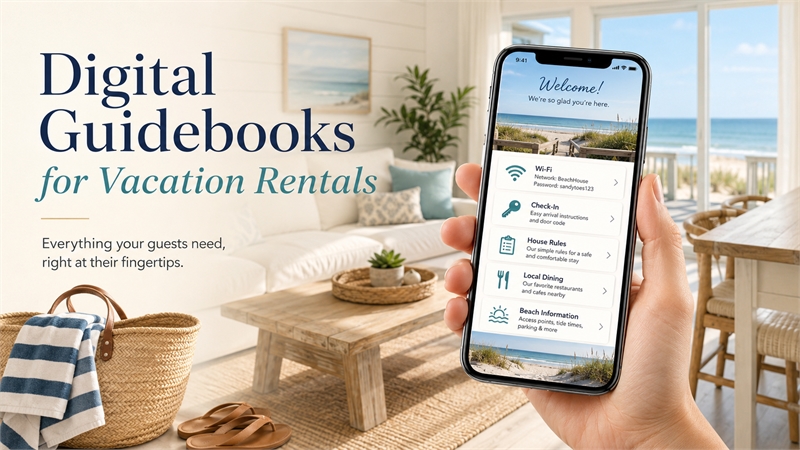
Digital Guidebooks Are No Longer Optional for Modern Vacation Rentals
Vacation rental guests have changed. Today’s travelers expect fast answers, clear instructions, mobile access, and a smooth arrival experience before they ever pull into the driveway.
For Topsail Island vacation rental owners, that matters.
A guest arriving after a long drive does not want to dig through a printed binder to find the Wi-Fi password, parking instructions, trash schedule, beach access details, or thermostat guidance. They expect the same convenience they receive from airlines, restaurants, hotels, and online booking platforms: instant information on their phone.
That is where digital guidebooks for vacation rentals have become one of the most valuable tools in modern short-term rental management.
A well-built digital guidebook is more than a digital version of an old house manual. It is part guest welcome packet, part operations tool, part safety resource, part local concierge, and part revenue strategy. When done correctly, it can reduce guest confusion, prevent avoidable problems, improve reviews, support repeat bookings, and help protect the long-term value of the rental property.
From the perspective of a licensed North Carolina real estate broker working in a coastal vacation rental market, digital guidebooks are not just a hospitality upgrade. They are a practical risk-management and income-protection tool.
What Is a Digital Guidebook for a Vacation Rental?
A digital guidebook is a mobile-friendly online resource that gives guests everything they need to know before and during their stay. It is usually sent before arrival and can be accessed from a phone, tablet, or computer.
A strong vacation rental digital guidebook typically includes:
- Check-in instructions
- Parking information
- Door codes or smart lock instructions
- Wi-Fi details
- House rules
- Appliance instructions
- Thermostat guidance
- Trash and recycling schedules
- Checkout requirements
- Emergency contacts
- Local recommendations
- Beach safety resources
- Maintenance reporting instructions
- Add-on services or direct booking information
Unlike printed binders, digital guidebooks can be updated instantly. That is especially important in a coastal market like Topsail Island, where weather, beach conditions, restaurant hours, bridge traffic, seasonal rules, and local service availability can change quickly.
A printed binder may look nice sitting on a coffee table, but if it contains outdated restaurant hours, old trash pickup information, or incorrect Wi-Fi details, it creates frustration. A digital guidebook allows owners and managers to keep information current without reprinting pages or relying on cleaners to swap out materials between turnovers.
Why Digital Guidebooks Matter on Topsail Island
Topsail Island is not just another vacation destination. It is a coastal barrier island with unique guest needs, seasonal traffic patterns, beach safety concerns, HOA rules, limited parking in some areas, and weather-related issues that can affect the guest experience.
Guests visiting North Topsail Beach, Surf City, and Topsail Beach may not understand local conditions unless they are clearly explained. Many guests are first-time visitors. Others may be familiar with the beach but not with a specific property, neighborhood, condo complex, parking area, public access point, or local rule.
A well-designed digital guidebook helps bridge that knowledge gap.
For example, a Topsail Island digital guidebook can help guests understand:
- Where to park
- Which beach access to use
- How to check tide conditions
- How to monitor rip current risk
- What to do during severe weather
- Where to find local grocery stores
- How to avoid HVAC damage from leaving doors open
- How to follow HOA or community rules
- Where trash and recycling should be placed
- What to do if an appliance, lock, or internet connection stops working
This type of information directly affects guest satisfaction. It also helps protect the property.
For owners, the benefit is simple: informed guests make fewer mistakes, ask fewer repetitive questions, cause fewer preventable problems, and are more likely to leave positive reviews.
The First Five Minutes Shape the Entire Stay
The guest experience begins before the guest walks through the door.
The arrival process is one of the most important moments in any vacation rental stay. If guests are tired, hungry, traveling with children, unloading groceries, navigating parking, or arriving after dark, confusion can quickly become frustration.
Common arrival problems include:
- Guests cannot find the unit or property entrance
- Guests do not know where to park
- Guests cannot locate the lockbox or smart lock
- Door codes are buried in old messages
- Wi-Fi information is unclear
- Guests do not know which elevator, staircase, or walkway to use
- Guests are unsure whether linens, towels, or starter supplies are provided
Even if the property itself is beautiful, a frustrating arrival can create a negative first impression.
A digital guidebook solves this by giving guests one organized place to find the information they need. Instead of scrolling through platform messages, old emails, text threads, and screenshots, guests can open the guidebook and quickly find arrival instructions.
For Topsail Island vacation rentals, this is especially valuable during peak summer check-in windows, when traffic is heavy, cleaners are finishing turnovers, and guests may be arriving after hours.
A smooth check-in creates confidence. Confidence reduces anxiety. Reduced anxiety leads to a better guest experience.
Better Communication Leads to Better Reviews
Many negative vacation rental reviews are not caused by major property defects. They are often caused by unclear expectations.
A guest may leave a lower review because:
- They did not understand the checkout process
- They were confused about parking
- They could not find the trash area
- They did not know how to operate the TV
- They struggled with the thermostat
- They misunderstood what supplies were included
- They were surprised by HOA rules
- They did not know how to report an issue
These problems are preventable.
A digital guidebook gives owners and managers a professional way to explain important information before it becomes a complaint. The goal is not to overwhelm guests with rules. The goal is to communicate clearly, warmly, and early.
For example, instead of simply saying, “Do not leave balcony doors open while the air conditioning is running,” a better guidebook explains why:
Because Topsail Island is a humid coastal environment, leaving doors or windows open while the air conditioning is running can quickly increase indoor humidity, overwork the HVAC system, create condensation issues, and contribute to maintenance problems.
That type of explanation is more effective than a warning. It helps guests understand the reason behind the rule.
When guests understand the “why,” they are more likely to comply.
Digital Guidebooks Reduce Repetitive Guest Questions
Every vacation rental owner or manager knows the repetitive questions:
- What is the Wi-Fi password?
- What time is check-in?
- What time is checkout?
- Where do we park?
- Where is the beach access?
- How do we use the TV?
- Where do we take the trash?
- Are pets allowed?
- Can we check in early?
- What restaurants do you recommend?
- Where is the nearest grocery store?
- What do we do if something breaks?
During peak season, these questions can become overwhelming.
A digital guidebook does not eliminate guest communication, but it significantly reduces avoidable back-and-forth. Guests still feel supported, but the owner or manager is no longer answering the same basic questions over and over.
That matters for property management efficiency.
For a single owner managing one property, fewer repetitive questions means less stress and more control. For a professional co-host or property manager handling multiple homes, it can mean better response times, cleaner systems, and fewer operational errors.
The best guest communication systems are proactive, not reactive.
A digital guidebook allows owners to answer questions before guests ask them.
A Digital Guidebook Helps Protect the Property
From a real estate and property management perspective, guest experience is only one part of the equation. Owners also need to protect the physical asset.
A vacation rental is not just a hospitality product. It is a real estate investment.
On Topsail Island, coastal properties are exposed to salt air, humidity, heavy use, storm conditions, sand, moisture, and seasonal occupancy pressure. Small guest mistakes can become expensive if they are repeated often enough.
A digital guidebook can help prevent avoidable damage by explaining:
- How to use the HVAC system properly
- Why doors and windows should remain closed when air conditioning is running
- How to operate appliances correctly
- How to use grills safely
- Where beach equipment should be stored
- How to avoid tracking excess sand into the property
- What items should not be flushed
- How to report leaks or maintenance concerns quickly
- What to do during severe weather
- How to follow HOA and community rules
This is especially important for condos and townhome communities where guest behavior can affect neighboring owners, common areas, elevators, walkways, trash areas, parking lots, and HOA compliance.
For property owners, clear instructions are not just about convenience. They can help reduce wear and tear, prevent unnecessary service calls, and protect the owner’s long-term return on investment.
Digital Guidebooks Improve Turnover Efficiency
Turnover day is one of the most stressful parts of vacation rental operations.
On Topsail Island, many summer rentals operate on tight same-day turnover windows. Cleaners, inspectors, maintenance vendors, owners, guests, and property managers may all be working against the clock.
A strong digital guidebook can improve turnover efficiency by clearly explaining checkout expectations.
Important checkout instructions may include:
- What time guests must leave
- Where to place used towels
- Whether beds should be stripped
- What to do with dishes
- Where trash should be taken
- Whether recycling is available
- How to secure doors and windows
- How to report accidental damage
- What to do with parking passes, pool keys, or gate cards
Clear checkout guidance helps reduce delays for cleaning teams. It also helps avoid last-minute confusion that can affect the next guest’s arrival.
In vacation rental management, one delayed checkout can create a chain reaction. A digital guidebook helps reduce that risk by setting expectations early and repeating them clearly.
Local Recommendations Build Trust and Improve the Guest Experience
One of the biggest advantages of digital guidebooks for vacation rentals is the ability to provide local recommendations.
This is where Topsail Island owners can create a major advantage.
A generic property guidebook may include the basics, but a high-performing guidebook gives guests local insight. It helps them experience the destination, not just the property.
Useful Topsail Island recommendations may include:
- Local restaurants
- Coffee shops
- Ice cream shops
- Seafood markets
- Grocery stores
- Fishing charters
- Boat tours
- Kayak rentals
- Surf lessons
- Rainy-day activities
- Family-friendly attractions
- Public beach accesses
- Local parks
- Seasonal events
- Turtle-related educational resources
- Local photographers
- Local service providers
The key is to recommend places with real local knowledge. Guests can already search online for restaurants. What they value is guidance from someone who knows the area.
For example, a guest may want to know where locals go for seafood, which beach access is easiest with small children, where to buy groceries before crossing the bridge, or what to do on a rainy afternoon.
This type of information creates a stronger connection between the guest, the property, and the destination.
That connection can lead to better reviews, repeat stays, direct booking opportunities, and more word-of-mouth referrals.
Beach Safety Information Adds Real Value
A digital guidebook should not only help guests have fun. It should also help them stay informed and safe.
For Topsail Island vacation rentals, beach safety information is especially important. Many visitors may not be familiar with tides, rip currents, marine life, beach driving rules, dune protection, or coastal weather changes.
A responsible digital guidebook can include links or guidance related to:
- Rip current risk
- Tide charts
- Weather alerts
- Hurricane preparedness
- Beach warning flags where applicable
- Emergency contacts
- Public beach access rules
- Dune protection
- Sea turtle nesting awareness
- Local town ordinances
- Evacuation guidance during severe weather
This information supports a better guest experience while also showing professionalism and care.
From an E-E-A-T perspective, this matters. It demonstrates that the owner or manager understands the local market, the coastal environment, and the practical needs of visitors.
A guest who feels informed and protected is more likely to trust the host.
Digital Guidebooks Can Support Direct Bookings and Repeat Guests
Many vacation rental owners think of digital guidebooks as purely operational tools. That is a mistake.
A guidebook can also support long-term revenue strategy.
Once a guest opens a guidebook, they are engaging with your brand outside of the booking platform. That creates an opportunity to build a direct relationship.
A strategic digital guidebook can include:
- A link to your direct booking website
- Information about other available properties
- Social media links
- Returning guest discounts
- Newsletter sign-up opportunities
- Local area guides
- Seasonal travel tips
- Referral incentives
- Owner or company branding
This is especially important for owners who want to reduce dependency on third-party booking platforms over time.
A guest who enjoys the stay, bookmarks your website, follows your social media, and receives future travel updates is more likely to book directly next time. That can reduce platform fees, increase repeat business, and improve long-term profitability.
Digital guidebooks help turn one-time guests into future guests.
How Digital Guidebooks Can Improve Vacation Rental Revenue
Digital guidebooks do not directly set nightly rates, but they can influence revenue in several important ways.
A better guest experience can lead to:
- Stronger reviews
- Higher review scores
- Better listing performance
- More repeat guests
- Fewer complaints
- Fewer refunds or concessions
- Reduced operational costs
- More direct booking opportunities
- Better owner control over the guest relationship
In competitive vacation rental markets, reviews matter. A property with strong reviews and clear communication has a better chance of standing out.
For Topsail Island owners, this can be especially important during shoulder seasons, when guests may compare multiple similar properties before booking. A property with consistent 5-star guest feedback can appear more trustworthy than a comparable property with mixed reviews.
The financial impact of a digital guidebook is often indirect, but very real.
It helps protect the guest experience, and the guest experience protects revenue.
What Should Be Included in a High-Performing Vacation Rental Digital Guidebook?
A strong digital guidebook should be organized, mobile-friendly, and easy to use. Guests should not have to scroll through long paragraphs to find basic information.
The best guidebooks are clear, visual, and practical.
1. Welcome Message
Start with a warm welcome that reinforces confidence. Include the property name, location, and a brief note that the guidebook contains everything guests need for their stay.
2. Check-In Instructions
Include arrival time, address, parking instructions, access codes, lockbox details, gate codes, elevator instructions, and any community-specific directions.
3. Wi-Fi and Technology
Include Wi-Fi name, password, smart TV instructions, streaming guidance, remote control tips, and troubleshooting steps.
4. House Rules
Present rules clearly and professionally. Avoid sounding hostile. Explain the most important rules in a way that helps guests understand the reason behind them.
5. HVAC and Appliance Instructions
Include thermostat guidance, washer and dryer instructions, dishwasher use, grill instructions, and any property-specific appliance notes.
6. Trash and Recycling
Explain trash pickup days, dumpster locations, recycling rules, bulk item restrictions, and what guests should do before checkout.
7. Beach and Community Information
Include beach access directions, parking rules, pool rules, HOA rules, quiet hours, balcony restrictions, elevator guidance, and common area expectations.
8. Local Recommendations
Include restaurants, coffee shops, grocery stores, activities, family-friendly options, rainy-day ideas, and local services.
9. Safety and Emergency Information
Include emergency contacts, urgent maintenance instructions, fire extinguisher location, first aid details if applicable, severe weather guidance, and links to trusted local safety resources.
10. Checkout Instructions
Keep checkout instructions simple and reasonable. Guests should know exactly what is expected before they leave.
11. Maintenance Reporting
Give guests a clear way to report issues. Encourage early reporting so small problems can be addressed before they become major repairs.
12. Direct Booking and Future Stay Information
Include a professional, non-pushy invitation for guests to book directly, follow your website, or return in the future.
Common Mistakes Owners Make With Digital Guidebooks
A digital guidebook only works if it is built and maintained correctly.
Common mistakes include:
- Making the guidebook too long
- Using unclear headings
- Forgetting to update seasonal information
- Providing outdated restaurant or activity recommendations
- Failing to include emergency contacts
- Burying important check-in details
- Using a PDF that is hard to read on mobile
- Writing rules in a harsh or threatening tone
- Leaving out checkout instructions
- Failing to include local safety resources
- Not connecting the guidebook to the guest communication process
A digital guidebook should be easy to scan. Guests should be able to find the Wi-Fi password, parking information, checkout instructions, and emergency contacts in seconds.
Clarity is more important than clever writing.
Why Professional Vacation Rental Management Makes a Difference
Creating a basic digital guidebook is easy. Creating one that supports guest experience, owner protection, operational efficiency, and long-term rental income requires more strategy.
Professional vacation rental management or co-hosting can help ensure that the guidebook is not just a document, but part of a larger guest experience system.
A properly managed guidebook should connect with:
- Automated guest messaging
- Pre-arrival communication
- Check-in reminders
- Checkout reminders
- Maintenance reporting
- Cleaning team expectations
- Local market knowledge
- Owner revenue goals
- Repeat guest strategy
- Brand consistency
For Topsail Island owners, local experience matters. A guidebook written by someone unfamiliar with the area may miss important details about beach access, parking, tides, humidity, storm preparation, HOA rules, or seasonal guest behavior.
That is why a local professional perspective is valuable.
A licensed North Carolina broker who understands coastal real estate, vacation rental operations, guest expectations, property value, and owner liability can help create a guidebook that supports both hospitality and investment performance.
Digital Guidebooks and Long-Term Property Value
Vacation rental success is not only about nightly income. It is also about protecting the property’s long-term value.
A poorly managed guest experience can lead to unnecessary wear and tear, bad reviews, lower occupancy, owner frustration, and reduced income potential.
A well-managed guest experience can help support:
- Better maintenance habits
- Faster issue reporting
- Stronger reviews
- Higher guest satisfaction
- More repeat bookings
- Better brand reputation
- Improved owner confidence
- Stronger long-term rental performance
Digital guidebooks are one small part of that bigger strategy, but they are an important one.
For Topsail Island owners, where properties are often exposed to salt air, humidity, storms, heavy summer use, and HOA requirements, proactive communication is one of the simplest ways to reduce preventable problems.
Final Thoughts: A Better Guest Experience Starts With Better Information
Digital guidebooks for vacation rentals are no longer a luxury feature. They are becoming a standard part of professional short-term rental management.
For Topsail Island vacation rental owners, a strong digital guidebook can improve the guest experience, reduce repetitive questions, protect the property, support better reviews, and create more opportunities for repeat and direct bookings.
The best guidebooks do more than tell guests how to unlock the door. They help guests feel prepared, welcomed, informed, and confident.
That confidence matters.
Confident guests are more relaxed. Relaxed guests have better stays. Better stays lead to stronger reviews. Stronger reviews support long-term rental income.
In a competitive coastal market like Topsail Island, details like this can separate an average vacation rental from a high-performing one.
Frequently Asked Questions About Digital Guidebooks for Vacation Rentals
What is a digital guidebook for a vacation rental?
A digital guidebook is an online, mobile-friendly resource that gives guests important information about a vacation rental property. It usually includes check-in instructions, Wi-Fi details, house rules, appliance instructions, checkout expectations, emergency contacts, and local recommendations.
Are digital guidebooks better than printed house manuals?
Yes, in most cases. Printed house manuals can become outdated quickly and may not be convenient for guests. Digital guidebooks can be updated instantly, accessed from a phone, and sent before arrival so guests have information before they reach the property.
When should guests receive the digital guidebook?
Ideally, guests should receive the guidebook several days before arrival and again on the day of check-in. This gives them time to review important information before traveling while also keeping the details easy to find when they arrive.
What should a Topsail Island vacation rental guidebook include?
A Topsail Island vacation rental guidebook should include check-in instructions, parking details, Wi-Fi information, house rules, HVAC guidance, trash instructions, beach access information, local restaurant recommendations, tide and safety resources, emergency contacts, and checkout instructions.
Can a digital guidebook help improve vacation rental reviews?
Yes. Clear communication can reduce confusion and frustration, which are common reasons for negative reviews. When guests know what to expect and can easily find answers, they are more likely to have a smooth stay and leave a positive review.
Can a digital guidebook reduce guest messages?
Yes. A well-organized guidebook can answer many of the most common guest questions before they are asked, including questions about Wi-Fi, parking, check-in, checkout, trash, appliances, and local recommendations.
How can digital guidebooks help protect a vacation rental property?
Digital guidebooks can explain how to properly use HVAC systems, appliances, grills, locks, parking areas, beach equipment, and community amenities. They can also encourage guests to report maintenance issues quickly, which may help prevent small problems from becoming larger repairs.
Should owners include local recommendations in a digital guidebook?
Yes. Local recommendations add value to the guest experience and help guests feel more connected to the destination. For Topsail Island rentals, this may include restaurants, beach accesses, fishing charters, grocery stores, rainy-day activities, and family-friendly attractions.
Can a digital guidebook help with direct bookings?
Yes. A digital guidebook can include links to the owner’s or manager’s website, social media pages, other rental properties, newsletter sign-ups, and returning guest offers. This can help build a direct relationship with guests beyond the booking platform.
Do professionally managed vacation rentals need digital guidebooks?
Yes. In many cases, professionally managed vacation rentals benefit even more from digital guidebooks because they help standardize communication, reduce repetitive questions, improve turnover efficiency, and create a consistent guest experience across multiple properties.
Is a PDF guidebook good enough?
A PDF is better than no guidebook, but it is usually not the best option. Mobile-friendly digital guidebooks are easier to navigate, update, and integrate into guest communication systems. Guests should be able to quickly tap through sections instead of scrolling through a long document.
Why are digital guidebooks especially useful for coastal vacation rentals?
Coastal vacation rentals often require additional guest education about tides, beach safety, storms, humidity, HVAC use, parking, HOA rules, and local conditions. A digital guidebook helps communicate those details clearly and professionally.
Keep reading