
Vacation Rental vs. Primary Residence: Understanding the Differences Before You Buy
An educational comparison of vacation rental properties versus primary residences, outlining financing, insurance, tax, and lifestyle differences for coastal buyers.
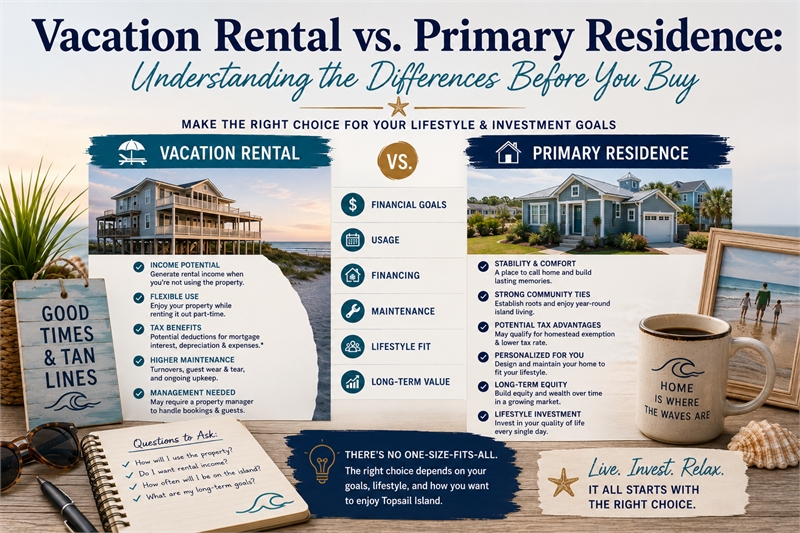
Understanding the Differences Before You Buy on Topsail Island
Buying property near the coast often involves a critical early decision: Will the home be used as a vacation rental or as a primary residence?
While both options involve ownership of real estate, the financial, legal, insurance, tax, and lifestyle considerations differ in important ways—especially in coastal markets like Topsail Island.
This guide breaks down the documented distinctions between vacation rental properties and primary residences to help buyers make informed decisions before purchasing.
Definition: Vacation Rental vs. Primary Residence
Vacation Rental Property
A vacation rental is a property primarily used to generate short-term rental income, often rented nightly or weekly through platforms such as Airbnb or Vrbo or through direct bookings.
Common characteristics include:
- Short-term occupancy by guests
- Income-producing intent
- Higher turnover and usage frequency
- Compliance with local short-term rental rules
Primary Residence
A primary residence is a property occupied by the owner as their main home, typically for the majority of the year.
Key characteristics include:
- Owner occupancy
- Lower turnover
- Residential use rather than commercial intent
- Different financing and insurance treatment
Financing Differences
Lenders classify properties based on intended use, not buyer preference.
Primary Residence Financing
Typically offers:
- Lower interest rates
- Lower required down payments
- Broader loan program availability
- More favorable debt-to-income treatment
Vacation Rental Financing
Often involves:
- Higher interest rates
- Larger down payment requirements
- Stricter underwriting standards
- Income documentation scrutiny (if rental income is used)
Lender guidelines vary, and buyers should confirm classification before submitting an offer.
Insurance Considerations
Insurance requirements differ significantly.
Primary Residence Insurance
- Standard homeowners insurance
- Designed for owner occupancy
- Lower premiums relative to rentals
Vacation Rental Insurance
- Specialty policies required
- Coverage for guest liability
- Increased exposure to claims
- Higher premiums due to usage patterns
Using an incorrect policy type can create coverage gaps.
Tax Treatment and Reporting
Tax treatment depends on use, duration, and income generation.
Vacation Rentals
Potential considerations include:
- Rental income reporting
- Depreciation eligibility
- Deductible operating expenses
- Occupancy-based IRS classification thresholds
Primary Residences
Typically involve:
- Different capital gains exclusions
- No rental income reporting
- Limited expense deductions
Buyers should consult a tax professional regarding classification.
HOA and Regulatory Differences
In coastal communities, HOA rules and town ordinances are often decisive.
Vacation rentals may be subject to:
- Permit requirements
- Registration fees
- Minimum stay rules
- HOA restrictions or prohibitions
Primary residences typically face fewer regulatory layers.
Lifestyle and Usage Considerations
Vacation Rental Ownership
Best suited for buyers who:
- Want income potential
- Are comfortable with guest turnover
- Can manage or outsource operations
- Accept seasonal fluctuations
Primary Residence Ownership
Often preferred by buyers who:
- Want stability
- Prioritize privacy
- Plan year-round occupancy
- Seek community integration
Resale and Market Dynamics
Buyer demand varies by property classification.
- Vacation rentals often appeal to investors
- Primary residences attract lifestyle buyers
- Financing limitations affect resale pools
- Insurance and HOA changes can shift desirability
Understanding exit strategy matters before purchase.
Which Is Right for You?
There is no universally “better” option—only what aligns with documented goals, finances, and regulatory realities.
Buyers should evaluate:
- Intended use
- Financing eligibility
- Insurance costs
- Regulatory compliance
- Long-term ownership plans
Clear classification early prevents complications later.
This article is part of a broader real estate education series covering ownership options, regulations, and buying strategies for coastal properties on Topsail Island. For more information check out The Complete Buyer’s Guide to Topsail Island Real Estate, a broader resource designed to help buyers understand the local market, property options, and ownership considerations.
Keep reading