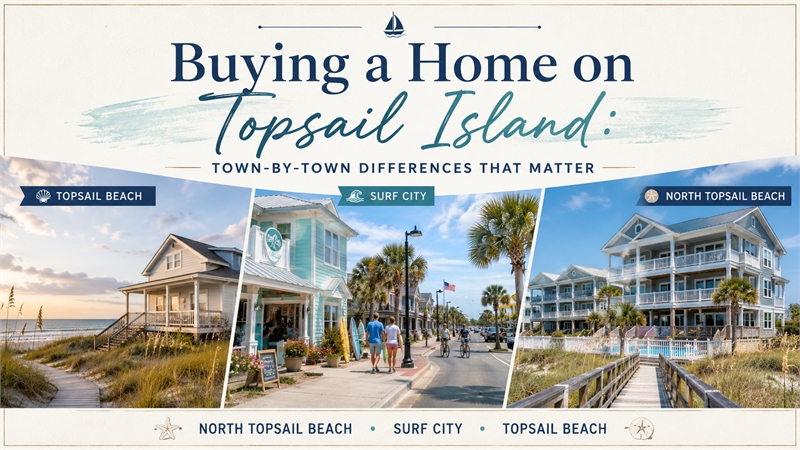
Buying a Home on Topsail Island: Town-by-Town Differences That Matter
Buying a home on Topsail Island? Compare Surf City, North Topsail Beach, and Topsail Beach to understand town-by-town differences in real estate, zoning, and lifestyle before you buy.
(Surf City vs North Topsail Beach vs Topsail Beach)
Buying on Topsail Island is not just a “pick a beach and find a house” decision. The island is divided into three municipalities—Surf City, North Topsail Beach, and Topsail Beach—and each town operates with its own ordinances, development standards, rental policies, and tax structure. In practical terms, town lines can change how a property can be used, what it costs to own, and what day-to-day life feels like once you move in.
That is why buyers who take time to compare the towns early in their search tend to make more confident decisions later—especially when narrowing down between similar homes with similar views.
Surf City: Convenience, Variety, and Year-Round Activity
Surf City sits near the center of Topsail Island and functions as the main commercial hub. Buyers who want daily convenience often start here because the town has the most concentrated mix of restaurants, retail, municipal services, and public beach access points. Many neighborhoods are close enough for walking or biking, which matters to buyers planning frequent stays or full-time living.
The real estate inventory in Surf City is generally more varied than elsewhere on the island. Buyers may find single-family homes, townhomes, and condominiums across a broader range of price points. Inventory turnover can be higher as well, which may increase the odds of finding a home that fits a specific budget and timeline.
Because Surf City is the activity center, seasonal traffic tends to be more noticeable. Some areas may also have more short-term rental presence depending on local zoning and any applicable homeowners’ association restrictions. For buyers looking for convenience and access to services, Surf City often feels like the most practical option on Topsail Island.
North Topsail Beach: A Quieter Coastline and Strong Oceanfront Demand
North Topsail Beach is defined by its long residential stretches and limited commercial development. Many buyers are drawn to this part of the island for its quieter feel, open shoreline, and strong oceanfront and ocean-view inventory.
Housing options commonly include single-family homes and condominium communities, and daily errands generally require driving because walkable amenities are fewer than in Surf City. Buyers who prioritize privacy and a less commercialized setting often view North Topsail Beach as a strong second-home location.
For condominium purchases in North Topsail Beach, due diligence matters. Homeowners’ association governance, maintenance responsibilities, reserve funding, and insurance requirements can materially affect long-term ownership costs. Buyers comparing condos should read governing documents carefully and verify restrictions before assuming any intended use is allowed.
Topsail Beach: Preservation, Stability, and Limited Inventory
Topsail Beach, at the southern end of the island, is widely known for a preservation-focused development philosophy. Density is lower, commercial activity is limited, and zoning tends to be more restrictive. Those policies shape the town’s character and the buyer experience.
Most real estate inventory in Topsail Beach is single-family homes, and turnover is often lower than in other areas. New construction opportunities tend to be more limited, and buyers may face fewer listing options at any given time.
Topsail Beach also tends to be less aligned with high-turnover rental strategies because rental activity is generally more constrained by local regulation and community expectations. Buyers who value stability, neighborhood consistency, and a quieter ownership experience often gravitate toward Topsail Beach.
Three Towns, Three Rulebooks
Even though Topsail Island is geographically continuous, each municipality governs land use, rental rules, permitting, and enforcement. Tax rates and municipal fees can vary by town, and ownership obligations can change depending on what side of a town boundary a property sits on.
This is why two homes that look “the same” on paper can have materially different outcomes in practice. Buyers should confirm applicable municipal rules and any homeowners’ association restrictions before relying on assumptions about allowed use.
Frequently Asked Questions
(Topsail Island town differences for home buyers)
Which town on Topsail Island is best for buying a primary residence?
Buyers planning to live on the island full time often look for access to services, infrastructure, and year-round convenience. Surf City is frequently evaluated for full-time living due to central access and amenities. Topsail Beach is also commonly considered by buyers prioritizing long-term stability and lower density. The best choice depends on lifestyle preferences and tolerance for seasonal activity.
Is Surf City or North Topsail Beach better for investment property purchases?
There is no island-wide answer. Surf City offers more proximity to amenities and services, while North Topsail Beach often offers more oceanfront and condominium inventory. Whether a property can be used as a short-term rental depends on municipal ordinances and homeowners’ association rules. Buyers should verify both before purchasing.
Are short-term rentals allowed everywhere on Topsail Island?
No. Short-term rental rules vary by municipality, and many condominium communities and planned developments impose additional restrictions through their governing documents. Rental eligibility should be confirmed for the specific property being evaluated.
Which area has the lowest development density?
Topsail Beach is widely known for the most restrictive zoning and lower density development pattern on the island, reflecting its preservation-oriented approach.
Do property taxes differ between Surf City, North Topsail Beach, and Topsail Beach?
Yes. Each municipality sets its own tax rate and budget priorities. Buyers comparing properties across town lines should review current tax rates and any applicable municipal fees.
Does the town I choose affect insurance costs?
Insurance costs are typically influenced by flood zone designation, elevation, proximity to the ocean, construction type, and age of the structure. Town boundaries alone do not set insurance pricing, but location-based risk factors can vary across the island and can influence premiums.
Can two similar homes have different rules just because they are in different towns?
Yes. Municipal jurisdiction can change zoning rules, permitting requirements, and rental regulations. Buyers should confirm the property’s jurisdiction early in the decision process.
For more information check out The Complete Buyer’s Guide to Topsail Island Real Estate, a broader resource designed to help buyers understand the local market, property options, and ownership considerations.
Keep reading