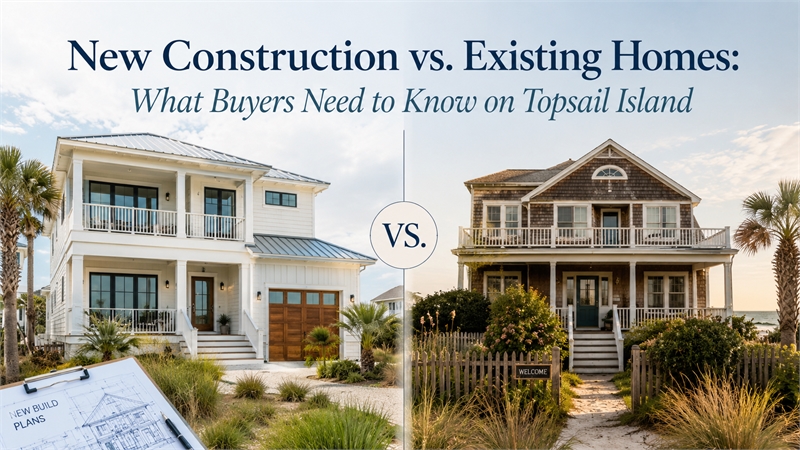
New Construction vs. Existing Homes: What Buyers Need to Know on Topsail Island
An educational comparison of new construction versus existing homes, covering financing, insurance, maintenance, resale, and regulatory differences for Topsail Island buyers.
What Buyers Should Know Before Purchasing on Topsail Island
When purchasing property on Topsail Island or in nearby coastal communities, buyers often face a key decision early in the process: Should you buy new construction or an existing home?
Both options involve distinct and documented differences in cost structure, financing, insurance, maintenance, regulatory exposure, and long-term ownership considerations—particularly in coastal markets where zoning, flood exposure, and insurance availability can materially affect value.
This guide outlines the verifiable differences between new construction and existing homes to help buyers make informed decisions before committing to a purchase.
Definition: New Construction vs. Existing Home
New Construction
New construction generally refers to:
- Homes that have never been occupied
- Properties built under current building codes
- Homes purchased directly from a builder or developer
Existing Home
An existing home is:
- Previously occupied
- Built under earlier code standards
- Often located in established neighborhoods or HOAs
Each classification carries different implications for buyers.
Purchase Price and Upfront Costs
New Construction
Buyers may encounter:
- Higher base purchase prices
- Builder premiums for location or customization
- Upgrade and option costs
- Extended timelines before closing
Existing Homes
Typically involve:
- Lower initial purchase prices
- Negotiation based on condition and market factors
- Fewer upgrade-related expenses at closing
- Faster occupancy after closing
Upfront cost structures differ substantially.
Financing Considerations
Lenders classify properties based on construction status and intended use.
New Construction Financing
May involve:
- Construction-to-permanent loans
- Builder-preferred lenders
- Draw schedules tied to build progress
- Appraisal timing complexities
Existing Home Financing
Often offers:
- Conventional mortgage products
- Faster underwriting timelines
- Fewer appraisal variables
- Broader lender participation
Loan eligibility and timing should be confirmed before contract execution.
Insurance and Building Codes
Insurance availability and pricing are closely tied to construction standards.
New Construction
Often includes:
- Compliance with current wind and flood codes
- Improved storm-resistance features
- Potential insurance premium advantages
- Reduced early-life maintenance exposure
Existing Homes
May involve:
- Higher insurance premiums
- Required upgrades for coverage eligibility
- Older roof, elevation, or fastening systems
- Increased inspection scrutiny
Insurance feasibility should be evaluated before making an offer.
Maintenance and Repair Expectations
New Construction
Common characteristics include:
- Builder warranties
- New systems and materials
- Lower short-term repair likelihood
- Predictable early maintenance
Existing Homes
May require:
- Immediate or near-term repairs
- Deferred maintenance assessments
- System replacements over time
- Ongoing upkeep costs
Inspection results play a decisive role.
HOA, Zoning, and Lot Availability
On Topsail Island, land availability and regulation are often decisive factors.
New construction may be limited by:
- Scarcity of buildable lots
- Environmental and coastal setback rules
- Zoning restrictions
- HOA architectural requirements
Existing homes are commonly located in:
- Fully developed neighborhoods
- Established HOAs
- Areas with known fee structures and rules
Regulatory review is critical before purchase.
Resale and Market Considerations
Market appeal varies by property type.
- New construction often attracts buyers seeking modern features
- Existing homes appeal to buyers prioritizing location or character
- Insurance and HOA changes affect resale pools
- Market cycles influence demand for each category
Exit strategy should be evaluated early.
Frequently Asked Questions (FAQ)
Is new construction always more expensive than an existing home?
Not always. While new construction often has a higher base price, total cost depends on upgrades, lot premiums, insurance, and financing terms. Existing homes may require immediate repairs that increase total ownership cost.
Are insurance rates lower for new construction on Topsail Island?
Often, but not guaranteed. Homes built to current wind and flood codes may qualify for lower premiums, but rates depend on elevation, proximity to water, roof design, and carrier underwriting guidelines.
Can I use standard financing for new construction?
Sometimes. Many buyers use construction-to-permanent loans or builder-affiliated financing. Existing homes typically qualify for a broader range of standard mortgage products.
Do HOAs treat new construction differently than existing homes?
Yes. HOAs may impose architectural controls, construction timelines, or design requirements on new builds that do not apply to existing homes.
Is resale easier with new construction or an existing home?
Resale ease depends on market conditions, insurance affordability, HOA rules, and buyer demand. Neither option is universally easier to resell.
Which option is better for first-time buyers?
There is no universal answer. First-time buyers should evaluate budget stability, maintenance tolerance, insurance costs, and timeline flexibility before deciding.
Which Option Fits Your Goals?
There is no objectively superior choice. Buyers should weigh:
- Budget and financing eligibility
- Insurance affordability
- Maintenance expectations
- Regulatory and HOA requirements
- Long-term ownership and resale plans
Clear evaluation early prevents complications later.
This article is part of a broader real estate education series covering buying strategies, ownership options, and regulatory considerations for Topsail Island and surrounding coastal communities. For more information check out The Complete Buyer’s Guide to Topsail Island Real Estate, a broader resource designed to help buyers understand the local market, property options, and ownership considerations.
Keep reading