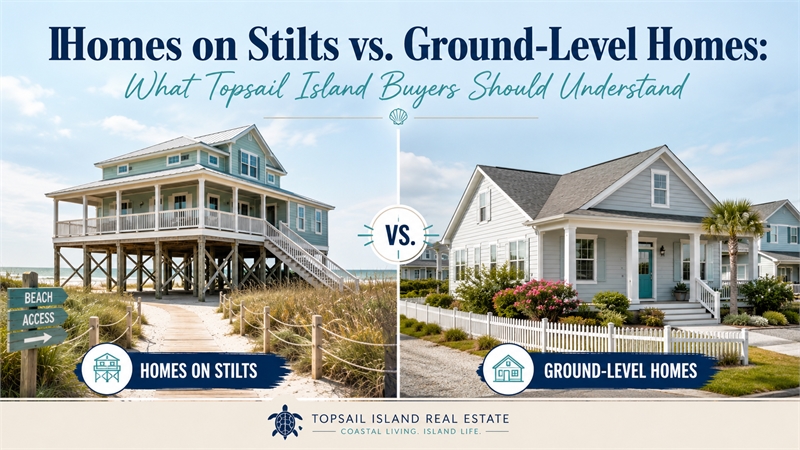
Homes on Stilts vs. Ground-Level Homes: What Topsail Island Buyers Should Understand
An educational comparison of elevated stilt homes versus ground-level homes, explaining flood exposure, insurance, compliance, and buyer considerations.
What Buyers Should Understand on Topsail Island
One of the most visible architectural differences on Topsail Island is whether a home is elevated on pilings (stilts) or built at or near ground level. This distinction is not cosmetic—it directly affects flood risk, insurance costs, building compliance, financing, and long-term ownership considerations.
This guide explains the documented differences between stilt homes and ground-level homes so buyers can evaluate which structure type aligns with their goals before purchasing.
Structural Overview: Elevated vs. Ground-Level Homes
Homes on Stilts (Elevated Homes)
Stilt homes are typically:
- Built on pilings or piers
- Elevated above Base Flood Elevation (BFE)
- Designed to allow water to pass beneath the structure
This design is common in coastal and flood-prone areas.
Ground-Level Homes
Ground-level homes are:
- Built closer to natural grade
- Often older construction on coastal islands
- More common in lower-risk flood zones or pre-FEMA builds
Structure type often reflects the era of construction and applicable building codes.
Flood Risk and Water Exposure
Elevated Homes
Generally offer:
- Reduced risk of floodwater entering living spaces
- Better performance during storm surge events
- Compliance with modern coastal flood standards
Ground-Level Homes
May involve:
- Increased flood exposure
- Greater likelihood of water intrusion
- Higher vulnerability during storm events
Flood risk depends on both structure type and elevation relative to BFE.
Insurance Cost Differences
Insurance treatment is one of the largest ownership cost differences.
Homes on Stilts
Often qualify for:
- Lower flood insurance premiums
- Broader carrier eligibility
- Improved long-term insurability
Ground-Level Homes
May face:
- Higher flood insurance premiums
- Limited carrier availability
- Mandatory elevation or mitigation requirements in some cases
Insurance pricing is heavily influenced by elevation data and flood zone classification.
Building Codes and Compliance
Elevated Homes
Typically:
- Built to current FEMA and coastal building codes
- Designed to meet wind and flood standards
- Less likely to trigger compliance issues during renovations
Ground-Level Homes
May:
- Pre-date modern codes
- Face restrictions when remodeling
- Trigger elevation requirements if substantially improved
Buyers planning renovations should evaluate compliance risk early.
Financing Considerations
Lenders assess flood exposure and insurance requirements when underwriting loans.
- Elevated homes may be easier to insure and finance
- Ground-level homes in high-risk zones may face stricter underwriting
- Insurance affordability directly impacts loan qualification
Flood zone and elevation status are reviewed during underwriting, not after closing.
Maintenance and Accessibility Tradeoffs
Homes on Stilts
Common considerations:
- Stair access required
- Exposure of pilings to salt air
- Structural inspections focused on foundation systems
Ground-Level Homes
Common considerations:
- Easier accessibility
- Greater exposure to moisture
- Increased maintenance after flooding or heavy rain events
Buyers should balance risk tolerance with lifestyle needs.
Resale and Long-Term Marketability
Market demand increasingly favors:
- Elevated homes in flood-prone areas
- Properties with lower insurance costs
- Homes compliant with current building standards
Ground-level homes may appeal to certain buyers but can face resale challenges if insurance or compliance issues arise.
Frequently Asked Questions (FAQ)
Are stilt homes safer than ground-level homes?
From a flood-risk perspective, elevated homes generally reduce the chance of floodwater entering living areas. However, safety depends on construction quality, elevation height, and maintenance.
Do ground-level homes always flood?
No. Some ground-level homes are located in lower-risk flood zones. However, statistical flood risk is higher for ground-level structures in coastal areas.
Is insurance always cheaper for homes on stilts?
Often, but not always. Insurance cost depends on elevation relative to BFE, flood zone, and carrier underwriting criteria.
Can a ground-level home be elevated later?
Yes, but elevation can be expensive and subject to permitting, zoning, and engineering requirements. Buyers should evaluate feasibility before purchasing.
Are stilt homes harder to maintain?
Maintenance is different, not necessarily harder. Elevated homes require periodic inspection of pilings and structural components exposed to coastal conditions.
Do lenders prefer elevated homes?
Lenders focus on insurability and flood compliance. Homes that meet flood standards and carry affordable insurance are generally easier to finance.
Key Takeaways for Buyers
Before purchasing on Topsail Island, buyers should:
- Compare elevation relative to BFE
- Obtain flood insurance estimates early
- Evaluate renovation and compliance risk
- Consider long-term resale and insurance trends
- Balance accessibility needs with flood exposure
Structure type directly affects ownership cost and risk.
This article is part of a broader real estate education series covering coastal construction, flood exposure, insurance, and buying strategies for Topsail Island and surrounding coastal communities. This guide is included in The Complete Buyer’s Guide to Topsail Island Real Estate, a broader resource designed to help buyers understand the local market, property options, and ownership considerations.
Keep reading