First-Time Buyers vs. Investors on Topsail Island
An in-depth comparison of first-time buyers and investors on Topsail Island, explaining differences in lifestyle goals, insurance costs, rental income focus, and HOA considerations.
Understanding Different Goals, Risks, and Strategies
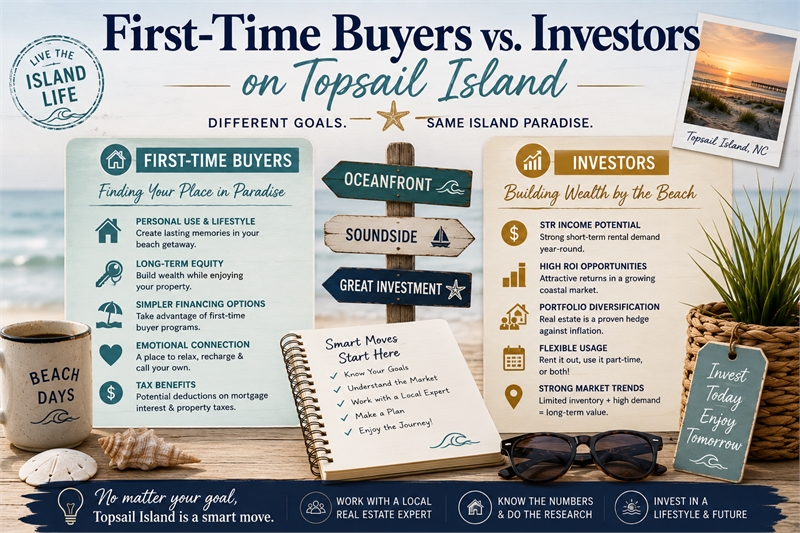
Real estate purchases on Topsail Island are driven by two primary buyer profiles: first-time or lifestyle-oriented buyers, and investment-focused buyers. While both groups may consider similar properties, their priorities, decision-making criteria, and risk tolerance often differ significantly.
Understanding these differences is essential for selecting the right property, structuring financing appropriately, and avoiding misaligned expectations after closing.
First-Time Buyers on Topsail Island
First-time buyers often approach Topsail Island real estate with a focus on personal use and lifestyle rather than pure financial return. This group may include primary residents, second-home buyers, or individuals transitioning from inland living to the coast.
Lifestyle Considerations
Lifestyle is typically the primary driver for first-time buyers. Common considerations include:
- Proximity to the beach or sound
- Quiet versus active neighborhoods
- Walkability to dining or amenities
- Overall community atmosphere
These buyers often prioritize how the property fits into their daily or seasonal routines rather than its short-term income potential.
Budget Predictability
First-time buyers tend to place strong emphasis on predictable monthly and annual costs.
Key concerns often include:
- Mortgage payment stability
- HOA dues and what they cover
- Property taxes
- Insurance costs, including flood and wind coverage
Unexpected expenses, such as special assessments or insurance premium increases, can be more disruptive for buyers without prior coastal ownership experience.
Insurance Affordability
Insurance affordability is a major factor for first-time buyers. Coastal insurance requirements can be more complex than inland policies, and first-time buyers often focus on:
- Understanding flood zone classifications
- Evaluating total insurance cost, not just premiums
- Balancing coverage with affordability
Properties in lower-risk flood zones or with shared HOA insurance structures may appeal more strongly to this buyer group.
Investors on Topsail Island
Investors approach Topsail Island real estate primarily as a financial asset. While lifestyle factors may still matter, they are typically secondary to income performance and long-term value preservation.
Rental History and Demand
Investors focus heavily on rental performance indicators, including:
- Historical rental income
- Occupancy rates
- Seasonal demand patterns
- Property management feasibility
Past performance and market comparables often weigh more heavily than personal preferences.
ROI and Income Potential
Return on investment (ROI) is a central consideration for investors.
This analysis may include:
- Gross rental income potential
- Operating expenses, including HOA dues and insurance
- Management costs
- Long-term appreciation trends
Investors often accept higher upfront costs if long-term income and appreciation justify the investment.
HOA and Regulatory Compliance
HOA rules and municipal regulations are especially critical for investors.
Investors typically review:
- Short-term rental allowances
- Minimum stay requirements
- HOA rental caps or restrictions
- Permit and tax compliance obligations
Restrictions that limit rental flexibility can materially affect income potential and investment viability.
Differences in Risk Tolerance
Risk tolerance often distinguishes first-time buyers from investors.
- First-time buyers generally seek stability and predictability
- Investors may accept greater variability in exchange for higher returns
This difference influences property selection, financing structure, and long-term strategy.
Financing Strategy Differences
Financing approaches often vary between the two buyer types.
First-time buyers may prioritize:
- Fixed-rate financing
- Lower monthly obligations
- Insurance and escrow predictability
Investors may focus on:
- Leveraging rental income
- Structuring financing for cash flow
- Accepting higher rates for flexibility
Loan classification—primary residence, second home, or investment property—plays a key role in these decisions.
Property Type Preferences
Property type selection often diverges between buyer profiles.
First-time buyers may favor:
- Condominiums with managed maintenance
- Properties in quieter, residential areas
- Homes with lower upkeep requirements
Investors may target:
- Oceanfront or high-demand rental locations
- Properties with strong seasonal appeal
- Communities with proven rental performance
Each profile evaluates trade-offs differently based on objectives.
Why Strategy Alignment Matters
Misalignment between buyer goals and property characteristics can lead to dissatisfaction or financial strain. A property well-suited for investment may not meet lifestyle expectations, while a lifestyle-focused purchase may underperform as a rental.
Understanding buyer identity early in the process supports better outcomes and clearer expectations.
Frequently Asked Questions (FAQ)
Can first-time buyers also rent their property?
Possibly, but rental use depends on zoning, HOA rules, and insurance considerations.
Are condominiums better for first-time buyers or investors?
They can suit both, but first-time buyers often value maintenance coverage, while investors focus on rental rules and demand.
Do investors face higher insurance costs?
Often, yes. Investment properties may carry higher premiums depending on use and coverage requirements.
Should first-time buyers avoid high-ROI properties?
Not necessarily, but they should ensure affordability and lifestyle fit align with personal goals.
Is it common for buyers to shift from lifestyle use to investment later?
Yes. Some buyers begin with personal use and later transition to rental use as circumstances change.
This guide is included in The Complete Buyer’s Guide to Topsail Island Real Estate, a broader resource designed to help buyers understand the local market, property options, and ownership considerations.
Keep reading