Buying Property on Topsail Island A Step-by-Step Guide for Buyers
A clear, step-by-step guide to buying property on Topsail Island, from defining goals and financing to inspections, insurance, and closing.
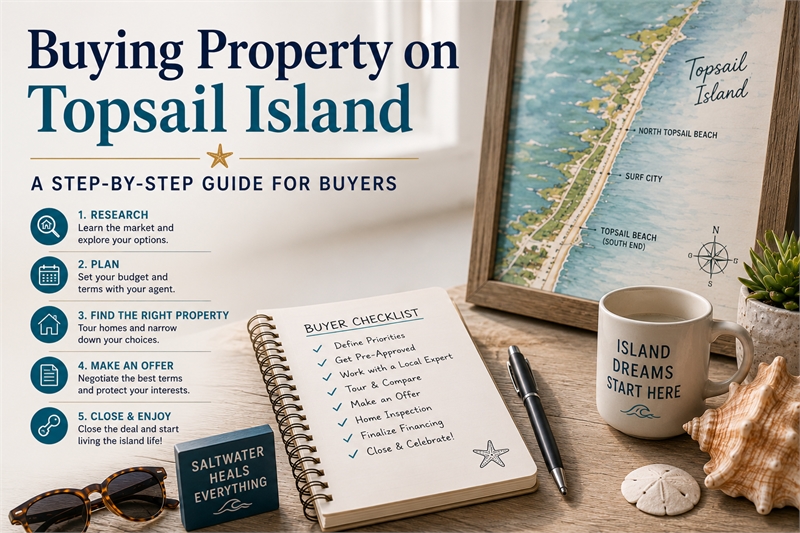
A Step-by-Step Guide for Buyers
Purchasing real estate on Topsail Island follows the same general structure as most residential transactions, but coastal factors such as insurance, zoning, HOAs, and property use add additional layers of consideration. Whether the goal is a primary residence, second home, or investment property, understanding the full buying process helps buyers plan effectively and reduce risk.
This step-by-step overview outlines how transactions typically unfold on Topsail Island from initial planning through closing.
Step 1: Define Your Ownership Goals
The first step in the buying process is clearly defining how the property will be used. Property classification affects financing, insurance, taxes, and long-term planning.
Common buyer goals include:
- Primary residence
- Second or vacation home
- Short-term or long-term rental investment
Each use carries different implications for loan terms, insurance requirements, HOA rules, and rental regulations. Buyers should clarify these goals before beginning their property search.
Step 2: Secure Financing Pre-Approval
Financing should be addressed early, particularly for coastal properties. A mortgage pre-approval helps buyers understand budget parameters and strengthens offer credibility.
During this stage, buyers typically:
- Submit financial documentation to a lender
- Review loan options such as conventional, jumbo, VA, or second-home financing
- Discuss insurance and flood zone considerations
Pre-approval provides a realistic price range and reduces delays once a property is identified.
Step 3: Identify Target Areas and Property Types
Topsail Island includes three municipalities, each with distinct residential patterns and property types.
Buyers should evaluate:
- Town preferences (North Topsail Beach, Surf City, or Topsail Beach)
- Property type (condominium, townhome, or single-family home)
- Proximity to beach, sound, or commercial areas
- HOA governance and community structure
Narrowing focus early helps streamline property tours and decision-making.
Step 4: Conduct Property Tours and Evaluations
Property tours allow buyers to assess condition, layout, location, and surrounding environment.
During tours, buyers often consider:
- Construction quality and maintenance condition
- Elevation and flood exposure
- Age of major systems (roof, HVAC, windows)
- Community amenities and shared spaces
For condominium purchases, reviewing common areas and understanding HOA maintenance responsibilities is especially important.
Step 5: Submit an Offer and Negotiate Terms
Once a suitable property is identified, buyers submit a formal offer outlining price, contingencies, and proposed timelines.
Negotiations may involve:
- Purchase price
- Repair requests or credits
- Closing timelines
- Contingencies related to financing, inspections, or HOA review
Market conditions influence negotiation dynamics, but clarity and preparation help support favorable outcomes.
Step 6: Complete Inspections and Appraisal
After offer acceptance, buyers proceed with inspections and lender-required appraisals.
Typical inspections include:
- General home inspection
- Specialized inspections if warranted (HVAC, roof, moisture)
The appraisal determines whether the property value supports the agreed purchase price. Inspection findings may lead to further negotiation or repairs prior to closing.
Step 7: Finalize Insurance Coverage
Insurance must be finalized before closing. Coastal properties often require multiple policies.
Buyers typically secure:
- Homeowners insurance
- Flood insurance (if applicable)
- Wind and hail coverage
Lenders require proof of coverage before loan funding, making early coordination essential.
Step 8: Closing and Transfer of Ownership
At closing, final documents are signed, funds are transferred, and ownership is officially conveyed.
Closing activities include:
- Signing loan and title documents
- Recording the deed
- Funding the transaction
- Receiving keys and access information
After closing, buyers assume responsibility for taxes, insurance, HOA dues, and ongoing maintenance.
Why Preparation Matters on Topsail Island
The Topsail Island buying process benefits from careful planning and early due diligence. Coastal considerations such as insurance costs, HOA governance, and zoning rules can materially affect ownership experience. Buyers who understand each step are better positioned to make informed decisions and protect long-term value.
Frequently Asked Questions (FAQ)
Is buying on Topsail Island different from inland purchases?
The overall process is similar, but coastal factors such as insurance, flood zones, and HOAs add complexity.
Should buyers secure insurance quotes before making an offer?
Yes. Insurance costs can significantly affect affordability and should be reviewed early.
Are inspections required?
Inspections are not legally required but are strongly recommended and commonly used.
Do condominiums require additional review?
Yes. HOA documents, budgets, and insurance policies are an important part of condo purchases.
How long does the buying process usually take?
Most transactions follow standard timelines, though insurance and HOA document review can extend the process slightly.
This guide is included in The Complete Buyer’s Guide to Topsail Island Real Estate, a broader resource designed to help buyers understand the local market, property options, and ownership considerations.
Keep reading